When organizations scale, managing their growing landscape of microservices, APIs, and internal tools becomes a challenge. Spotify’s Backstage emerged as a powerful open-source framework for building internal developer portals (IDPs), centralizing service catalogs, documentation, and developer workflows. However, as adoption spread, many engineering leaders discovered that Backstage is not a plug-and-play solution—it demands significant setup, customization, and ongoing maintenance.
Backstage alternatives are platforms, tools, or frameworks that address the same core need: providing a unified, discoverable, and standardized interface for developers to interact with their organization’s services and infrastructure. These alternatives aim to simplify developer experience, improve productivity, and lower the operational burden often associated with self-hosted Backstage instances.
In this guide, we’ll dive deep into the world of Backstage alternatives, reviewing their unique strengths, practical use cases, and how you can choose the best fit for your team. Whether you’re seeking a SaaS solution, a no-code platform, or a tool tightly integrated with your API workflows, this guide covers everything you need to know about Backstage alternatives in 2026.
Why Teams Seek Backstage Alternatives
Before exploring specific Backstage alternatives, it’s essential to understand why organizations look beyond Backstage in the first place. Some of the most common reasons include:
- High Implementation Overhead: Setting up Backstage can require months of engineering work, particularly for custom plugins and integrations.
- Maintenance Complexity: Ongoing upgrades and plugin management need dedicated resources and front-end (React/TypeScript) expertise.
- Hidden Costs: While Backstage is open-source, operational costs (infrastructure, staffing, training) can add up.
- Desire for Turnkey Solutions: Many teams prefer ready-to-use solutions with minimal setup, lower maintenance, and commercial support.
- Better Fit for Non-Engineering Teams: Some organizations need portals that are accessible to non-developers or less technical stakeholders.
These challenges have fueled a vibrant ecosystem of Backstage alternatives, each offering a distinct approach to the developer portal and internal platform experience.
Top Backstage Alternatives for 2026
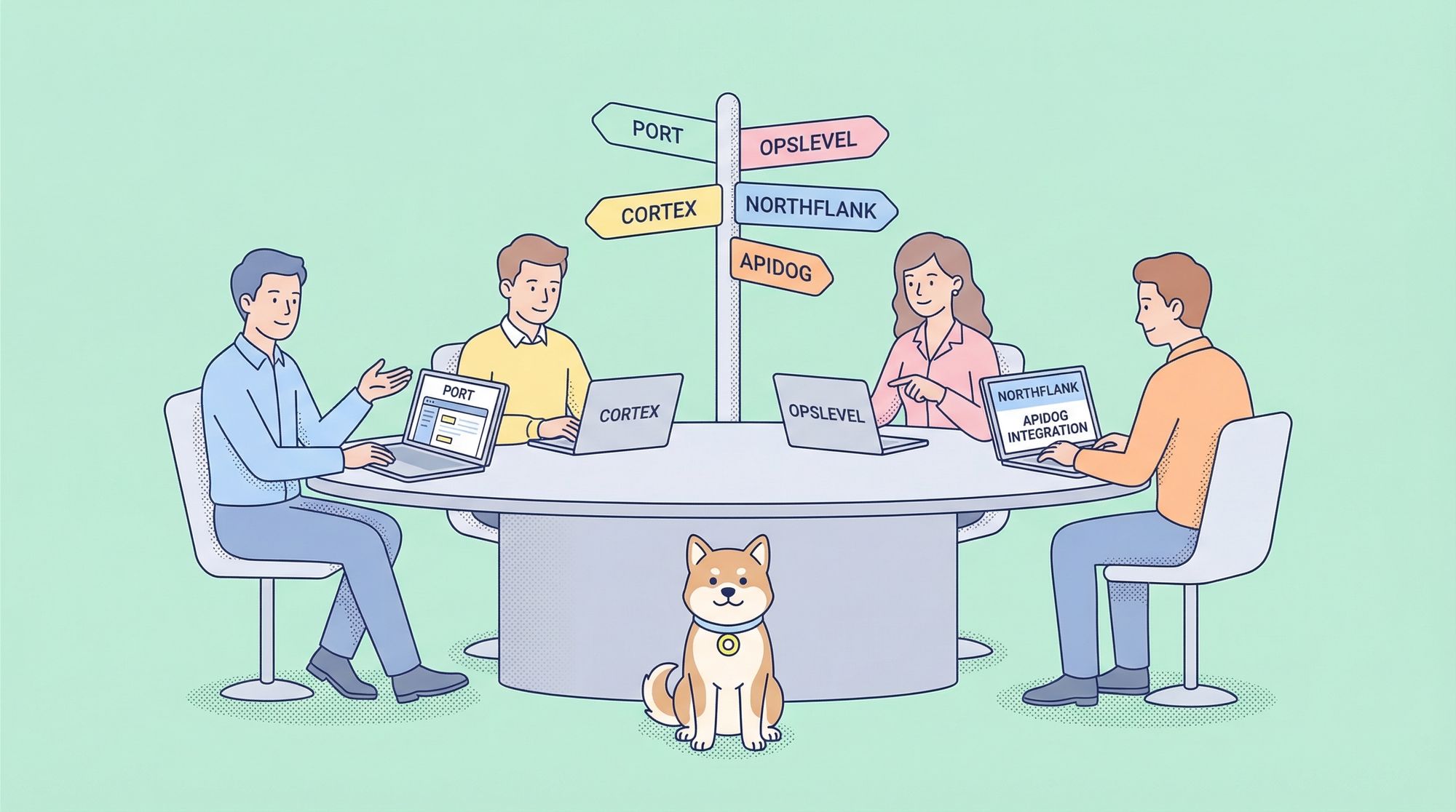
Let’s break down the leading Backstage alternatives, highlighting their core features, target use cases, and how they compare to Backstage.
1. Port
Overview:
Port is a no-code internal developer portal designed for rapid deployment and easy customization. Unlike Backstage’s framework-based approach, Port offers a SaaS solution with drag-and-drop blueprints, ready-made integrations, and a visual UI for cataloging services, APIs, and infrastructure resources.
Key Features:
- No-code setup for service catalogs and workflows
- Out-of-the-box integrations with CI/CD, cloud, and monitoring tools
- Role-based access controls and audit trails
- Visual dependency mapping and documentation
Best For:
Organizations seeking a fast, low-maintenance path to a developer portal, especially if they lack extensive front-end expertise.
2. OpsLevel
Overview:
OpsLevel offers a fully managed SaaS developer portal focusing on service ownership, scorecards, and engineering standards. It uses automated catalog updates and AI-powered suggestions to keep service data fresh and actionable.
Key Features:
- Automated discovery and cataloging of services
- Engineering scorecards and operational maturity tracking
- Deep integrations with CI/CD, incident management, and observability tools
- Self-service onboarding for new services
Best For:
Teams who want to enforce engineering best practices and maturity standards without heavy portal maintenance.
3. Cortex
Overview:
Cortex is a commercial developer portal with strong emphasis on service health, standards enforcement, and visibility. Its scorecards and reporting features help teams track reliability, ownership, and compliance across microservices.
Key Features:
- Service catalog auto-populated from code repositories
- Scorecards for service health, security, and compliance
- Customizable dashboards and reporting
- Integration with major DevOps tools
Best For:
Engineering organizations focused on reliability, compliance, and service ownership.
4. Northflank
Overview:
Northflank is more than a developer portal—it’s a unified platform for building, deploying, and running services, databases, and jobs. It combines deployment automation, infrastructure management, and service cataloging in a seamless interface.
Key Features:
- Built-in CI/CD and deployment automation
- Centralized service catalog and documentation
- Multi-cloud support and infrastructure orchestration
- Real-time monitoring and scaling
Best For:
Teams who want a one-stop shop for both portal visibility and infrastructure operations, reducing tool sprawl.
5. Cycloid
Overview:
Cycloid combines a developer portal with GitOps-style infrastructure automation, FinOps, and GreenOps features. Its platform focuses on governance, cost management, and environmental impact alongside cataloging.
Key Features:
- GitOps automation for infrastructure deployment
- Cost and sustainability monitoring
- Service and resource catalog
- RBAC and policy enforcement
Best For:
Organizations with complex infrastructure and a focus on cost, sustainability, and compliance.
6. Roadie
Overview:
Roadie offers a fully managed, hosted Backstage experience. It removes the operational burden of self-hosting Backstage while providing customization, plugin support, and commercial SLAs.
Key Features:
- Hosted Backstage with automated upgrades
- Plugin marketplace and custom integrations
- Support and onboarding for teams new to Backstage
- Security, authentication, and access controls
Best For:
Teams who want Backstage’s flexibility, but don’t want the hassle of running it themselves.
Comparing Backstage Alternatives: Key Evaluation Criteria
When choosing between Backstage alternatives, consider these critical factors:
- Implementation Timeline:
How quickly can your team deploy and start using the portal? SaaS solutions like Port and OpsLevel offer immediate value, while frameworks like Backstage or hybrid approaches take longer.
- Maintenance Requirements:
Who will maintain the platform long term? Open-source or self-hosted solutions require dedicated resources; managed SaaS alternatives reduce this burden.
- Integration Capabilities:
Does the portal integrate smoothly with your existing tools (CI/CD, monitoring, ticketing, cloud providers, API management tools like Apidog)?
- Customization and Extensibility:
Do you need no-code configuration, or deep customization with plugins and APIs?
- Cost Structure:
Consider not just licensing, but also operational costs, engineering time, and opportunity costs of slower rollout.
Real-World Applications of Backstage Alternatives
Example 1: Fast-Growing SaaS Company
A SaaS company with 100+ microservices outgrows tribal knowledge and struggles to onboard new engineers. They try Backstage, but the setup stalls due to limited React expertise and the need for rapid time-to-value.
Solution: They switch to OpsLevel, which auto-discovers services, enforces scorecards, and integrates with their CI/CD pipeline in days, not months. The result: faster onboarding, higher engineering standards, and more productive teams.
Example 2: Cloud-Native Enterprise
A cloud-native enterprise wants to unify deployment, monitoring, and documentation for their distributed teams. Their legacy portal is outdated, and Backstage’s maintenance overhead is too high.
Solution: They adopt Northflank, which combines deployment automation, service cataloging, and real-time monitoring in a single platform. This all-in-one approach streamlines DevOps workflows and reduces tool fatigue.
Example 3: API-First Organization Using Apidog
An API-first company needs a developer portal tightly integrated with their API management process. They use Apidog for API design, documentation, and testing.
Solution: By choosing a Backstage alternative with deep API integrations (e.g., Port or Cortex), they sync their Apidog-generated documentation and service definitions directly into the developer portal. This ensures APIs are discoverable, up-to-date, and developer-friendly—while saving time compared to manual cataloging.
How Apidog Enhances Backstage Alternatives
Backstage alternatives are most powerful when paired with robust API development tools. Apidog stands out as a spec-driven API platform that helps teams:
- Design, Mock, and Document APIs:
Use Apidog to create and maintain OpenAPI specs, mock endpoints, and generate interactive documentation—assets easily integrated into developer portals.
- Import and Sync API Data:
Apidog’s export and import capabilities (Swagger, Postman, etc.) mean you can keep your service catalog in sync with real API changes.
- Centralize API Workflows:
Whether your portal is built on Backstage, Port, or another alternative, Apidog ensures API definitions and documentation are always accessible and current, powering a seamless developer experience.
By integrating Apidog with your chosen Backstage alternative, you bridge the gap between API design and developer portal visibility, boosting collaboration and reducing errors.
Conclusion: Choosing the Right Backstage Alternative
The era of monolithic developer portals is over. Modern engineering teams demand flexible, scalable, and easy-to-use solutions. As we've seen, Backstage alternatives offer a spectrum of choices—from turnkey SaaS offerings like Port and OpsLevel, to unified platforms like Northflank, to hybrid managed Backstage options like Roadie.
When selecting a Backstage alternative, focus on your team's unique needs: speed to launch, maintenance capabilities, integration depth, and extensibility. Don’t overlook the value of integrating with best-in-class API tools like Apidog for a truly developer-centric experience.