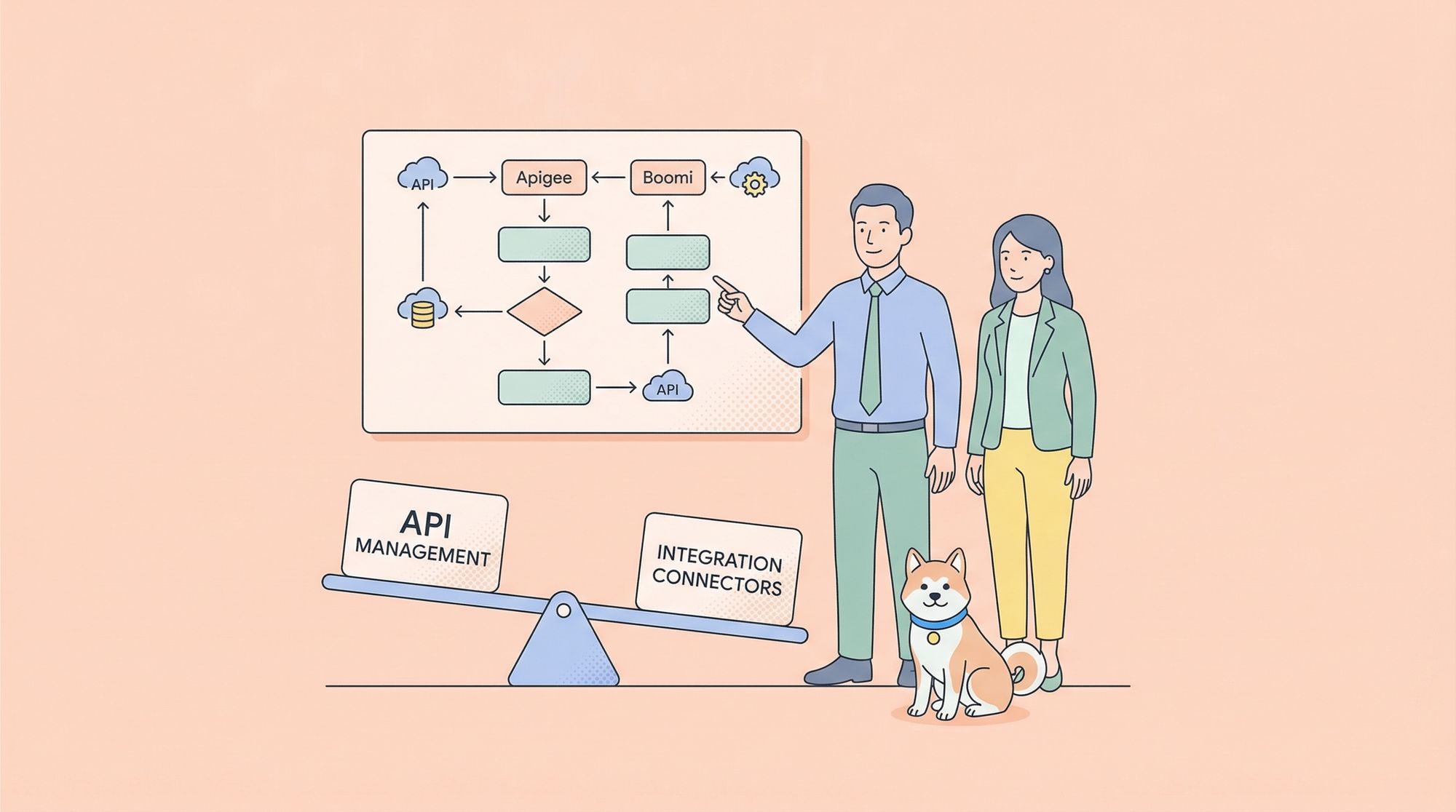
In a rapidly evolving digital world, businesses must choose the right tools for managing APIs and integrating systems. "Apigee vs Boomi" is a hot topic for IT leaders, API developers, and architects who want to optimize connectivity, security, and scalability. This article dives deep into Apigee vs Boomi, comparing their core features, architecture, use cases, and practical applications—helping you make an informed choice for your API integration journey.
What Does "Apigee vs Boomi" Mean, and Why Does It Matter?
When comparing Apigee vs Boomi, you're evaluating two leading platforms that solve critical but distinct challenges in the API and integration space:
- Apigee (by Google Cloud): Primarily an API Management platform that enables enterprises to design, secure, deploy, monitor, and analyze APIs through their full lifecycle.
- Boomi (by Dell Technologies): An Integration Platform as a Service (iPaaS) that focuses on connecting disparate applications, data sources, and cloud/on-premises systems, with some API management capabilities.
The "Apigee vs Boomi" debate is significant because choosing the right platform can impact your organization's agility, security, cost, and ability to innovate via APIs and system integration. Whether you're building microservices, connecting SaaS apps, or modernizing legacy systems, understanding the differences between Apigee vs Boomi is essential.
Apigee vs Boomi: Core Feature Comparison
API Management Capabilities
Apigee:
- Comprehensive API lifecycle management (design, deploy, secure, monitor, analyze)
- Robust traffic management, rate limiting, quotas, API security (OAuth, API keys, JWT)
- In-depth analytics for API usage and performance
- Developer portal for API documentation and onboarding
- Supports REST, SOAP, GraphQL, gRPC, OData
Boomi:
- API management as part of a broader integration suite
- Centralized API governance via the Boomi API Control Plane
- Supports REST and SOAP APIs, with some API gateway features
- Developer portal with simplified self-service UI
- API versioning and policy management
Key Takeaway:
In Apigee vs Boomi, Apigee is the clear leader in API management depth, whereas Boomi offers API management as a component of broader integration capabilities.
Integration Capabilities
Apigee:
- Focused on API management—not a full integration suite
- Integrates with Google Cloud ecosystem and supports hybrid deployments
Boomi:
- iPaaS platform enabling application, data, and B2B integration
- Over 1,500 pre-built connectors for SaaS, on-prem, and cloud systems
- Drag-and-drop low-code interface for building integrations
- Workflow automation and orchestration
Key Takeaway:
Boomi excels in integration breadth and rapid connectivity, while Apigee is specialized for API management.
Architecture & Deployment
| Feature | Apigee | Boomi |
|---|---|---|
| Hosting | Cloud-native (GCP), Hybrid | Cloud-based, Hybrid (Atoms) |
| Scaling | Auto-scaling on Google Cloud | Distributed via Atoms, optimized for mid-size workloads |
| Customization | Advanced policies, extensibility via plugins | Extensive pre-built connectors, customizable pipelines |
| Vendor Lock-In | Closely tied to Google Cloud | More flexible, but Boomi ecosystem-centric |
Developer Experience
- Apigee: Google-backed documentation, user-friendly UI for API design/testing, robust analytics, supports OpenAPI/Swagger imports.
- Boomi: Drag-and-drop UI, low-code development, learning curve for complex integrations, extensive documentation.
Security & Compliance
- Apigee: Enterprise-grade API security (OAuth, SAML, encryption), traffic management, threat protection, audit logging.
- Boomi: API policies, encryption, role-based access, compliance with key standards.
Pricing & Cost Structure
- Apigee: Subscription-based, costs scale with API traffic and premium features (analytics, security).
- Boomi: Usage-based pricing, costs depend on number of connectors, integrations, and complexity.
Apigee vs Boomi: Practical Examples and Use Cases
When to Choose Apigee
- Scenario: A fintech company needs robust API management to expose secure, scalable APIs to partners and developers, with detailed analytics and traffic control.
- Why Apigee Wins: Full API lifecycle tools, advanced security, and developer onboarding via portals make Apigee ideal for API-first organizations.
Example:
A healthcare SaaS provider uses Apigee to manage FHIR APIs, ensuring HIPAA-compliant access, rate limiting, and granular analytics for third-party app developers.
When to Choose Boomi
- Scenario: A retail enterprise must rapidly connect dozens of SaaS apps (Salesforce, SAP, NetSuite) and on-prem systems, automating data flows and workflows.
- Why Boomi Wins: Boomi’s iPaaS excels in integration, with drag-and-drop building, ready-made connectors, and API exposure as an added benefit.
Example:
A logistics firm uses Boomi to integrate shipment data from legacy ERP to cloud-based CRM and expose select data via Boomi’s API gateway for partners.
Hybrid Use Case: Integrating Apigee and Boomi
Some organizations leverage both platforms—using Boomi for system integration and workflow automation, then managing and securing their public APIs with Apigee. This approach provides best-in-class integration and API management.
Apigee vs Boomi: Side-by-Side Feature Table
| Feature | Apigee | Boomi |
|---|---|---|
| Primary Focus | API Management | Application/Data Integration (iPaaS), API Management |
| API Lifecycle Management | Full support | Partial, part of integration suite |
| Integration Breadth | Limited (API-centric) | Extensive (apps, data, B2B, EDI, API) |
| Pre-built Connectors | Few (focus on APIs) | 1,500+ connectors |
| Developer Portal | Integrated, customizable | Simple UI, less customizable |
| Security | Advanced (OAuth, JWT, SAML, threat protection) | API policies, encryption, compliance |
| Analytics | In-depth, real-time | Basic API analytics, advanced integration analytics |
| Pricing | Subscription, traffic-based | Usage-based, connector/integration-based |
| Cloud Support | GCP-native, hybrid | Cloud, hybrid, on-premises via Atoms |
| Learning Curve | Moderate (API-focused) | Low for basic, higher for complex integrations |
Apigee vs Boomi: Real-World Selection Criteria
1. API-First vs Integration-First Approach
- API-First: Choose Apigee if your business revolves around exposing, securing, and monetizing APIs at scale.
- Integration-First: Choose Boomi if you need to connect many different systems, automate workflows, and only occasionally expose APIs.
2. Scalability and Performance
- High API Volume: Apigee is optimized for large-scale, high-traffic API ecosystems.
- Integration Workloads: Boomi is well-suited for orchestrating data flows and connecting SaaS/on-prem systems but may not match Apigee’s high-traffic API performance.
3. Ecosystem Alignment
- Google Cloud Users: Apigee’s tight GCP integration is a plus.
- Multi-Cloud or Hybrid: Boomi’s Atoms support diverse environments.
4. Developer Experience and Team Skillset
- API Designers: Apigee offers API-first design and testing workflows, compatible with tools like Apidog for spec-driven development and documentation.
- Integration Builders: Boomi’s drag-and-drop interface empowers business analysts and integrators with low-code capabilities.
Apigee vs Boomi: How Apidog Fits Into the Picture
During your Apigee vs Boomi evaluation, you’ll need robust API design, testing, and documentation tools. Apidog naturally complements both platforms by:
- Allowing you to design and prototype APIs before deploying to Apigee or Boomi
- Importing/exporting OpenAPI/Swagger files for seamless collaboration
- Generating interactive online API documentation for developer portals
Whether you pick Apigee for management or Boomi for integration, Apidog boosts your productivity and ensures consistent API quality across platforms.
Apigee vs Boomi: Frequently Asked Questions
Q: Can Boomi replace Apigee for API management?
A: Boomi includes basic API management but lacks the depth of Apigee. For advanced API security, analytics, and full lifecycle management, Apigee is superior.
Q: Is Apigee suitable for complex integrations?
A: Apigee is not a full iPaaS. For complex workflows and broad system integration, Boomi is better suited.
Q: Can I use both Apigee and Boomi together?
A: Yes! Many enterprises use Boomi to integrate systems and Apigee to manage and secure APIs, leveraging each platform’s strengths.
Conclusion: Apigee vs Boomi – Which Should You Choose?
The "Apigee vs Boomi" choice depends on your organization’s priorities:
- Select Apigee if API management, security, analytics, and developer experience are mission-critical.
- Select Boomi if you need to rapidly integrate many applications, automate data flows, and occasionally expose APIs.
For many enterprises, a hybrid approach delivers the best of both worlds. Regardless of your platform, integrating tools like Apidog into your workflow ensures you can design, document, and test APIs with maximum efficiency.