Introduction: The Strategic Leap from API Tool to AI Oriented Platform
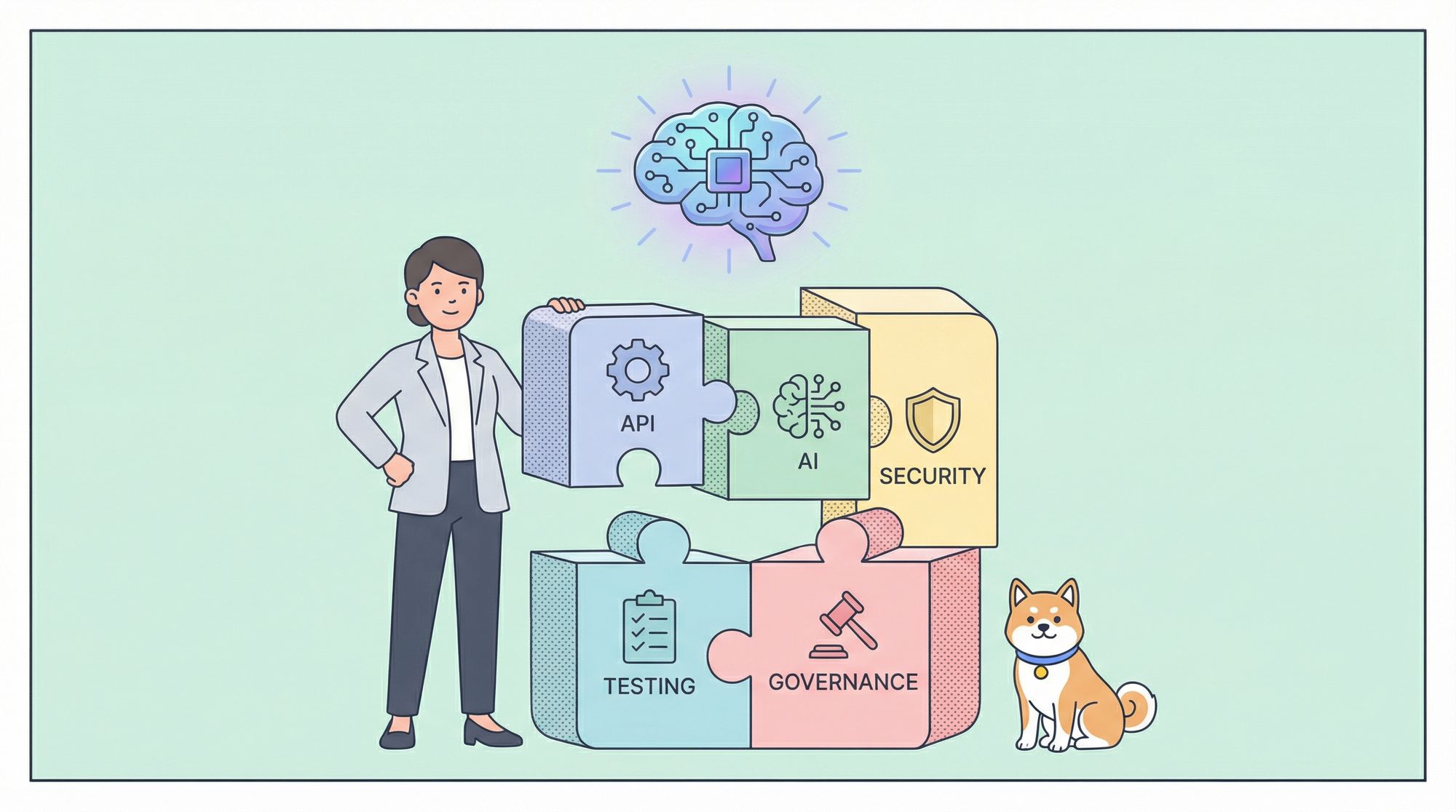
The year 2025 marks a pivotal transformation for Apidog, signifying its strategic evolution from a proficient "API tool" into a comprehensive "AI-powered API Collaboration and Quality Platform." This leap is not merely an incremental enhancement of features but a fundamental reimagining of the API lifecycle, designed to address the complex challenges faced by modern, large-scale engineering organizations. The core purpose of this document is to detail the key technological breakthroughs that enable this evolution, focusing on three foundational pillars: the maturation of an enterprise-grade API Contract Governance system, the deep integration of an AI-native engine across the entire API lifecycle, and a significant upgrade to the Automated Testing System. This analysis will provide technical decision-makers and development teams with a clear understanding of how these advancements deliver tangible value, enabling the successful implementation of API-first methodologies in demanding engineering environments.
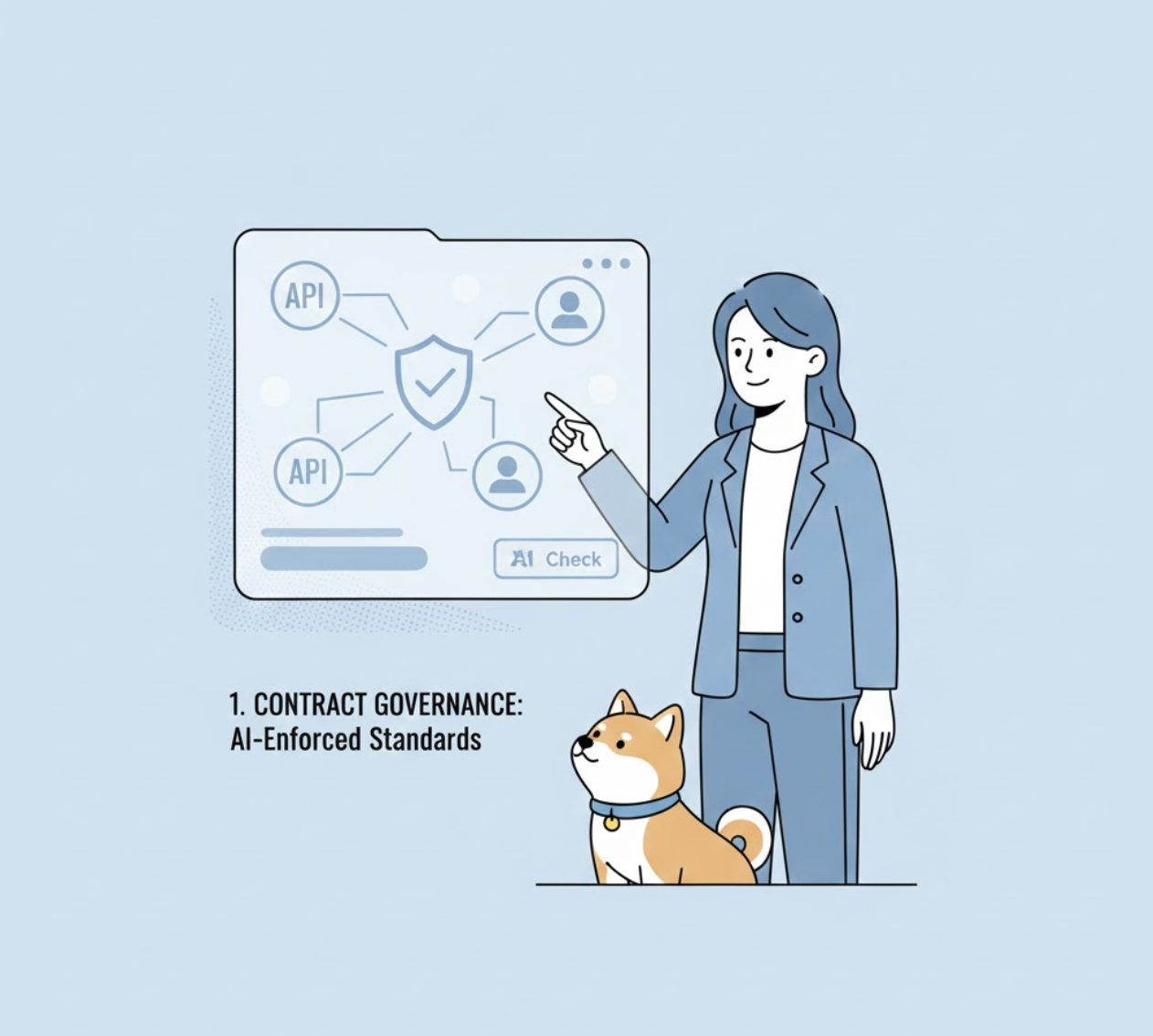
Breakthrough 1: Maturation of the API Contract Governance System
Robust API Contract Governance is the bedrock of a successful API-first strategy. Moving "API-first" from an aspirational slogan to an executable engineering discipline is the primary challenge for modern development teams. In 2025 Apidog's updates directly address this by introducing a suite of features that institutionalize quality, ensure interoperability, and provide the stability required to replace ad-hoc internal processes. This system provides a platform-level foundation for designing, versioning, and collaborating on APIs at scale.
1.1 From Design Guidelines to Standardized Governance
Apidog now institutionalizes API design quality by moving beyond informal conventions to codified standards. The introduction of Endpoint Design Guidelines allows organizations to define and enforce their specific API style guides directly within the platform. To ensure these standards are met, Apidog leverages artificial intelligence to automatically check endpoint compliance against the defined guidelines. This AI-powered review process acts as a crucial quality gate, preventing low-quality or non-compliant API contracts from entering the development workflow and accumulating technical debt.
1.2 Comprehensive OpenAPI Specification Support
Full compatibility with the OpenAPI Specification is a non-negotiable requirement for enterprise adoption, ensuring seamless integration with a wide array of third-party tools and systems. In 2025, Apidog achieved industry-leading compatibility, capable of handling complex and nuanced API definitions.
Security Scheme: Full support for defining and exporting all OpenAPI Security Schemes (e.g., API Keys, HTTP Auth, OAuth 2.0, OpenID Connect) during import/export, which is critical for enforcing enterprise-grade security contracts.
Multiple Request/Response Examples: Achieved full OAS compatibility by supporting multiple examples for request bodies and responses across various media types, including JSON, XML, Raw, and MsgPack, ensuring comprehensive testing and documentation.
OpenAPI 3.2 Sequential Media Types (SSE Streaming): World's first platform to support API design and documentation for OpenAPI Spec 3.2's Sequential Media Types. This breakthrough enables standard documentation for SSE (Server-Sent Events) streaming responses, a critical format used by AI large language models, providing unmatched documentation clarity for stream-based APIs.
Status Code Ranges: Full support for defining response codes using ranges such as $2XX$, $4XX$, $5XX$, and default, providing greater flexibility in contract definition.
Response Components: Full support for defining and reusing response components during import and export operations, promoting modular and maintainable API designs.
Advanced Schema Composition: Achieved industry-leading compatibility with complex polymorphism patterns using allOf and discriminator, enabling the accurate modeling of sophisticated data structures.
Webhook & Callback Support: Added full support for defining and documenting Webhooks and Callbacks, enabling comprehensive documentation of asynchronous API interaction patterns.
1.3 Modularization and Version Control for Scalability
To support large, complex projects, Apidog's architecture promotes modularization and is underpinned by robust version control. This allows teams to break down monolithic API definitions into manageable, domain-specific components that can be developed and versioned independently.
Project Modules: Projects can be organized using Modules, where each module corresponds to a distinct OpenAPI file. This structure simplifies management and improves clarity for large API landscapes.
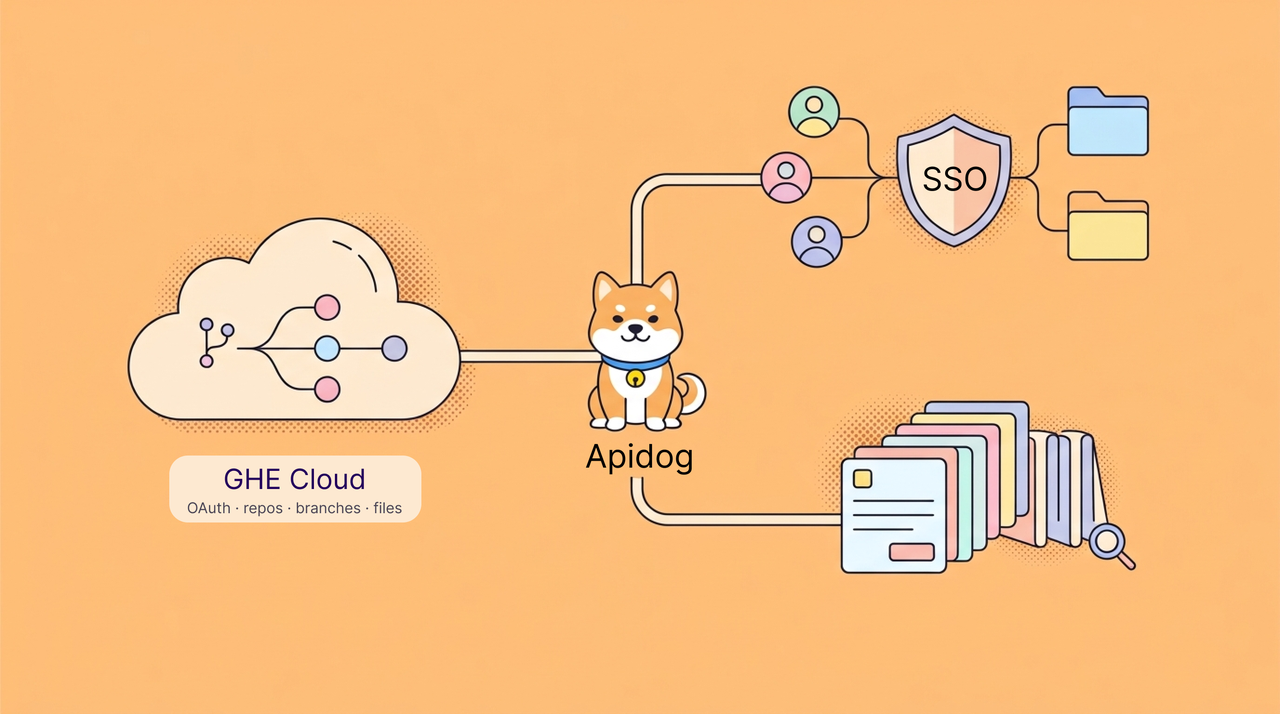
Git Integration: Each module's OpenAPI file can be automatically backed up to a dedicated GitHub, GitLab, or Azure DevOps repository. This integration ensures API contract management is directly incorporated into existing Git-based workflows, providing a critical feature favored by large enterprise customers.
Version Selection: During project data import and export, teams can now select specific API versions, providing granular control over which iteration of a contract is being used or shared.
1.4 Reliable Branching and Collaboration Workflow
For teams working in parallel sprints, stable and predictable branching is critical. Apidog has significantly enhanced its branching model to make the collaboration process "controllable and dependable," ensuring that concurrent development streams do not interfere with one another.
Sprint Branch Administration: Teams can now assign dedicated branch administrators responsible for reviewing Merge Requests, formalizing the code review process for API changes.
Protected Branch Controls: New configuration options allow team leads to specify whether branch admins have permission to directly modify protected branches, adding a crucial layer of governance to prevent unauthorized changes.These governance features provide a platform-level stability robust enough to replace brittle, custom-built internal solutions, establishing the disciplined contract-first foundation upon which AI can build intelligence.
Breakthrough 2: The AI-Native API Lifecycle Engine
In 2025 Apidog's integration of artificial intelligence represents a paradigm shift. AI is no longer a peripheral "assistant" but a core "lifecycle engine" deeply woven into the design, contract, testing, and debugging phases. This native integration is designed to drastically reduce redundant manual work, proactively improve quality, and accelerate the entire development process from conception to deployment.
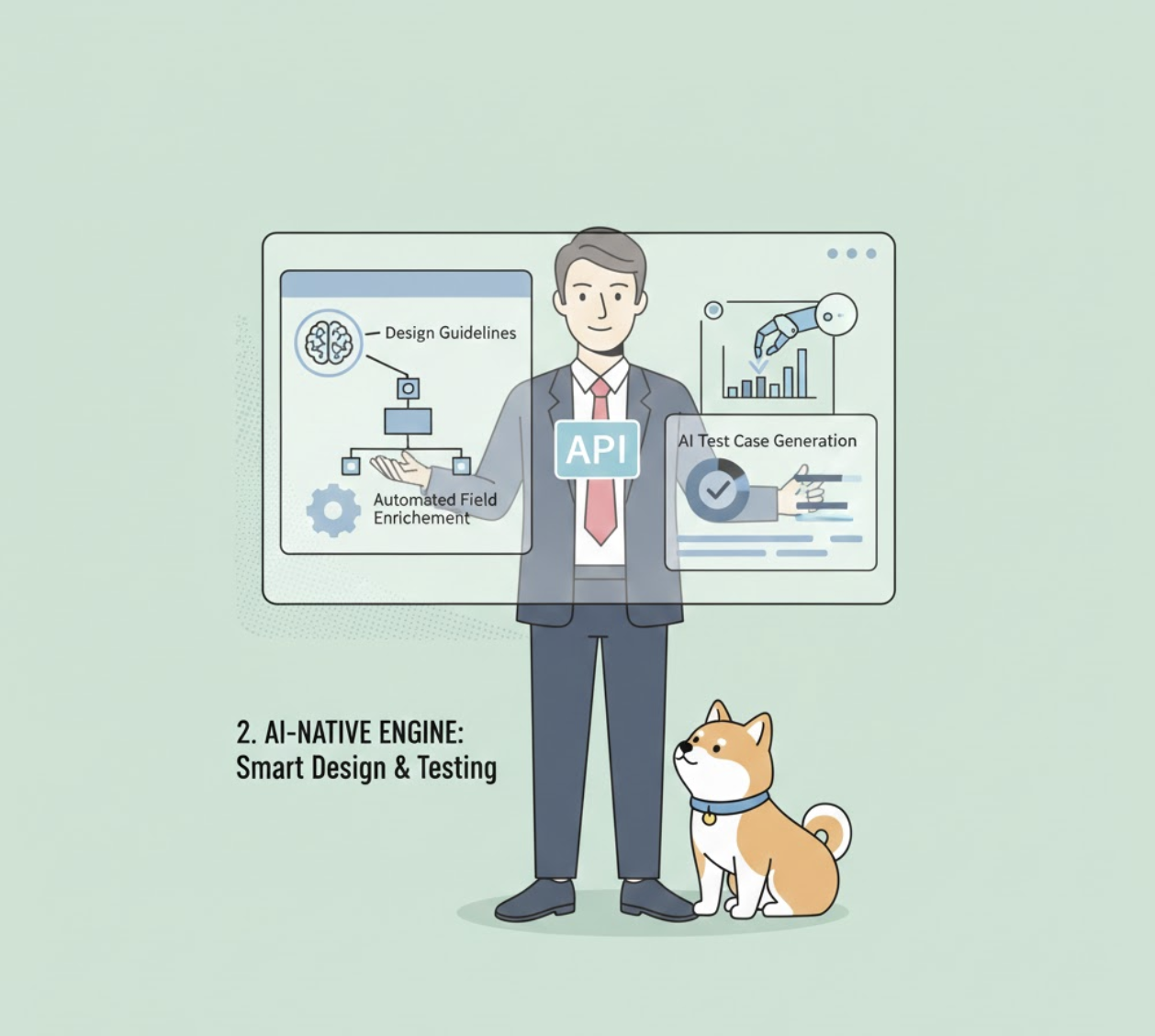
2.1 AI Test Case Engine
The AI Test Case Engine transforms the Quality Assurance process by automating the labor-intensive task of creating comprehensive test suites. This significantly reduces the repetitive work for QA engineers, front-end developers, and back-end developers alike. The generation process is refined and interactive:
The AI first generates a high-level list of test cases, complete with descriptions, based on the API contract.
Users can review and re-edit this list, adding, removing, or modifying proposed test cases before committing to the full generation.
The engine can also generate additional test cases based on an existing test cases, intelligently analyzing the coverage gaps and automatically supplementing potential edge cases that may have been missed.
2.2 AI Schema Builder
During the critical API design and documentation phase, the AI Schema Builder acts as an intelligent partner to the developer, accelerating the creation of clear, consistent, and well-documented API contracts.
Automated Field Enrichment: The AI can automatically complete field descriptions based on their names and context, as well as generate realistic mock data and examples.
Intelligent Naming & Optimization: It assists developers in generating clear and consistent parameter names and helps ensure overall contract consistency, adhering to best practices.
2.3 AI-Enhanced Debugging Experience
With specialized features for debugging the unique challenges of streaming and AI-related endpoints, Apidog is now the primary tool for developers to validate the behavior of Large Language Models (LLMs) and other AI-driven services.
SSE/LLM Stream Processing: For Server-Sent Events (SSE), a protocol common in LLM responses, Apidog automatically merges the streaming message content into a coherent, readable format.
Advanced Visualization: The merged content can be rendered as Markdown for easy reading. For reasoning models like DeepSeek R1, it can even display the underlying inference chain, offering unparalleled insight into the model's behavior.
2.4 Multi-Model and Local Inference Ecosystem
Recognizing the diverse AI landscape, Apidog provides a flexible and open platform that does not lock users into a single model provider. This ecosystem approach empowers teams to use the best tool for the job.
Cloud Model Providers: The platform supports custom API Keys for major providers like OpenAI and DeepSeek, allowing teams to leverage their existing accounts and subscriptions.These features transform AI from a helpful utility into a core engine of the development lifecycle, directly feeding a new level of intelligence and efficiency into the automated testing system.
Breakthrough 3: Enterprise-Grade Automated Testing System
For mature engineering organizations, automated testing is not just about execution—it's about governing quality and mitigating release risk. In 2025, Apidog's testing system evolved beyond simple test running to become an enterprise-grade quality governance framework, focusing on coverage, cross-environment consistency, and long-term maintainability.
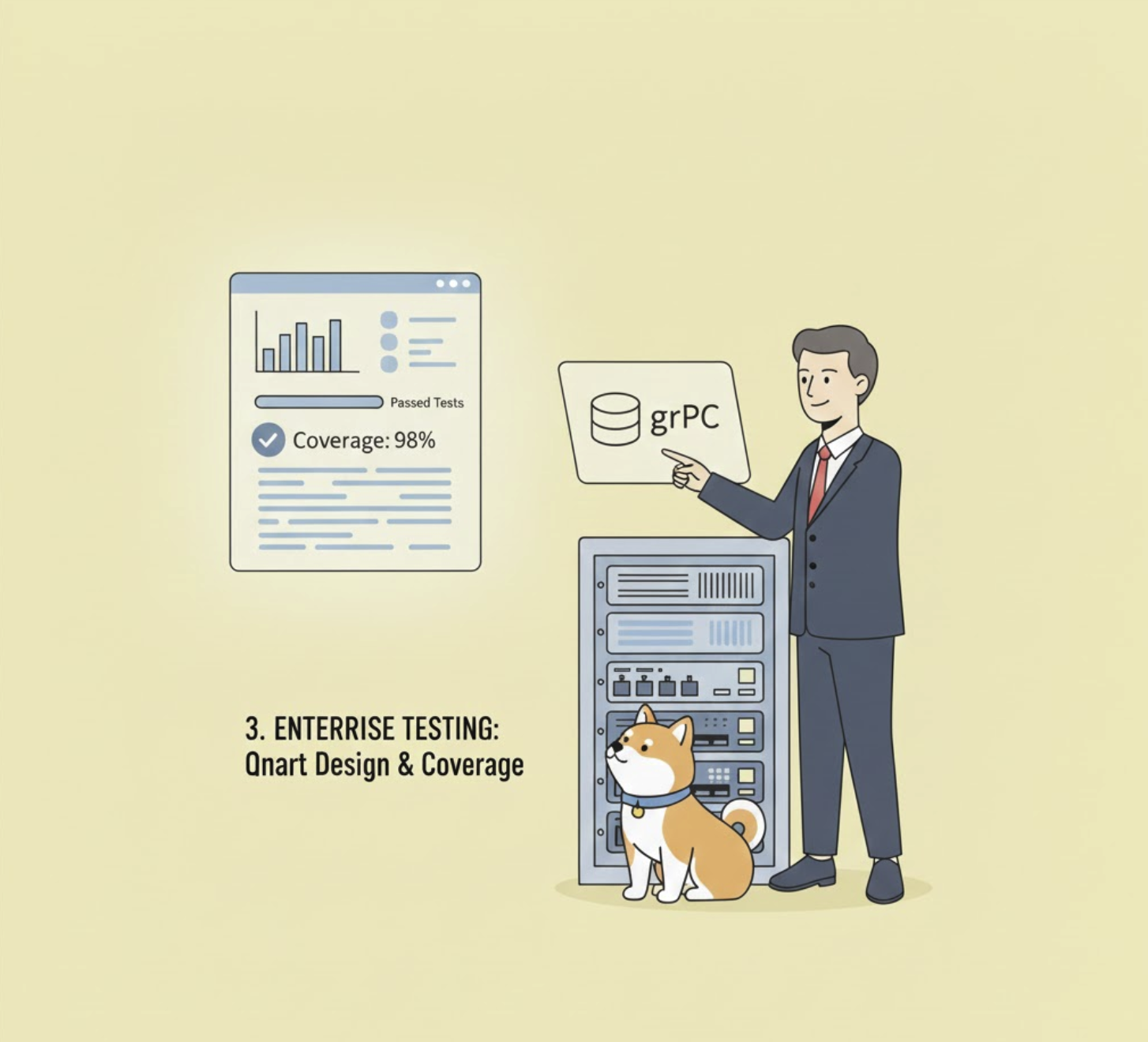
3.1 A Complete API Testing Workflow
Apidog provides a fully connected and manageable testing chain. This clear, end-to-end structure allows teams to trace the entire lifecycle of an automated test, from its smallest component to its scheduled execution.Test Case → Test Scenario → CICD/Scheduled TaskThis logical flow ensures that all aspects of the testing process are integrated within a single platform, eliminating the need to stitch together multiple disparate tools.
3.2 Scalable Test Management and Execution
As test suites grow, managing them effectively becomes a primary challenge. Apidog has introduced several features specifically designed to enable teams to manage testing at scale.
| Capability | Benefit for Scaled Teams |
| Test Case Tagging & Categories | Simplifies the organization and filtering of large test suites, allowing for targeted test runs. |
| Bulk Editing of Test Scenarios | Dramatically increases maintenance efficiency by allowing changes to be applied across multiple tests at once. |
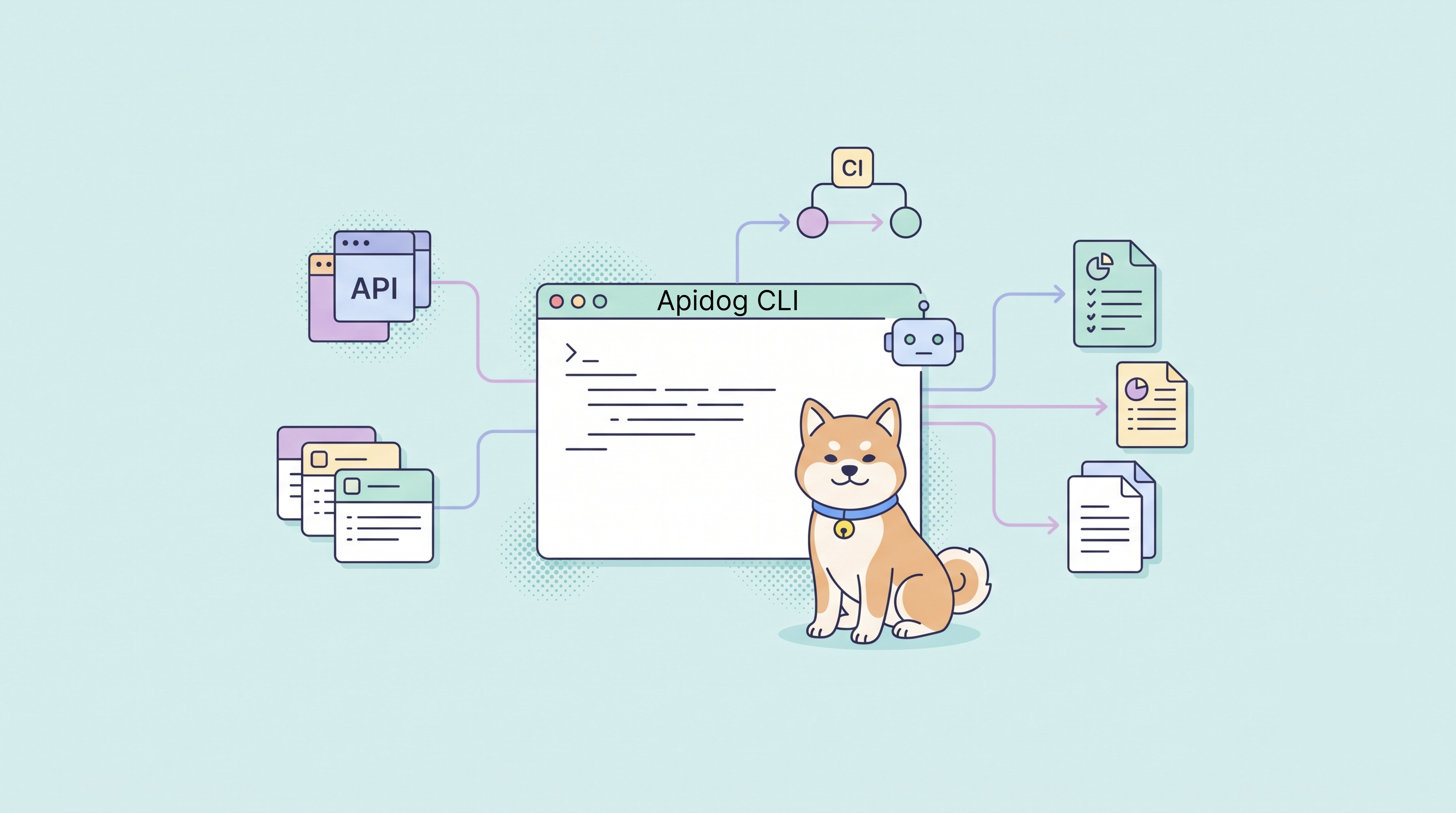
| Cross-Environment Execution with CLI | Ensures tests behave consistently across development, staging, and production by allowing local "current values" to be passed via the CLI, enabling seamless CI/CD integration. |
| Configurable Response Validation | Allows teams to selectively enable or disable response validation for different run types (e.g., disable for smoke tests, enable for regression tests). |
3.3 Enhanced Execution and Reporting
The test runner and reporting tools have been upgraded with professional-grade features that cater to the detailed workflows of dedicated QA teams.
Expanded Database Operations: Tests can now directly interact with a wider range of databases, including full support for MySQL, PostgreSQL, and MongoDB, enabling more comprehensive end-to-end validation.
More Professional Reports: Reports now include categorized result counts for clearer summaries, the ability to search for specific steps by ID for faster debugging, and a non-blocking UI that remains responsive even when handling large response bodies.
Informative Webhook Notifications: When tests are run via CI/CD, Webhook notification payloads now include the environment name, providing essential context to external systems like Slack or incident management platforms.The Apidog testing system is now a mature and robust solution for implementing and governing quality assurance processes, supported by a comprehensive suite of debugging tools for all API interactions.
Breakthrough 4: Comprehensive Protocol and Edge-Case Debugging
Developer productivity is directly eroded by tool-switching. A platform that forces a context switch to handle a niche protocol is a platform with a critical flaw. In 2025, Apidog achieved comprehensive protocol coverage to eliminate this friction, solidifying its position as an indispensable, all-in-one debugging hub.
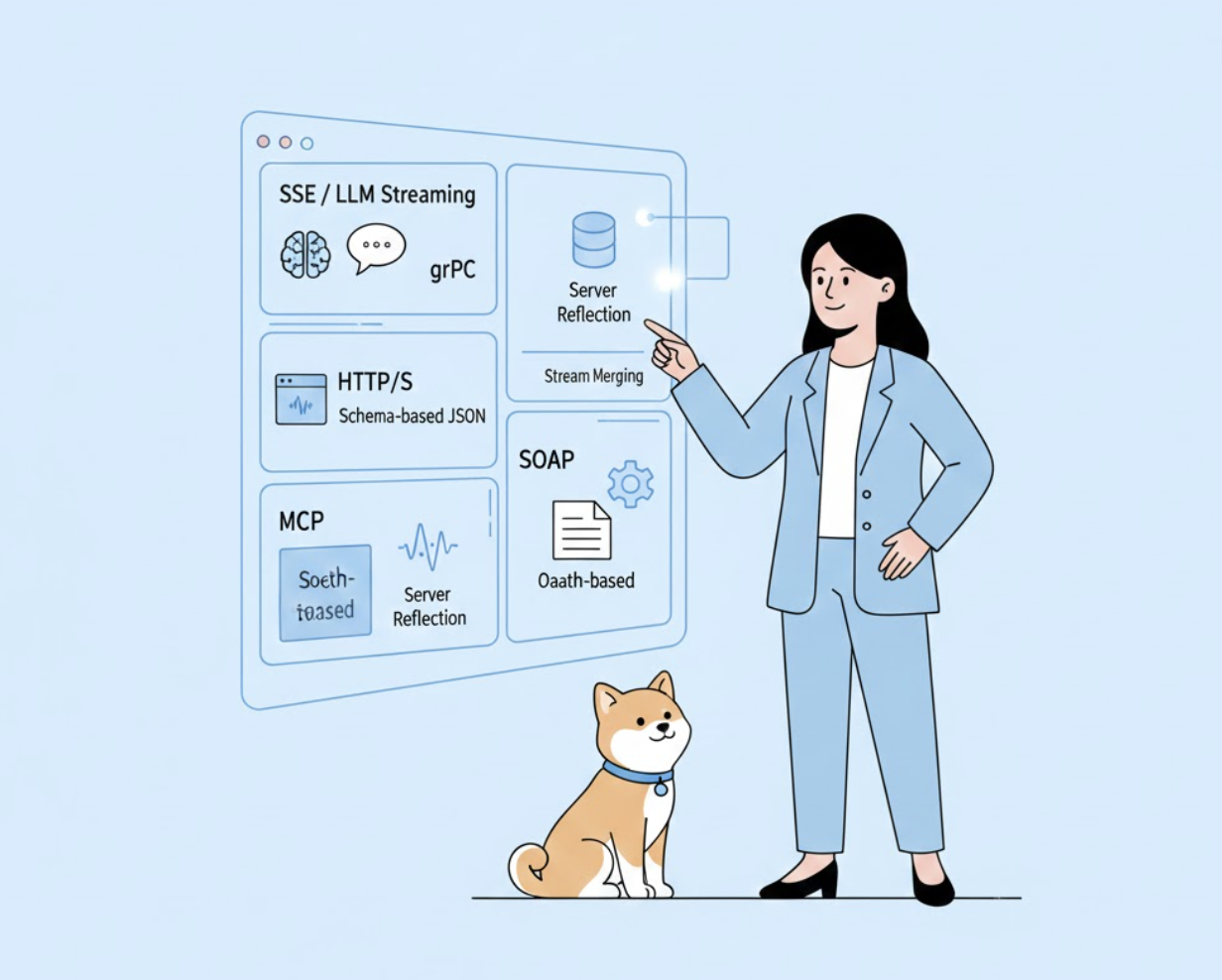
MCP (Model Context Protocol)
Apidog now functions as a robust MCP Client, supporting debugging for both STDIO and Streamable HTTP (displayed as HTTP in the interface) MCP Servers. We ensure compatibility with major industry standards, supporting the three core server functionalities: Tools, Prompts, and Resources (with priority on Tools). This feature includes support for configuring Environment, Headers, and Auth, along with:
Automatic Parsing of MCP Server configuration from the address bar.
Auto-filling OAuth 2.0 information for OAuth-secured MCP Servers.
Enhanced Debugging: Unlike competitors (Postman, Insomnia) which dropped SSE support, Apidog retains strong support for debugging SSE Servers, meeting the specific needs of large customers.
HTTP/S
Schema-based JSON auto-completion is now available during debugging, preventing typos and accelerating request composition.
Support for defining and switching between multiple request body examples, making it easy to test various payloads.
OAuth 2.0 tokens can be set as local "current values," preventing sensitive credentials from being shared with the team when the project is synchronized.
SSE / LLM Streaming
Automatic merging of streaming SSE responses with full Markdown rendering, making it easy to read and validate LLM outputs.
Advanced visualization of inference chains for reasoning models, providing deep insight into the AI's decision-making process.
Native debugging for NDJSON (Newline Delimited JSON) streaming responses, a common format for data-intensive applications.
Socket.IO
Full support for sending multiple parameters and handling acknowledgements (ack), covering more complex real-time communication scenarios.
Multiple stability fixes have been deployed to ensure reliable debugging across various edge cases.
gRPC
Endpoints can be imported directly from a running server via server reflection, simplifying setup and ensuring the client is always in sync with the service.
Support for pre/post-processors (e.g., assertions, variable extraction) during debugging, bringing gRPC testing capabilities in line with REST.
Correct handling of metadata and projects with multi-package structures, resolving key pain points for complex gRPC applications.
SOAP
Legacy SOAP-based systems can be easily migrated into Apidog, as the platform now supports importing projects directly from a WSDL URL.This full-stack protocol support solidifies Apidog as a single, indispensable debugging hub for modern development teams, whose power is managed and governed at an organizational level.
Breakthrough 5: Enterprise-Ready Organizational Governance
The year 2025 marks Apidog's maturation from a powerful "personal tool" into a true "organizational API platform." This transition required a systematic focus on the security, compliance, and collaborative needs of large, distributed teams. The platform now provides the administrative controls and governance features necessary to operate securely and efficiently at an enterprise scale.

5.1 Advanced Security and Access Control
Apidog has introduced a suite of features designed to meet stringent enterprise security and compliance requirements, giving administrators granular control over access and data.
Team Variables: These function as secure, cross-project variables, allowing teams to manage shared secrets and configurations without hardcoding them into individual requests.
IP Allowlist: Platform access can be restricted to a list of trusted IP ranges, ensuring that sensitive API information can only be accessed from corporate networks or approved locations.
Custom Roles & Billing Manager: Organizations can now create custom roles with granular permissions. A dedicated, non-seat-consuming "Billing Manager" role has also been added to allow finance personnel to manage subscriptions without needing full platform access.
Real-time Collaboration: To support seamless teamwork, global variables now update in real-time for all online users, preventing stale configurations and collaborative conflicts.
5.2 Sophisticated Documentation Governance
Apidog empowers organizations to create and manage professional, secure, and highly customized developer portals that serve as the public face of their APIs.
Access Management: Documentation access can be controlled through custom login configurations and Email Allowlists, ensuring that only authorized users can view sensitive API information.
Branding & Customization: Developer portals can be fully branded with Custom Landing Pages and further tailored with support for Custom CSS/JS, allowing for complete visual and functional alignment with corporate identity.
Discoverability & Analytics: Portals can be optimized for search engines with configurable SEO Settings, and usage can be tracked via integration with Google Analytics.
LLM Friendliness: The system is configured as an MCP Server to allow AI agents to read the API Spec directly. Furthermore, when AI code models (such as Claude Code) access the online documentation, they will receive the Markdown format content including the API Spec.These features provide large organizations with the systemic support needed for secure, compliant, and efficient collaboration, enabling Apidog to integrate deeply into the broader developer ecosystem.
Breakthrough 6: Deepening Integration with the Developer Ecosystem
A modern platform's value is measured not just by its standalone features, but by its ability to integrate seamlessly into existing engineering systems. Apidog's 2025 ecosystem developments represent a strategic move to become foundational infrastructure that can be embedded directly within IDEs, CI/CD pipelines, and emerging AI-native workflows.
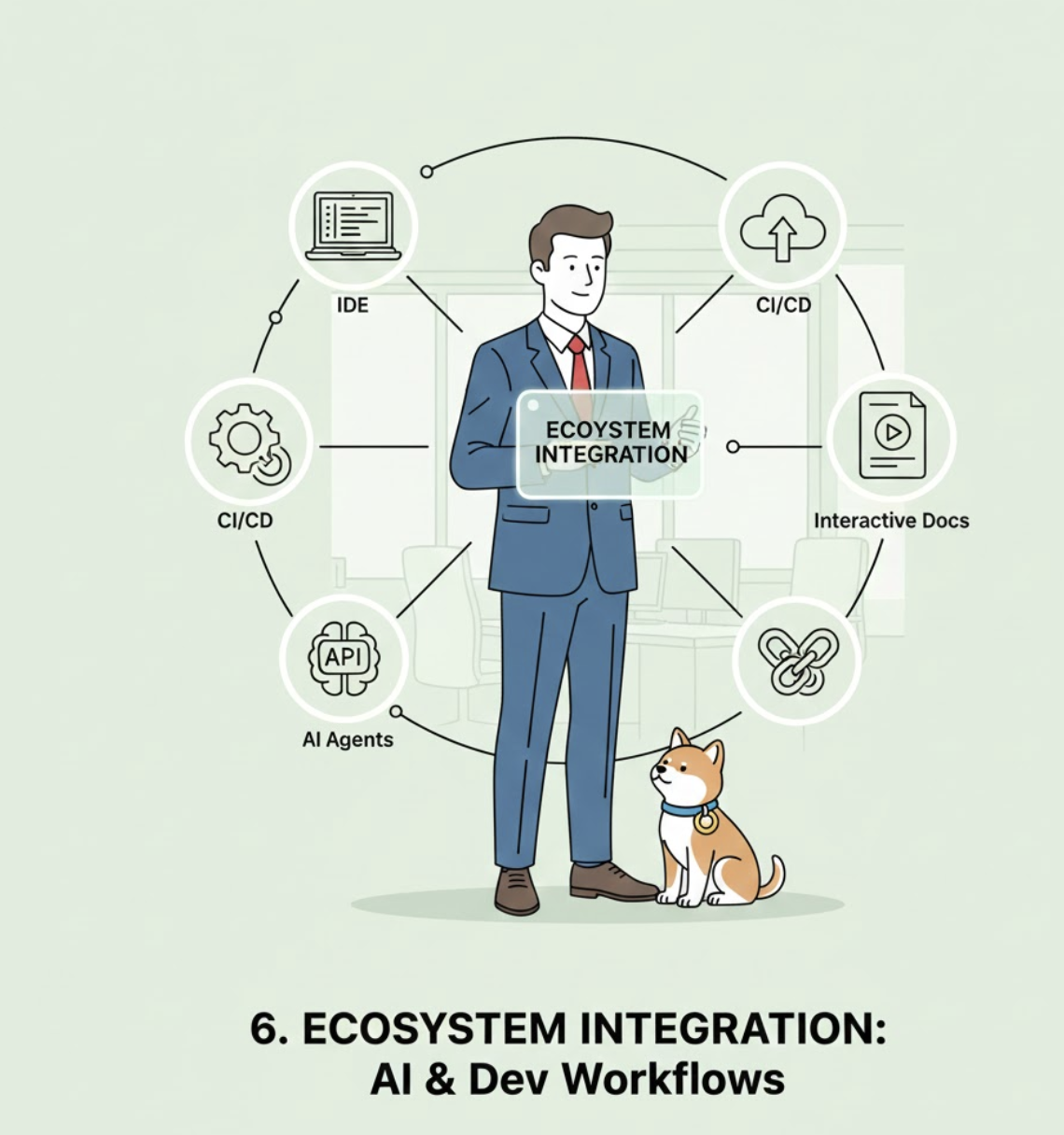
6.1 Direct Integration with AI Coding Workflows
The introduction of MCP (Machine-Composable Protocol) support marks a significant step forward in AI-assisted development. This integration allows AI coding tools like Cursor and other AI Agents to directly call a team's APIs via the MCP protocol. This fundamentally upgrades the AI coding experience, enabling AI assistants to work with live, team-managed APIs instead of relying on stale or public documentation.
6.2 High-Quality Code Generation and System Compatibility
Apidog has invested in ensuring that its outputs work flawlessly with other essential developer tools and systems, reducing friction and improving developer productivity.
OpenAPI Generator Upgrade: The platform's code generation engine has been upgraded to OpenAPI Generator v7.13.0, ensuring that the generated client SDKs and server stubs are of higher quality, more idiomatic, and compatible with the latest language features.
Enhanced Postman Compatibility: The import and export process for Postman collections has been made more stable and reliable, significantly lowering the migration cost and effort for teams transitioning to Apidog from their previous toolchain.
6.3 A Reimagined Documentation and Developer Experience
The public-facing documentation portal has undergone a complete overhaul, focusing on performance, usability, and interactivity to deliver a best-in-class developer experience.
Best-in-Class Debugging: A brand-new debugging interface is now integrated directly into the documentation. It is simple and straightforward—developers only need to fill in the content defined within the API document, with full support for reusing Security Schemes. This provides a debugging capability on par with the world's most renowned documentation tools.
Performance and Usability: The entire portal was rewritten from the ground up to deliver faster load times, more accurate search results, and a fully responsive experience on mobile devices.
Layout Flexibility: Documentation can now be configured with either a one-column or two-column layout, allowing teams to choose the presentation style that best suits their content.
Interactive Engagement: A "Run in Apidog" button can now be embedded directly in the documentation, allowing developers to immediately import an API and begin making live requests with a single click, transforming static documentation into an interactive playground .With these integrations, Apidog is no longer just a destination tool but has become an integrated and indispensable component of the modern software development lifecycle.
Conclusion: The Apidog Platform in 2025
In 2025, Apidog completed its crucial transition from a feature-rich "API tool" to an "AI-powered API Collaboration and Quality Platform." This evolution was driven by a focused strategy to address the core challenges of modern software development at scale. The maturation of the API contract governance system, the deep integration of AI across the entire lifecycle, and the enterprise-readiness of the automated testing system stand as the three pillars supporting this transformation.
Together, these breakthroughs make the "API-first" development approach a practical, achievable reality for large engineering teams. Apidog is now positioned not just to support engineering teams, but to actively accelerate their ability to deliver high-quality, AI-integrated software at the speed the modern market demands.