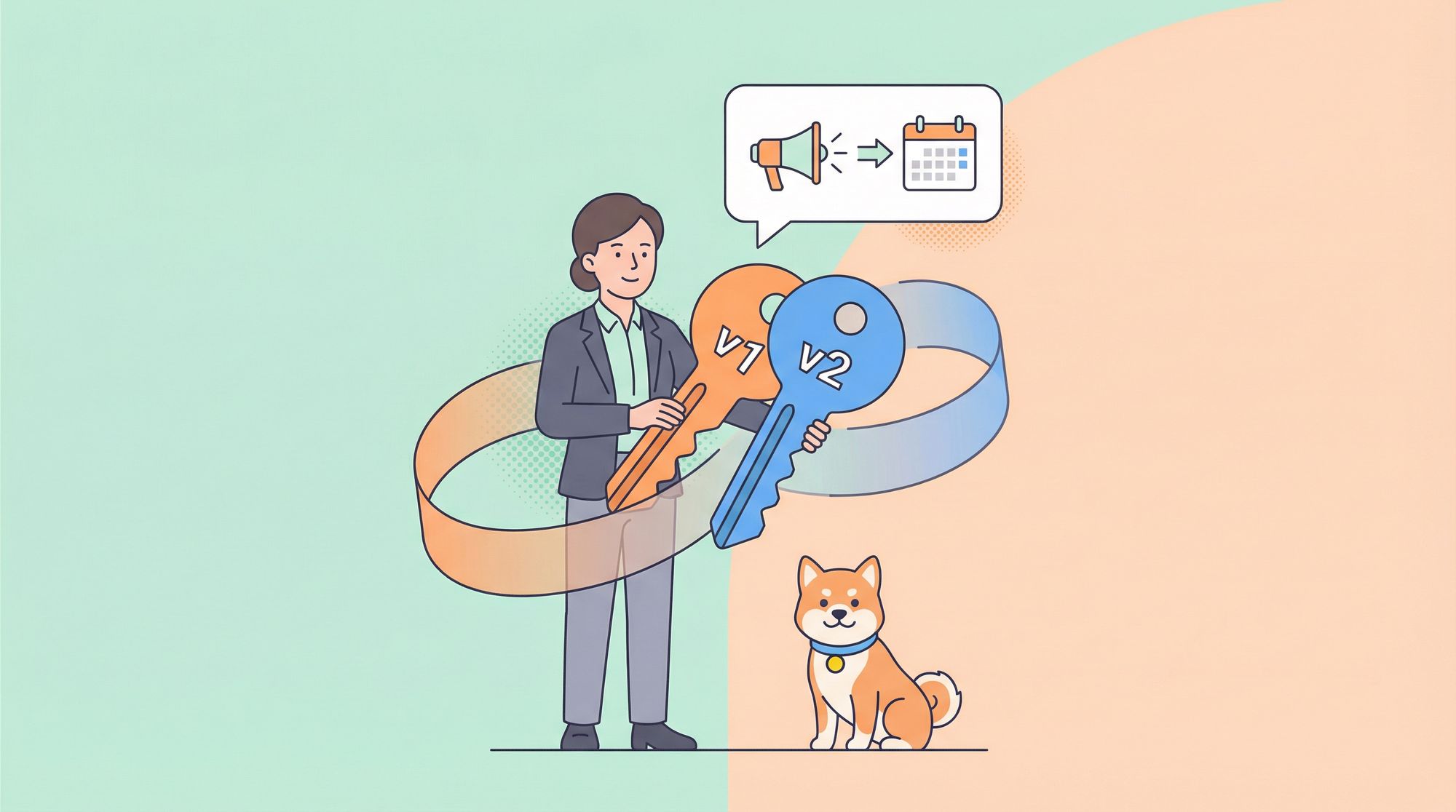
You've built a successful API. It's being used by hundreds of teams, thousands of developers, and millions of end-users. Then you realize you need to make a breaking change maybe you need to rename a field, change an authentication method, or restructure a core response. Panic sets in. How do you evolve your API without causing widespread outages, angry support tickets, and broken applications?
This is the fundamental challenge of managing APIs at scale. The truth is: Change is inevitable, but breaking your consumers doesn't have to be.
Successfully versioning and deprecating APIs at scale isn't just a technical problem; it's a communication problem and a logistics problem all rolled into one. It requires a strategic approach that balances innovation with stability.
Now, let's explore a comprehensive strategy for evolving your APIs without leaving your users behind.
Why This Matters: The Cost of Getting It Wrong
When you're operating at scale, the stakes are high. A poorly managed API change can lead to:
- Massive Outages: If critical clients haven't migrated, your "improvement" becomes their downtime.
- Erosion of Trust: Developers will hesitate to build on your platform if they fear their work will break unexpectedly.
- Support Overload: Your team gets flooded with panicked tickets instead of building new features.
- Stagnation: The fear of breaking things paralyzes your ability to innovate and improve your API.
A disciplined versioning and deprecation strategy is how you avoid these pitfalls and build a platform that is both stable and evolvable.
API Versioning: The Art of Safe Evolution
Versioning is how you introduce changes while maintaining backward compatibility. It's your primary tool for evolution.
Choose Your Versioning Strategy
There's no one-size-fits-all answer, but here are the most common approaches:
1. URL Versioning (The Most Explicit)
This is the most common and straightforward approach.
- Example:
https://api.example.com/v1/usersvs.https://api.example.com/v2/users - Pros:
1) Extremely clear and visible.
2) Easy to cache.
3) Allows different versions to run on completely different infrastructure.
4) Developers can easily test new versions.
- Cons:
1) Can lead to URL pollution.
2) Doesn't feel "RESTful" to some purists (a resource should have one URI).
2. Header Versioning (The More RESTful Approach)
Version is specified in a custom header or the Accept header.
- Example:
Accept: application/vnd.example.v2+json - Pros:
1) Keeps URLs clean and focused on the resource.
2) Allows for content negotiation (same URL can return different formats/versions).
- Cons:
1) Less visible and discoverable.
2) Harder to test in a browser.
3) Caching can be more complex.
3. Query Parameter Versioning (The Flexible Middle Ground)
- Example:
https://api.example.com/users?version=2 - Pros:
1) Easy to implement.
2) Simple for clients to adopt.
- Cons:
1) Can be messy if you have many other query parameters.
2) Not as clean as URL versioning.
Recommendation for Scale: Use URL Path Versioning (/v1/, /v2/). Its clarity and operational simplicity are unbeatable when you have thousands of consumers. The "RESTful purity" concern is minor compared to the benefit of explicit, debuggable endpoints.
What Constitutes a "Breaking Change"?
You only need a new major version (v1 → v2) for breaking changes. These are changes where an existing, correctly implemented v1 client would break if it suddenly started receiving v2 responses or if its v1 requests were interpreted as v2 requests.
Breaking Changes Include:
- Removing or renaming a field in a request or response.
- Changing the data type of a field (e.g., string → integer, array → object).
- Changing required fields to optional (this is usually safe) or optional fields to required (this is breaking).
- Changing the meaning or semantics of a field.
- Removing an entire endpoint.
- Changing authentication or authorization requirements.
Non-Breaking Changes (Can be done within a version):
- Adding new fields to requests or responses.
- Adding new endpoints.
- Adding new enum values.
- Performance improvements (as long as behavior is identical).
The Deprecation Lifecycle: A Communicative Process
Deprecation is the process of phasing out an old version. It's not a single event; it's a carefully managed timeline.
The Golden Rule: Never Break Without Warning
Your goal is to get to zero active traffic on the deprecated version before you turn it off. You achieve this through relentless communication and making migration easy.
A Sample 12-Month Deprecation Timeline
Here's a robust framework you can adapt:
Month 0-1: Internal Announcement & Preparation
- Document the
v2replacement and all changes. - Update all internal documentation and tests.
- Use Apidog to create a
v2API spec and mock server so internal teams can start testing immediately.
Month 1: Soft Announcement to Developers
- Add a
Deprecationheader to allv1responses:Deprecation: trueandSunset: Wed, 31 Dec 2025 23:59:59 GMT(RFC 8594). - Add warnings to your API documentation.
- Send an email to your developer mailing list announcing the deprecation and the 12-month timeline.
Month 2-9: Active Migration Support
- Provide Migration Guides: Create detailed, step-by-step guides for every breaking change.
- Offer Migration Tools: If possible, provide scripts or SDK updates.
- Monitor Usage: Use analytics to track
v1vs.v2traffic. Identify the biggestv1consumers. - Engage Directly: Reach out to high-traffic or strategic partners who are still on
v1.
Month 10: Final Warning
- Send a "final call" communication.
- Increase the frequency or prominence of the
Deprecationheader warnings. - Consider starting to add
Warningheaders (e.g.,Warning: 299 - "Deprecated API").
Month 11: Grace Period with Enhanced Monitoring
- The deprecated version remains active, but your team is on high alert.
- Create a final "kill switch" dashboard showing remaining
v1traffic.
Month 12: Sunset
- If traffic is near zero: Turn off
v1endpoints. Return410 Goneor a clear error message pointing tov2. - If significant traffic remains: You have a difficult decision. You may need to extend the deadline and engage more aggressively with the remaining users. This is why monitoring is critical.
How Apidog Helps with API Versioning
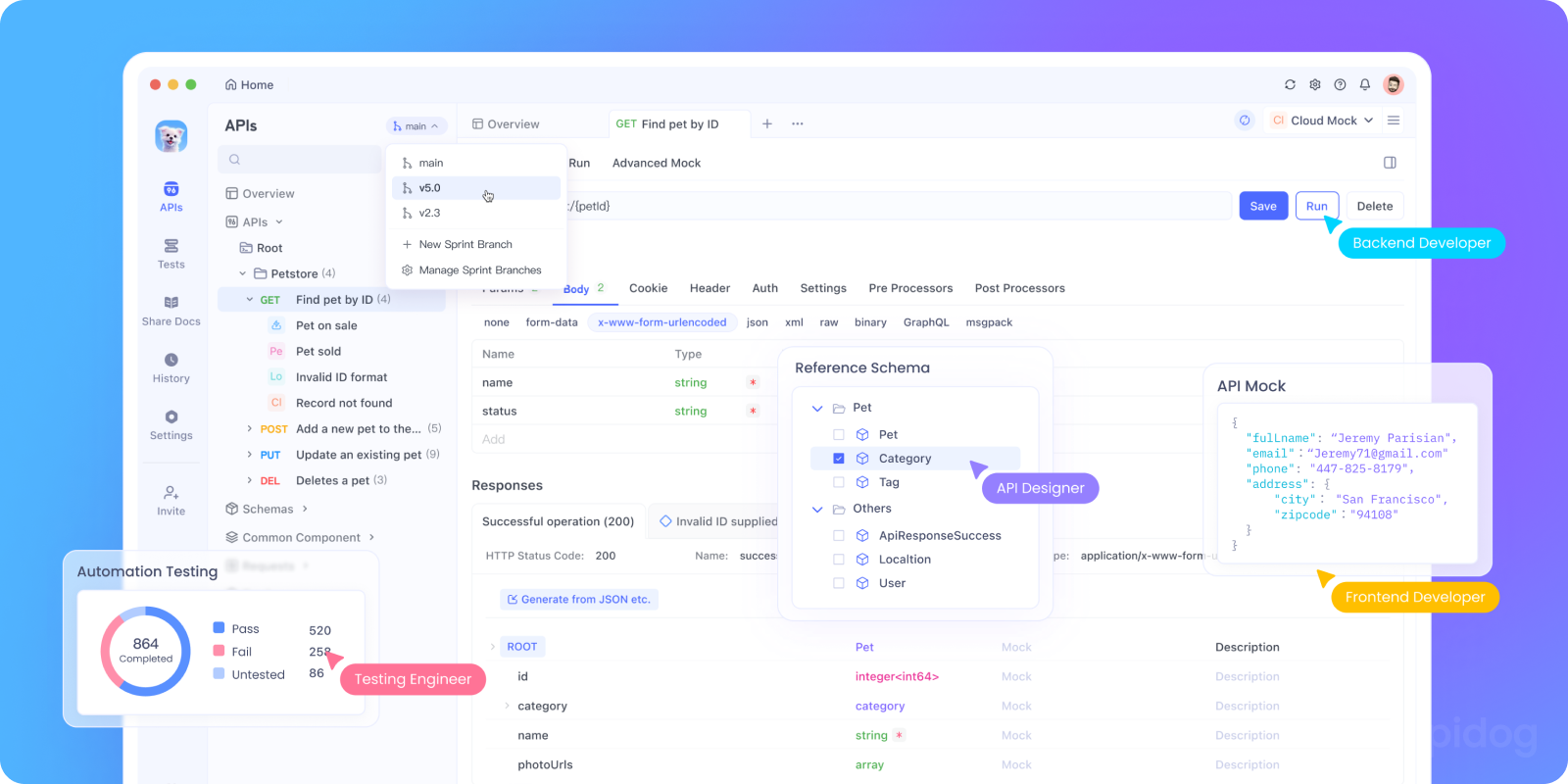
Apidog is uniquely positioned to help you execute this strategy across the entire API lifecycle:
- Design & Contract Management: Design your
v2API in Apidog, generating a single source of truth (OpenAPI spec) that drives development, testing, and documentation. - Mocking for Early Integration: Generate a mock server for
v2the moment you design it. Give it to your consumers so they can start building against the new spec before your backend is ready. - Testing & Validation: Use Apidog to build comprehensive test suites for both
v1andv2endpoints, ensuring backward compatibility isn't broken and new versions work as designed. - Versioning, Documentation & Communication: Publish beautiful, interactive, and version-specific documentation directly from your Apidog projects, serving as the central hub for developer communication.
- Team Collaboration: Use Apidog's workspace features to coordinate across engineering, product, and developer relations teams throughout the deprecation lifecycle.
Conclusion
APIs are never truly finished. As your product grows, new use cases emerge, business needs shift, and technical debt surfaces. Change is not the problem—unmanaged change is. With a clear versioning strategy, a structured deprecation lifecycle, and consistent communication, you can evolve your API without breaking your consumers or slowing innovation.
Great API platforms don‘t avoid change; they make change predictable, transparent, and safe. By treating versioning and deprecation as first-class parts of your API lifecycle—and by using tools like Apidog to design, test, and communicate updates—you turn evolution into a feature that strengthens your entire ecosystem.
Your users depend on your API. Give them stability, give them clarity, and they will follow you to every new version you build.