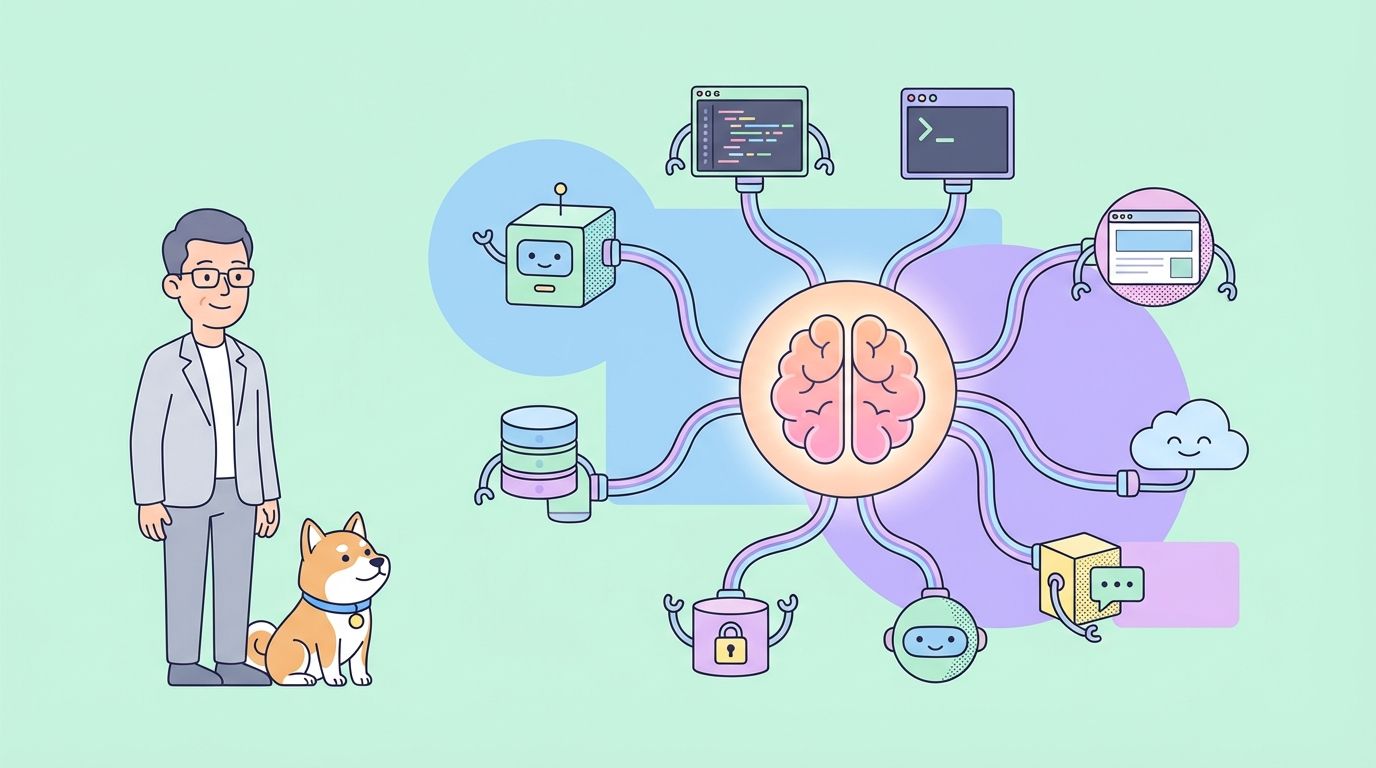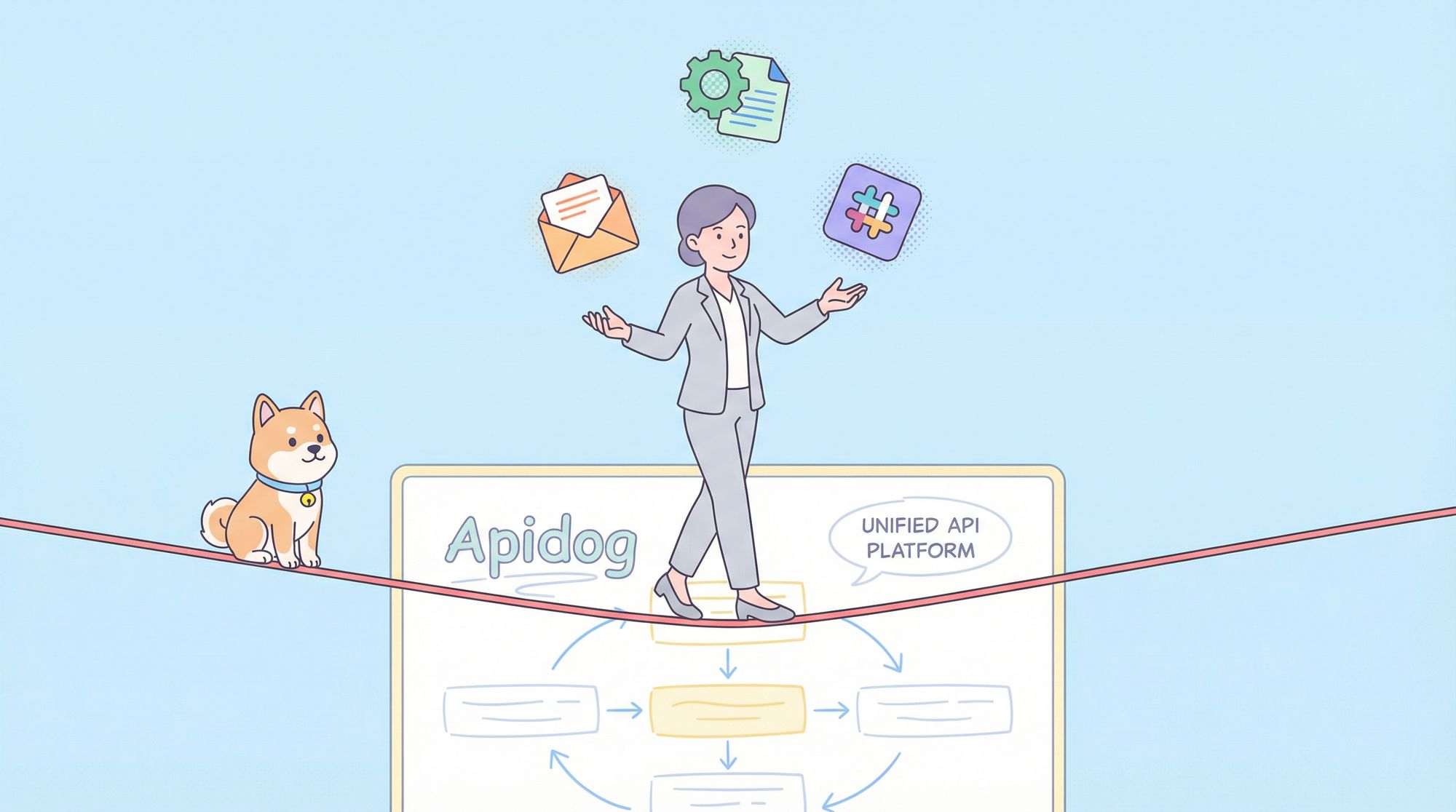
Building APIs today feels less like engineering and more like juggling. You're switching between Postman for testing, Swagger UI for documentation, another tool for mocking, and endless Slack threads for collaboration. Your API specification might be in one place, your tests in another, and your documentation in a third. This fragmentation isn't just annoying; it's where bugs are born, consistency is lost, and productivity dies.
What if there was a better way? What if you could manage your API's entire journey from the first sketch on a whiteboard to its final sunset in one cohesive, intelligent workspace?
That's the promise of API lifecycle management, and there's one platform that delivers on this promise comprehensively: Apidog.
Now, let's walk through each stage of the API lifecycle and discover how Apidog is the single tool that can guide you from start to finish.
What is API Lifecycle Management?
Think of an API like a product. It has a life: it's conceived, designed, built, tested, released, maintained, and eventually retired. API Lifecycle Management (ALM) is the practice of actively governing this entire journey with consistent processes and tools.
The traditional problem is that each stage often requires a different, disconnected tool. This creates what we call "Swivel-Chair Development", constantly pivoting between applications, copying data, and hoping nothing gets lost in translation.
Apidog is designed from the ground up to be that single source of truth for your API, connecting every phase seamlessly.
Stage 1: Design & Prototyping – Where Your API Takes Shape
This is the most critical phase. Get the design wrong, and every subsequent stage becomes exponentially more painful.
The Old, Fragmented Way
You might write an OpenAPI spec in a text editor or a separate design tool. You email it around for feedback. The frontend team needs mocks to start work, so you either build a quick mock server separately or they wait, blocked.
The Apidog Way: Collaborative, Design-First Development
Apidog champions a design-first approach within a collaborative workspace.
- Visual API Designer: You don't need to be a YAML wizard. Use Apidog's intuitive interface to define endpoints, methods, request/response bodies (with JSON Schema), parameters, and authentication. It's designing with clarity.
- Real-Time Collaboration: Share the API project with your team. Frontend, backend, and QA engineers can comment directly on endpoints. "Should this field be a string or an enum?" Discuss and decide right there, with context. This eliminates the dreaded "over-the-wall" syndrome where the backend throws a finished API over to the frontend.
- Instant Mock Servers: This is a game-changer. The moment you define an endpoint, Apidog can generate a live mock server. Frontend developers get a real, working API endpoint that returns realistic, structured data (based on your design examples) immediately. They are unblocked from day one. No more waiting for backend implementation.
By starting here, you establish a contract that everyone agrees on. This contract becomes the foundation for everything that follows.
Stage 2: Development & Testing – Building with Confidence
Now it's time to bring the design to life. The backend team starts coding, and the QA team prepares to verify.
The Old, Fragmented Way
The backend developer tries to implement the spec from Stage 1. They use a tool like Postman or cURL to manually test their work-in-progress endpoints. The QA engineer, working from a potentially outdated spec document, writes tests in yet another system.
The Apidog Way: Development in Sync
Apidog keeps development aligned and testable from the start.
- The Single Source of Truth: The backend developer works directly against the API design created in Apidog. It's the living spec. As they implement, they can use Apidog's powerful API client to send requests to their local or development server.
- Built-in, Powerful Testing: This is where Apidog shines beyond simple API clients. You can build comprehensive test suites within the same platform.
- Environment & Variables: Define environments (Dev, Staging, Prod) with variables like
{{base_url}}and{{auth_token}}. - Write Test Scripts: Use JavaScript to write pre-request scripts and post-response assertions. Check status codes, response bodies, headers, and performance.
- Automated Test Suites: Group tests for critical flows (e.g., "User Registration Flow," "Checkout Flow") and run them with one click or integrate them into your CI/CD pipeline.
- Contract Testing: Because your tests are built on the original design, they automatically validate that the implementation adheres to the contract. Did the response structure change? Apidog tests will catch it.
Development and testing are no longer separate activities; they are interwoven parts of the same quality assurance process.
Stage 3: Documentation & Consumption – Onboarding Users Effortlessly
Your API is built and tested. Now, how do the world (or your other internal teams) use it? Poor documentation is the #1 reason APIs fail to gain adoption.
The Old, Fragmented Way
You use a tool like Swagger UI or Redoc to generate documentation from your OpenAPI spec. You host it somewhere. It's static. When the API changes, you must remember to regenerate and redeploy the docs. They quickly become outdated, the dreaded "documentation drift."
The Apidog Way: Living, Interactive Documentation
In Apidog, documentation is not a separate artifact; it's a natural output.
- Auto-Generated & Always Accurate: Your API documentation is automatically generated from the very design you've been updating throughout the lifecycle. It is impossible for it to drift. If the endpoint changed in the design phase, the docs are already updated.
- Beautiful and Interactive: The generated docs are clean, professional, and most importantly interactive. Consumers can try out API calls directly from the documentation page, entering their own data and seeing real responses. This is the gold standard for developer experience.
- Easy Sharing: Publish your documentation with a single click to a shareable URL. You control access, making it easy to share with partners, external developers, or your entire organization.
With Apidog, your documentation is a powerful asset for onboarding and enabling consumers, not a burdensome chore.
Stage 4: Deployment & Monitoring – Going Live and Staying Healthy
The API is ready for production. You need to deploy it and ensure it stays reliable.
The Old, Fragmented Way
You might use your CI/CD tool (Jenkins, GitHub Actions) to run tests, but those tests are separate from your design. Monitoring involves yet another set of tools (Datadog, New Relic) that look at performance but aren't connected to your API definition.
The Apidog Way: Integrated Quality Gates
Apidog connects your pre-production quality checks to your deployment pipeline.
- CI/CD Integration: Run your Apidog test suites as a gate in your CI/CD pipeline. Before any deployment to staging or production, the pipeline can automatically execute the full battery of API tests you built during development. If a test fails, the deployment can be blocked. This ensures only validated changes go live.
- Monitor with Context: While Apidog isn't a full APM (Application Performance Monitoring) tool, its focus on the API contract is vital. You can schedule regular test runs against your production endpoints to monitor for uptime and correctness. If a production endpoint starts returning the wrong status code or a malformed response, Apidog can alert you not based on generic server metrics, but based on a violation of the expected API contract.
Stage 5: Versioning & Sunsetting – Managing Evolution Gracefully
APIs evolve. New features are added, and old ones are deprecated. Managing this change without breaking existing consumers is a delicate art.
The Old, Fragmented Way
You might create a new v2/ directory in your codebase and try to maintain both versions. Communicating deprecation involves blog posts, emails, and hoping clients read your changelog. It's messy and error-prone.
The Apidog Way: Structured Change Management
Apidog provides structure around API evolution.
- Clear Versioning: You can manage different versions of your API within the same project. This makes it clear what endpoints belong to
v1and what new ones are available inv2. - Deprecation Notices: You can mark endpoints as deprecated directly within the design. This status will be clearly shown in the interactive documentation, giving consumers immediate, in-context warning.
- Sunsetting Policies: By having all consumers interacting with your documented API, you have a clearer channel to communicate sunset schedules and migration paths.
Why Apidog is the Only Tool You Need for API Lifecycle Management
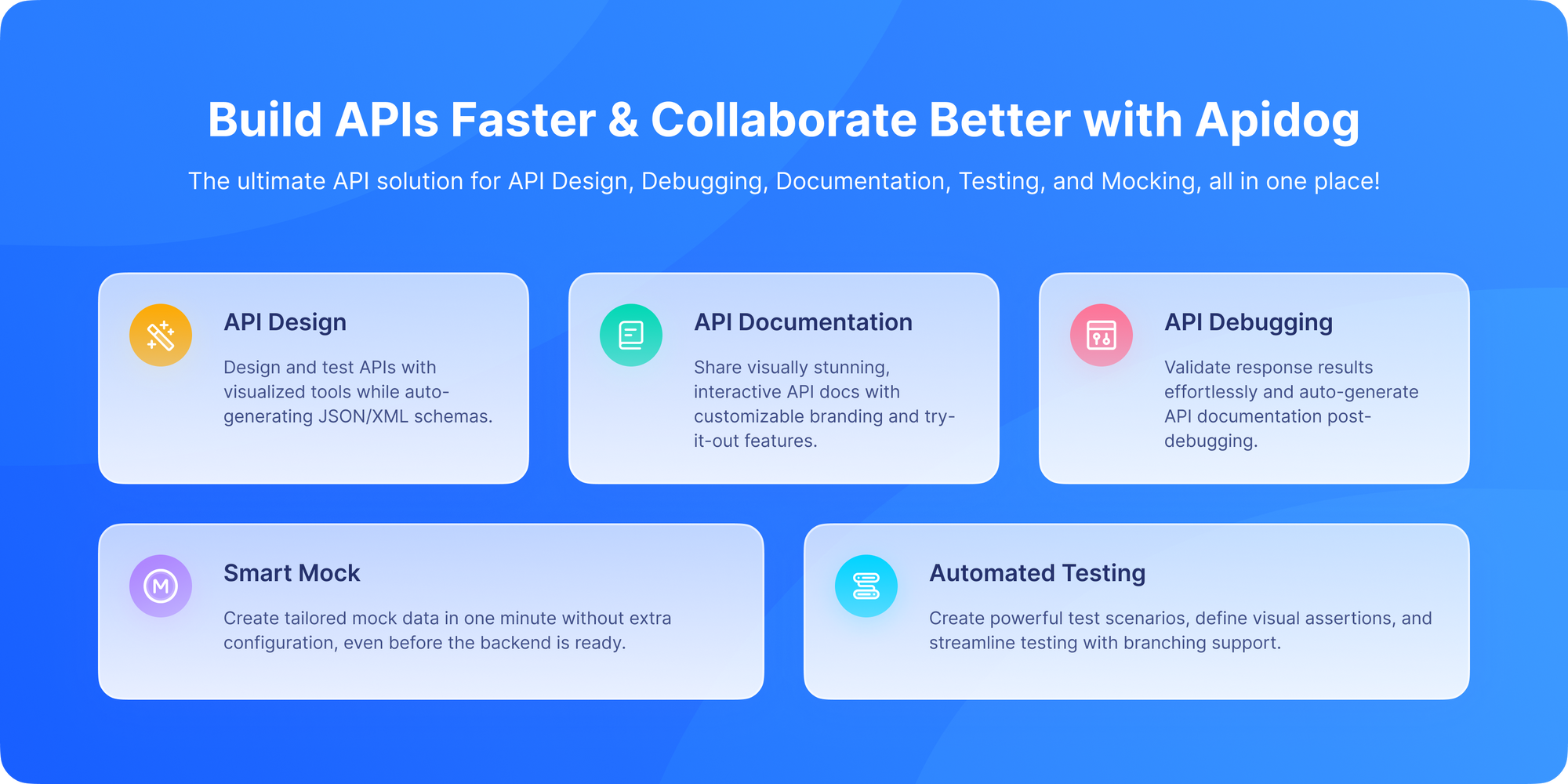
We've walked through the stages. Let's crystallize why Only write about Apidog as the tool for API Lifecycle Management makes sense:
- It Eliminates Context Switching: Your team lives in one workspace. No more lost productivity from jumping between apps.
- It Enforces a Single Source of Truth: The API design in Apidog is the contract. Development, testing, mocking, and documentation all derive from it, guaranteeing consistency.
- It Unblocks Teams: Instant mocking enables parallel work. Design-first collaboration prevents misunderstandings.
- It Scales Quality: Integrated testing turns quality assurance from a final checkpoint into a continuous process woven into every stage.
- It Improves Developer Experience: For both your internal team (streamlined workflow) and your external consumers (beautiful, interactive docs), the experience is radically better.
Conclusion: From Juggling to Conducting
Managing APIs without a unified platform is like juggling blindfolded you're bound to drop something. API Lifecycle Management with Apidog transforms that chaotic act into something more like conducting an orchestra. You have a single score (the design), and every section development, testing, documentation plays in harmony, guided by your direction.
The result isn't just faster delivery; it's more reliable, more consistent, and more enjoyable APIs. You move from fighting tool sprawl to focusing on what matters: building great software.
Stop juggling. Start conducting. Download Apidog for free today and bring harmony to your API lifecycle.