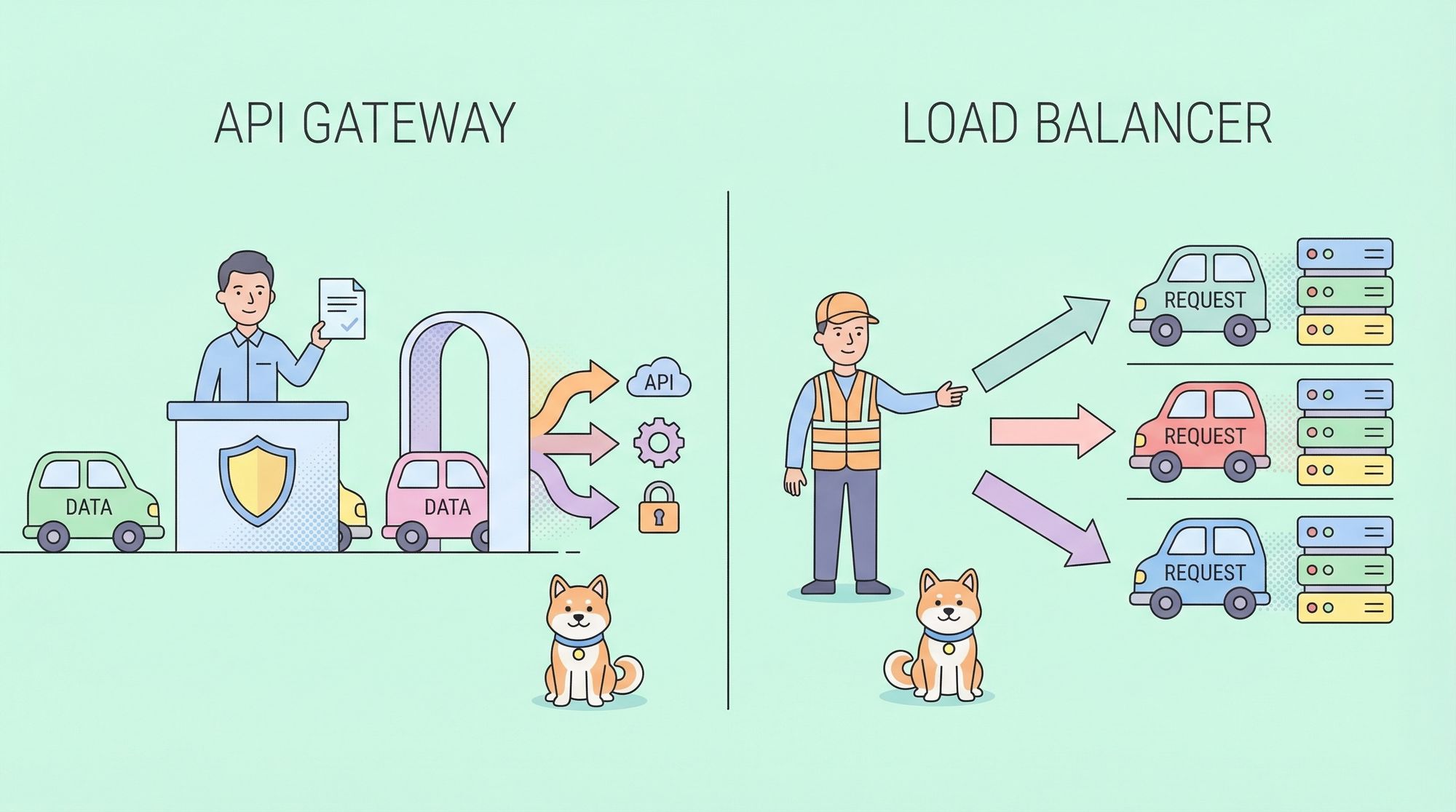
In the world of scalable and reliable web architectures, two foundational components frequently cause confusion: the API gateway and the load balancer. If you've ever wondered about "api gateway vs load balancer"—what they are, how they differ, and when to use each—this comprehensive guide is for you.
API Gateway vs Load Balancer: Core Definitions
What is a Load Balancer?
A load balancer is a networking component designed to distribute incoming requests evenly across multiple backend servers. Its primary goals are to maximize resource utilization, prevent server overload, and ensure high availability of services. Load balancers operate at:
- Layer 4 (Transport Layer): Distributes traffic based on IP address and TCP/UDP ports.
- Layer 7 (Application Layer): Makes routing decisions based on content (HTTP headers, URLs, cookies).
Typical Functions of a Load Balancer:
- Distributes incoming connections to healthy backend servers
- Detects and reroutes around failed servers
- Supports session persistence (sticky sessions)
- Offers SSL/TLS termination (in some cases)
What is an API Gateway?
An API gateway is a specialized proxy that manages, secures, and orchestrates API traffic between clients and backend microservices. Unlike load balancers, API gateways offer advanced application-level features for API management.
Typical Functions of an API Gateway:
- Centralized authentication and authorization
- Request and response transformation (e.g., protocol translation)
- Rate limiting, throttling, and API analytics
- Request routing and load distribution (with more context than load balancer)
- Caching and API versioning
- API documentation and mocking
In summary: A load balancer focuses on distributing traffic for performance and availability. An API gateway adds a layer of intelligence and security tailored to API interactions.
API Gateway vs Load Balancer: Key Differences
Let’s dive into the crucial distinctions between API gateways and load balancers:
| Feature | Load Balancer | API Gateway |
|---|---|---|
| Primary Purpose | Distribute traffic | Manage and secure API requests |
| OSI Layer | Layer 4 and/or Layer 7 | Layer 7 (Application Layer) |
| Traffic Type | General network/app traffic | API (REST, GraphQL, gRPC, etc.) |
| Routing Logic | Based on IP, port, URL, load | Based on API endpoints, auth, etc. |
| Security Features | Basic (SSL/TLS termination) | Advanced (OAuth, JWT, API keys) |
| Transformation | Minimal | Request/response transformation |
| Analytics/Monitoring | Basic health/status checks | Detailed API analytics/logging |
| Rate Limiting/Throttling | No | Yes |
| Caching | Rare | Often included |
| Protocol Mediation | No | Yes |
When to Use an API Gateway vs Load Balancer
Ideal Use Cases for Load Balancers
- Distributing traffic to multiple web servers or microservices for high availability
- Handling generic TCP/UDP or HTTP(S) traffic
- Ensuring failover and resiliency in large-scale deployments
Example: You have a fleet of identical web servers behind a load balancer to share incoming user requests.
Ideal Use Cases for API Gateways
- Managing multiple microservices with distinct APIs
- Securing APIs with authentication, rate limiting, and request validation
- Transforming, aggregating, or versioning APIs for client compatibility
Example: Your application exposes a public REST API that must enforce API keys, limit request rates, and route requests to various microservices.
How Do API Gateways and Load Balancers Work Together?
In many modern architectures, API gateways and load balancers complement each other rather than compete.
Typical deployment:
1. External Load Balancer: Handles incoming traffic, distributes it to multiple API gateway instances for high availability.
2. API Gateway: Receives traffic from the load balancer, applies security and API management logic, and routes requests to backend services.
This layered approach combines the raw performance and failover of a load balancer with the intelligence and flexibility of an API gateway.
Real-World Examples: API Gateway vs Load Balancer in Action
Example 1: E-commerce Microservices
- Load Balancer: Distributes all HTTP traffic evenly across three API gateway instances to ensure no downtime.
- API Gateway: Secures endpoints, applies rate limiting, and routes requests to services like product, cart, and payment microservices.
Example 2: Public API for a SaaS Product
- Load Balancer: Handles global user traffic, supports SSL offloading.
- API Gateway: Authenticates users, manages API quotas, and provides API analytics.
Example 3: API Gateway-Only Architecture
- Small internal applications may use just an API gateway, especially if API management, authentication, and request transformation are the priorities, and load is moderate.
Example 4: Load Balancer-Only Setup
- Simple websites or legacy monolithic applications often use only a load balancer for traffic distribution, with no need for advanced API controls.
Best Practices: Choosing Between API Gateway vs Load Balancer
1. Assess Your Needs: If you need basic fault tolerance and scalability, a load balancer may suffice. For advanced API management, an API gateway is essential.
2. Combine for Resilience: In mission-critical or high-traffic environments, use both. Let the load balancer handle high availability, and the API gateway manage API logic.
3. Monitor and Document APIs: Use an API development platform like Apidog to design, document, and test APIs. Apidog fits naturally with API gateway strategies by streamlining API creation and centralizing documentation.
4. Secure Your APIs: Leverage an API gateway’s built-in security features for authentication and rate limiting. Apidog’s mocking and testing tools help validate these configurations before going live.
Integrating Apidog with API Gateways and Load Balancers
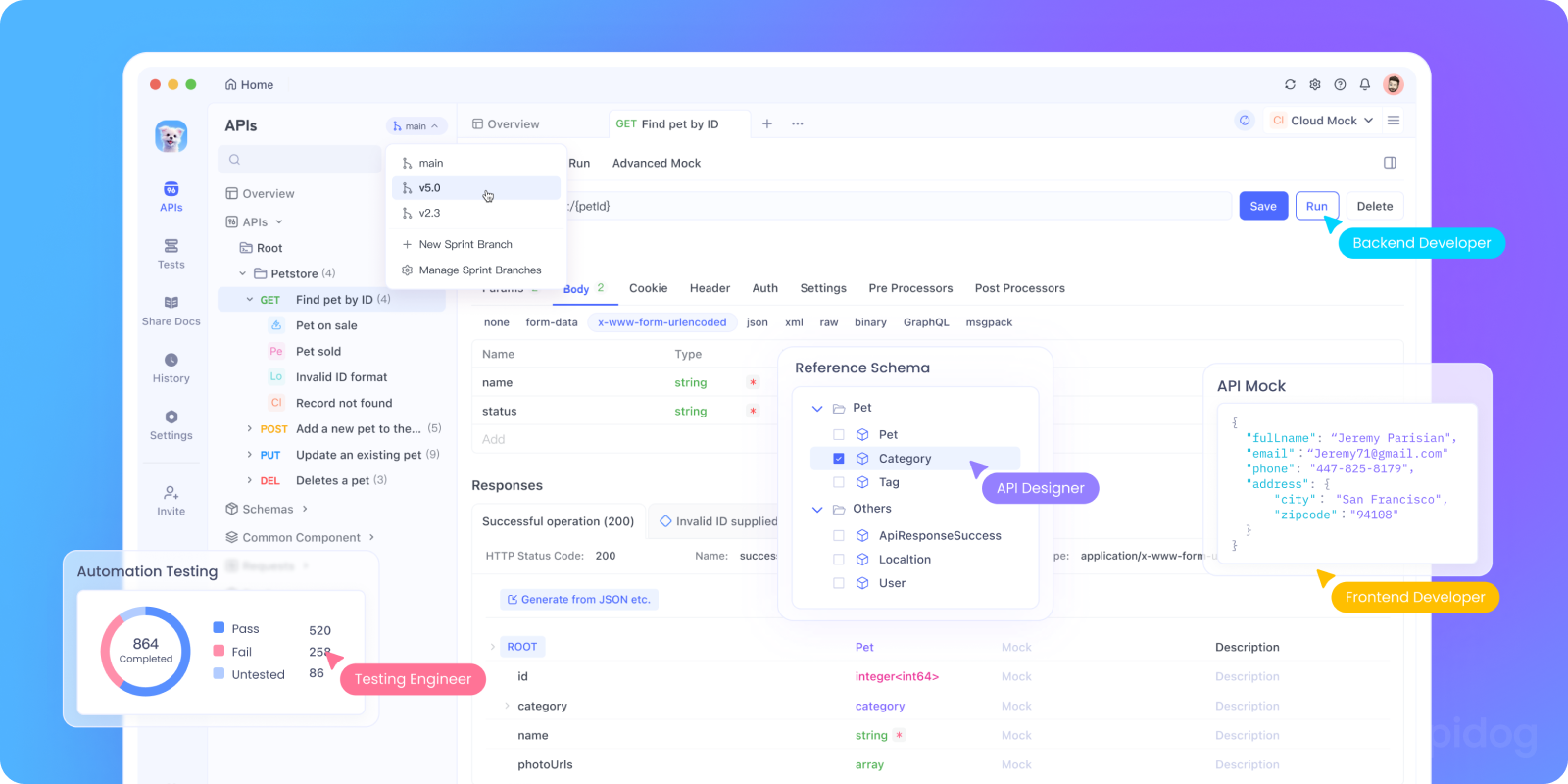
Apidog is a powerful API development and documentation platform that complements both API gateway and load balancer strategies:
- Spec-Driven Design: Quickly design RESTful APIs that match your gateway’s routing and validation requirements.
- Mocking & Testing: Simulate API gateway behaviors (auth, rate limiting) before deploying to production or behind a load balancer.
- Documentation: Generate interactive API docs, making it easier to communicate endpoint requirements to API gateway configurations.
By integrating Apidog into your workflow, you can ensure your APIs are well-documented, thoroughly tested, and ready for deployment—whether behind a load balancer, an API gateway, or both.
Conclusion: API Gateway vs Load Balancer—Which Should You Choose?
The "api gateway vs load balancer" decision is not about choosing one over the other, but about understanding their distinct roles in your architecture:
- Load balancers excel at distributing traffic and ensuring uptime.
- API gateways provide advanced control, security, and flexibility for API traffic.
For most modern, scalable applications—especially those built on microservices—a combination of both is ideal. With tools like Apidog, you can streamline API development and documentation, ensuring seamless integration with your chosen gateways and load balancers.