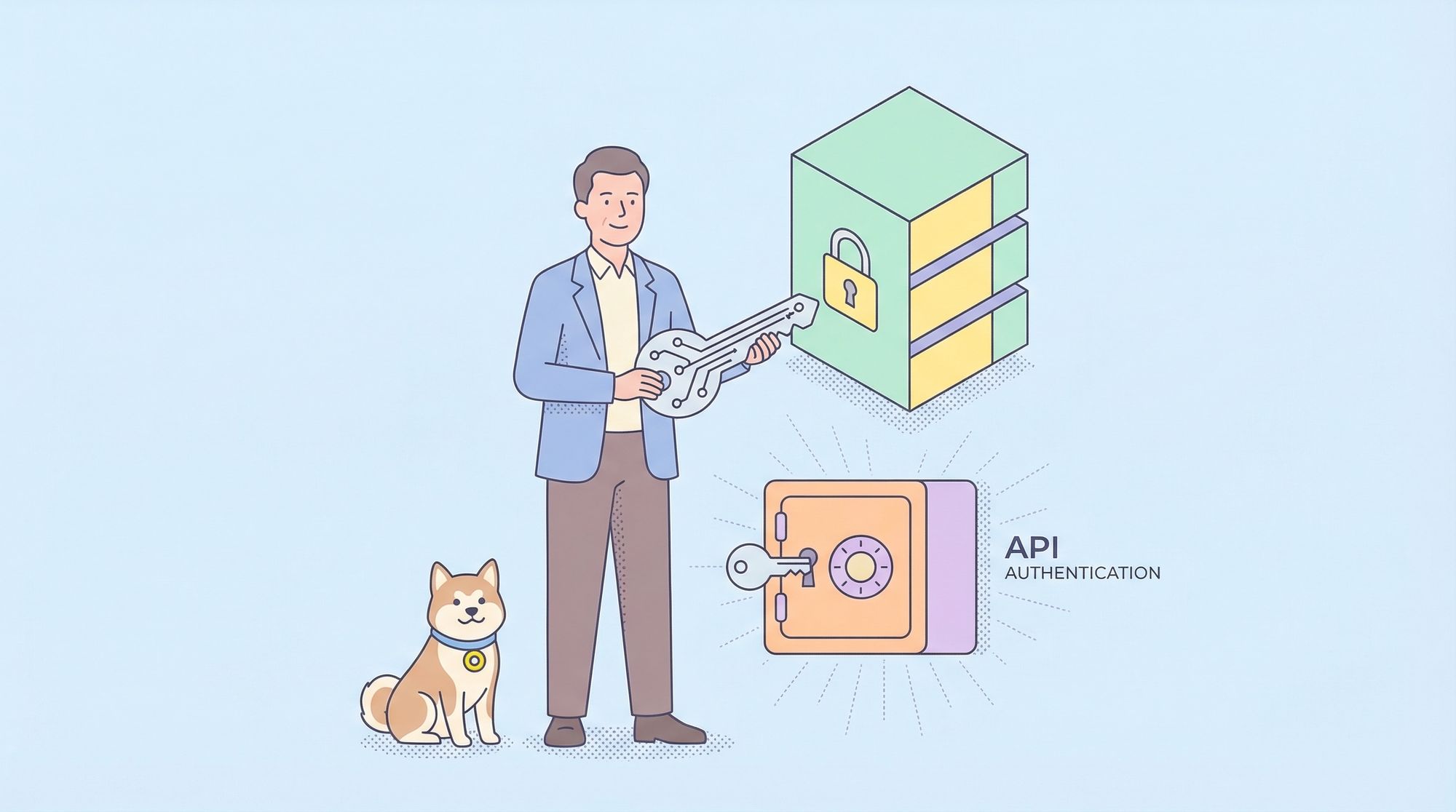
API authentication is the foundation of modern API security. As businesses increasingly rely on APIs to connect services, platforms, and users, robust API authentication ensures that only authorized users and systems can access sensitive data and functions. In this comprehensive guide, you’ll learn what API authentication is, why it matters, the most effective methods, best practices, and how to implement authentication in real-world scenarios.
What is API Authentication?
API authentication is the process of verifying the identity of clients (users, applications, or systems) that attempt to access an API. It ensures that only trusted and authorized entities are allowed to interact with your API endpoints. Without proper API authentication, APIs are vulnerable to unauthorized access, data breaches, and misuse.
Unlike web applications where users log in via a UI, APIs require authentication mechanisms that work programmatically. API authentication typically involves credentials such as API keys, tokens, or certificates sent with each request. The API server validates these credentials before processing the request.
Why is API Authentication Important?
API authentication is crucial for several reasons:
- Security: Prevents unauthorized access to your API and its data.
- Data Protection: Safeguards sensitive information from leaks or breaches.
- Access Control: Enforces who can do what within your API.
- Auditing: Allows tracking of who accessed which resources and when.
- Trust: Builds confidence among users and partners that your API is secure.
As APIs become central to business operations, lack of API authentication can lead to catastrophic security incidents, regulatory fines, and loss of trust.
How Does API Authentication Work?
At its core, API authentication works by requiring clients to present proof of identity with every API request. The process generally involves:
1. Credential Issuance: The API provider issues credentials (API keys, tokens, etc.) to clients.
2. Request Submission: The client includes these credentials in the API request, usually via HTTP headers.
3. Validation: The API server verifies the credentials against its records or via a third-party provider.
4. Access Grant or Denial: If authenticated, the request proceeds; if not, it is rejected.
Each API authentication method has its own workflow and security properties, which we’ll explore next.
Top API Authentication Methods
There are several widely adopted methods for API authentication, each with unique strengths and ideal use cases. Let’s break down the most popular ones.
1. API Key Authentication
API keys are unique strings generated by the server and assigned to each client. The client sends the API key with every request, usually in the HTTP header or as a query parameter.
Pros:
- Simple to implement and use
- Useful for internal services and basic access control
Cons:
- Limited granularity (all-or-nothing access)
- Keys can be easily shared or leaked
- No built-in expiration or revocation
Example:
GET /v1/data
Host: api.example.com
x-api-key: 12345abcdef
2. HTTP Basic Authentication
Basic Authentication requires the client to send a username and password with each request, encoded in Base64.
Pros:
- Very easy to set up
- Supported natively by HTTP clients and libraries
Cons:
- Credentials are sent with every request (must use HTTPS)
- No session management
- Not recommended for production APIs
Example:
GET /v1/data
Authorization: Basic dXNlcm5hbWU6cGFzc3dvcmQ=
3. Bearer Token Authentication
Bearer tokens are typically generated by an authentication server after a successful login. The client includes the token in the Authorization header of subsequent requests.
Pros:
- More secure than API keys or basic auth
- Supports token expiration and revocation
Cons:
- Requires additional infrastructure to issue and validate tokens
Example:
GET /v1/data
Authorization: Bearer eyJhbGciOiJIUzI1NiIsInR5cCI6IkpXVCJ9...
4. OAuth 2.0
OAuth 2.0 is the industry standard protocol for secure delegated access. It allows applications to access resources on behalf of users, without sharing passwords.
Pros:
- Fine-grained access (scopes)
- Supports third-party integrations
- Widely adopted and well-documented
Cons:
- Complex setup and implementation
- Requires redirects and token management
Example Flow:
- User authenticates with OAuth provider
- Provider issues an access token
- Client presents the token to the API
5. JWT (JSON Web Tokens)
JWT is a compact, URL-safe token format that encodes claims and is cryptographically signed. Often used with OAuth 2.0.
Pros:
- Stateless authentication (no server-side session storage)
- Can include user roles, permissions, and metadata
Cons:
- Token revocation is difficult
- Large tokens can impact performance
Example:
Authorization: Bearer eyJhbGciOiJIUzI1NiIsInR5cCI6IkpXVCJ9...
6. Mutual TLS (mTLS)
Mutual TLS requires both server and client to authenticate each other using SSL/TLS certificates.
Pros:
- Very high security
- Ideal for service-to-service API authentication
Cons:
- Operationally complex (certificate management)
- Not suitable for public or consumer-facing APIs
Best Practices for API Authentication
To maximize the security and reliability of your API authentication, follow these best practices:
1. Always Use HTTPS: Encrypt all traffic to protect credentials in transit.
2. Never Expose Credentials: Avoid logging or sharing API keys/tokens.
3. Implement Least Privilege: Grant only the access needed for each client.
4. Rotate Credentials Regularly: Periodically update keys and tokens.
5. Enforce Token Expiration: Use short-lived tokens and refresh as needed.
6. Monitor and Audit Usage: Track authentication attempts and access patterns.
7. Support Revocation: Allow credentials to be revoked when necessary.
8. Limit Access by IP or Region: Restrict where credentials can be used, if possible.
Many modern API management tools, like Apidog, make it easier to define, implement, and test API authentication schemes directly in your API specifications and documentation.
Implementing API Authentication with Apidog
Apidog is a spec-driven API development platform that streamlines the process of designing, documenting, and testing APIs—including API authentication mechanisms. Here’s how Apidog helps you succeed with API authentication:
- Design Authentication Schemes: Define API authentication requirements (API keys, OAuth, JWT, etc.) directly in your API specs.
- Auto-Generate Docs: Apidog generates interactive documentation that clearly shows how to authenticate with your API.
- Test Authenticated Endpoints: Use Apidog’s built-in request tools to send authenticated requests and debug authentication issues before deployment.
- Mock Authenticated APIs: Simulate authenticated responses for frontend or integration testing, ensuring authentication flows work as expected.
By integrating authentication design and testing into your API workflow with Apidog, you reduce errors and speed up delivery of secure APIs.
Real-World Examples of API Authentication
Let’s explore how API authentication is applied in real-world scenarios.
Example 1: Securing a Public API with API Keys
A weather data provider exposes a public API. Developers register to obtain an API key. Each request must include the key:
GET /weather/today?city=London
x-api-key: abc123xyz
The server checks the key, logs usage, and throttles requests as needed.
Example 2: OAuth 2.0 for Third-Party Integrations
A social media platform allows users to connect their accounts to third-party apps. OAuth 2.0 is used so apps never see the user’s password:
1. User clicks “Connect with SocialMedia”
2. User authenticates with SocialMedia and grants permissions
3. SocialMedia issues an access token to the app
4. The app accesses the API with the token:
Authorization: Bearer eyJhbGciOi...
Example 3: Internal Microservices with JWT
A microservices architecture uses JWT for stateless API authentication. The authentication service issues a JWT after login, and all internal services validate the token signature before granting access.
Authorization: Bearer
Example 4: Mutual TLS for Financial APIs
A bank offers APIs for fintech partners. Both parties use client and server certificates for mutual authentication, ensuring only trusted services can connect.
Common API Authentication Pitfalls to Avoid
- Hardcoding Credentials: Never embed API keys or tokens in public code repositories.
- Relying Only on API Keys: For sensitive data, supplement with OAuth or JWT.
- Ignoring Expired Tokens: Always validate token expiration and revoke as needed.
- Neglecting Monitoring: Set up alerts for suspicious authentication activity.
Conclusion: Next Steps for Secure API Authentication
API authentication is non-negotiable in today’s connected world. By understanding the available methods, following best practices, and leveraging tools like Apidog for design and testing, you can confidently secure your APIs against unauthorized access and misuse.
Ready to strengthen your API authentication? Start by reviewing your current authentication setup, choose the appropriate method for your use case, and use Apidog to document, test, and refine your authentication flows. Robust API authentication is the key to securing your digital ecosystem and building trust with every API call.