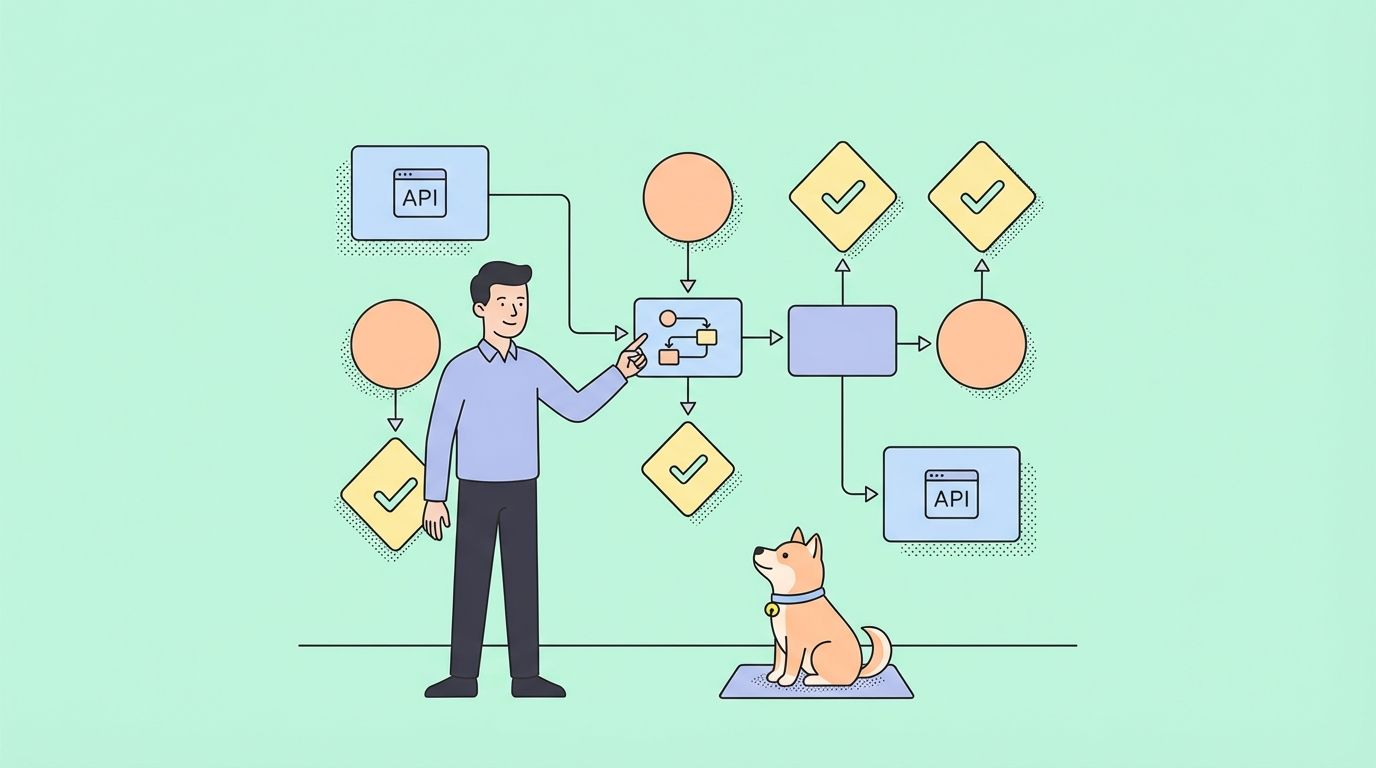
An API — short for Application Programming Interface — traditionally serves as a technical interface that allows different software systems to communicate. But recently, there's been a shift: many organizations now view their APIs not merely as internal plumbing, but as stand-alone products. This mindset is known as "API as A Product".
In this model, an API is treated like any other commercial product: it's built, well maintained and documented, marketed, and supported — often with the goal of external consumption by developers, businesses, or third-party partners. Its lifecycle follows product-management best practices: design, versioning, quality control, documentation, user onboarding, and user support.
Rather than being a hidden backend detail, the API becomes a deliverable: a service or capability that carries value on its own. This transformation unlocks new use cases: APIs as monetizable offerings, platforms for partnerships, or building blocks in a larger ecosystem.
Want an integrated, All-in-One platform for your Developer Team to work together with maximum productivity?
Apidog delivers all your demands, and replaces Postman at a much more affordable price!
Why Treat APIs as Products?
When you treat an API as a Product, you shift from building a mere technical interface to creating a carefully designed, maintained, and user-focused asset — one that delivers value to external or internal consumers on an ongoing basis. This mindset helps ensure the API is easy to use, reliable, and continually improved, rather than a “set-and-forget” backend component.
Key benefits include:
- Customer-Centric Design and Developer Experience
- Scalability & Reusability
- Ecosystem Expansion & Monetization
- Maintainability and Versioning
- Better Developer Experience
In short — shifting to “API as a Product” changes how we think about APIs: from hidden infrastructure to public-facing, value-delivering assets.
How to Build and Manage Your API Product — Step by Step
Treating an API as a product means adopting processes similar to software product development. Here is a practical, step-by-step approach:
- Design Thoughtfully:
Begin with careful API design: define endpoints, data schemas, request/response contracts, error handling, versioning, and consistency. Understand what your API offers and how clients will consume it. - Document Clearly & Professionally:
Good documentation is critical — it’s often the first impression new users get. Documentation should be clear, easy to read, include samples, and be kept up to date. - Publish & Distribute:
Make the API easy to consume — publish documentation, provide SDKs or code samples, ensure versioning is clear, and provide an onboarding flow for developers. - Support & Versioning:
Maintain backward compatibility, provide change logs, manage deprecation, and support users. Treat each change like a product release. - Market & Engage:
Promote your API, gather feedback from developers, iterate based on usage, and treat API adoption as a measure of success. - Monitor & Maintain Quality:
Track usage, performance, errors, and developer experience — iterate to improve.
If you adopt this approach, your API can deliver value not only in your internal projects — but also as a "product" others can rely on and integrate with.
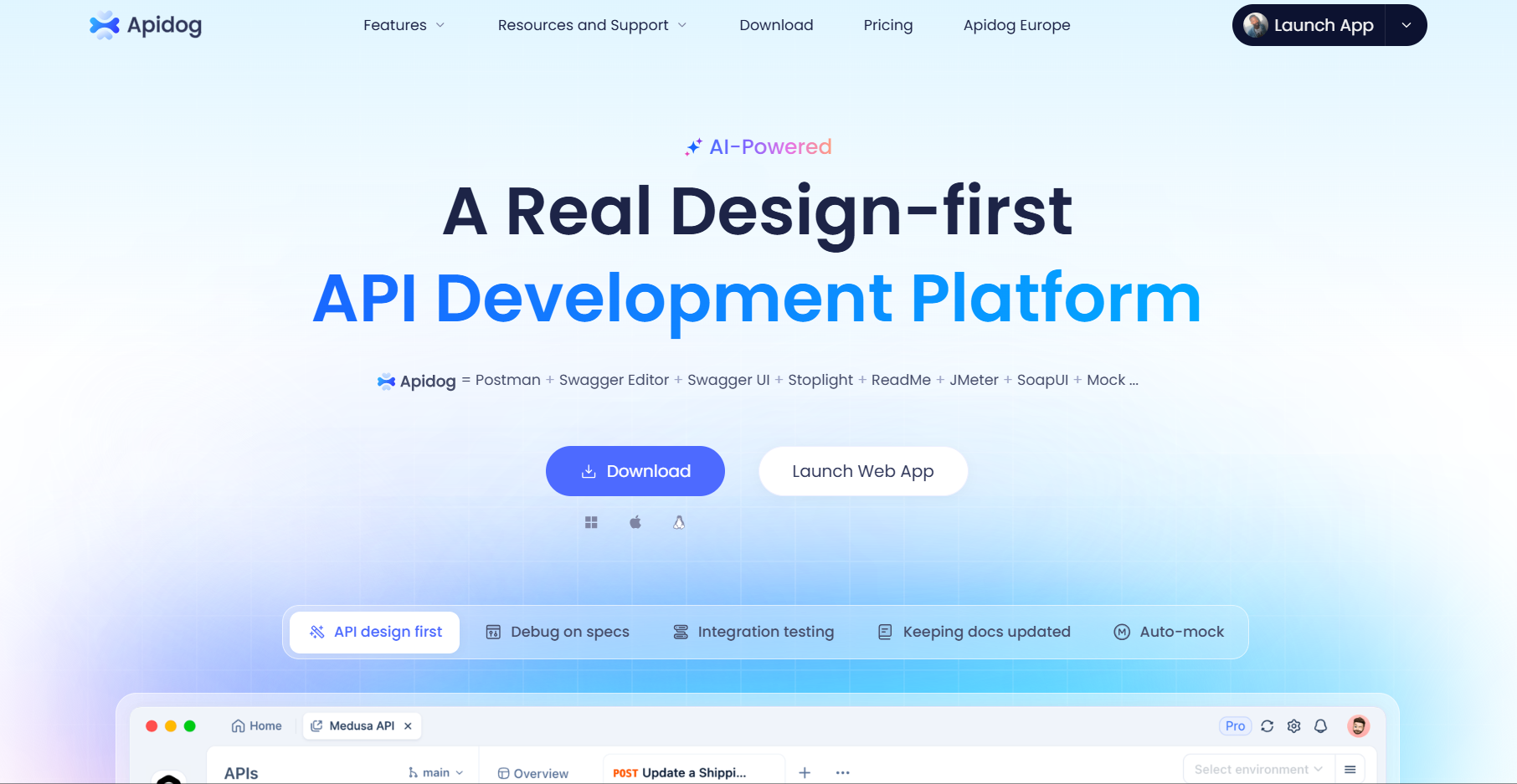
Apidog: The Best Tool to Make Your API a Product
Building an API product requires the right tools, especially when it comes to design, documentation, versioning, publishing, and developer experience. This is where Apidog shines. Below is how Apidog supports the “API as a Product” workflow — often more effectively than generic documentation tools.
Designing APIs as User-Focused Products in Apidog
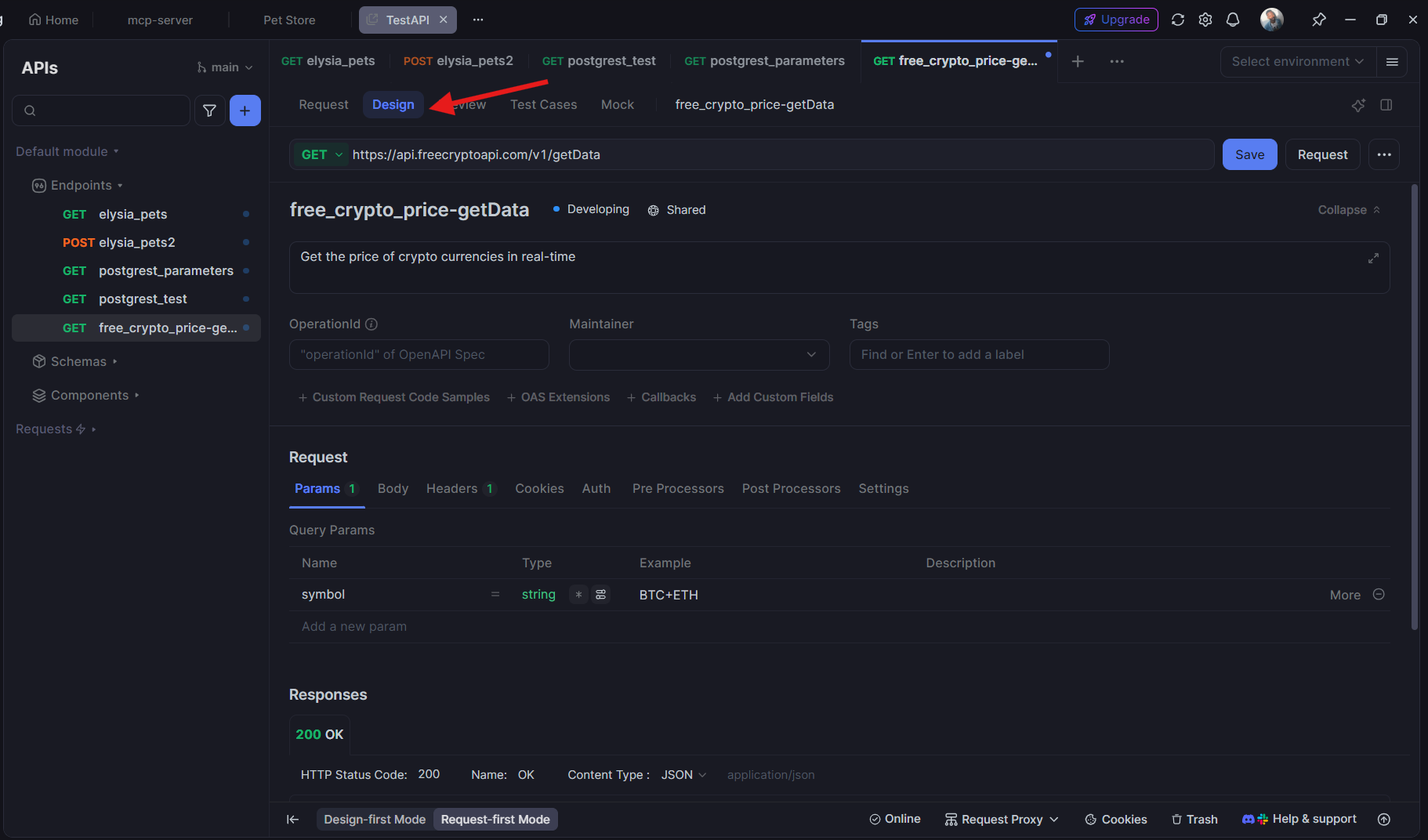
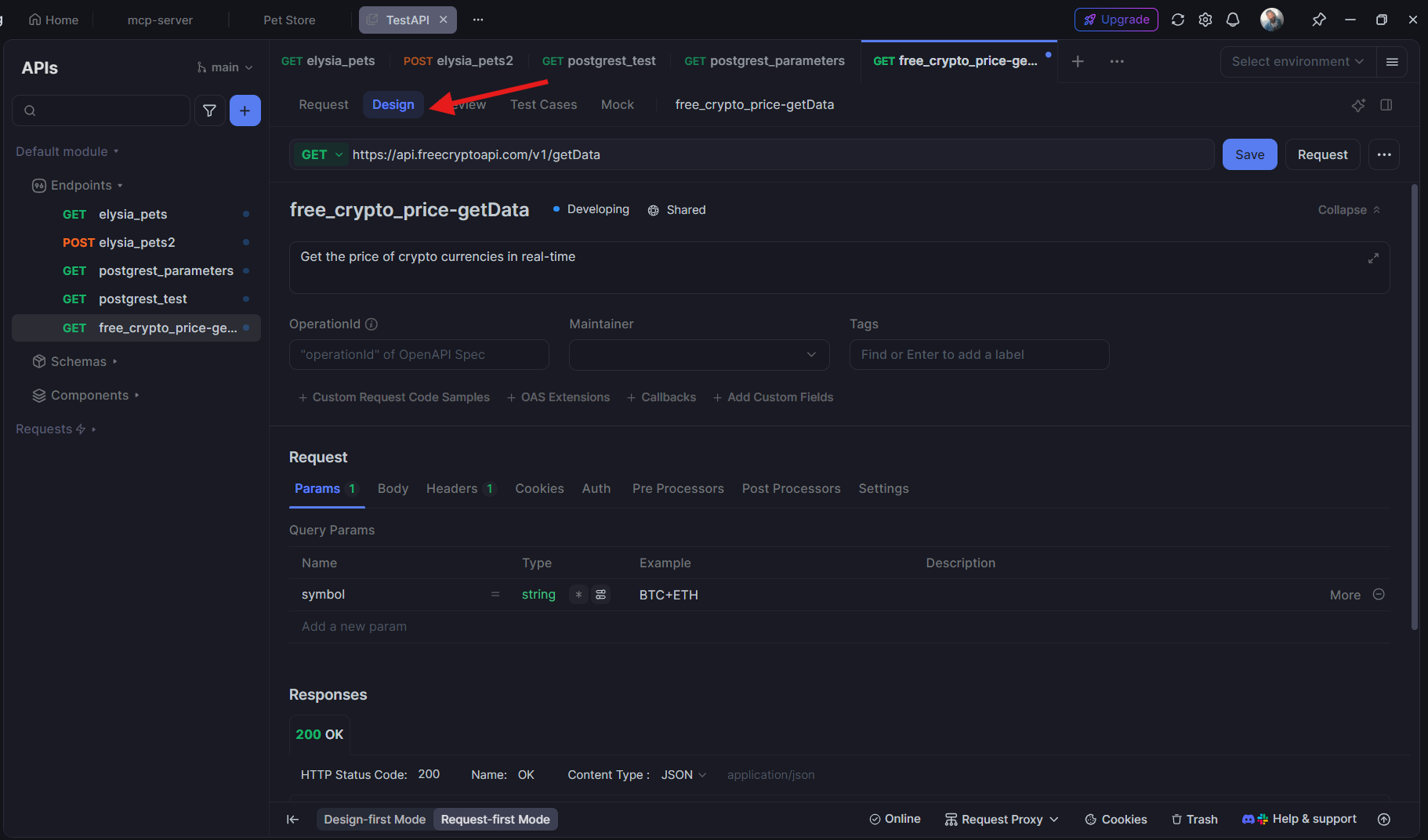
Apidog's design-first methodology transforms APIs into reliable, scalable products by enabling early validation and reuse. Start with a new project to define endpoints, HTTP methods, and schemas, ensuring data integrity and consistency across interactions.
Leverage reusable components like response templates and shared parameters to streamline development, reducing errors and accelerating iterations. This product-oriented design minimizes implementation gaps, making Apidog ideal for creating APIs that delight consumers from the start.
- Main Benefits: Visual editors for quick prototyping; automatic consistency checks for robust schemas.
Publishing APIs as Accessible Products in Apidog
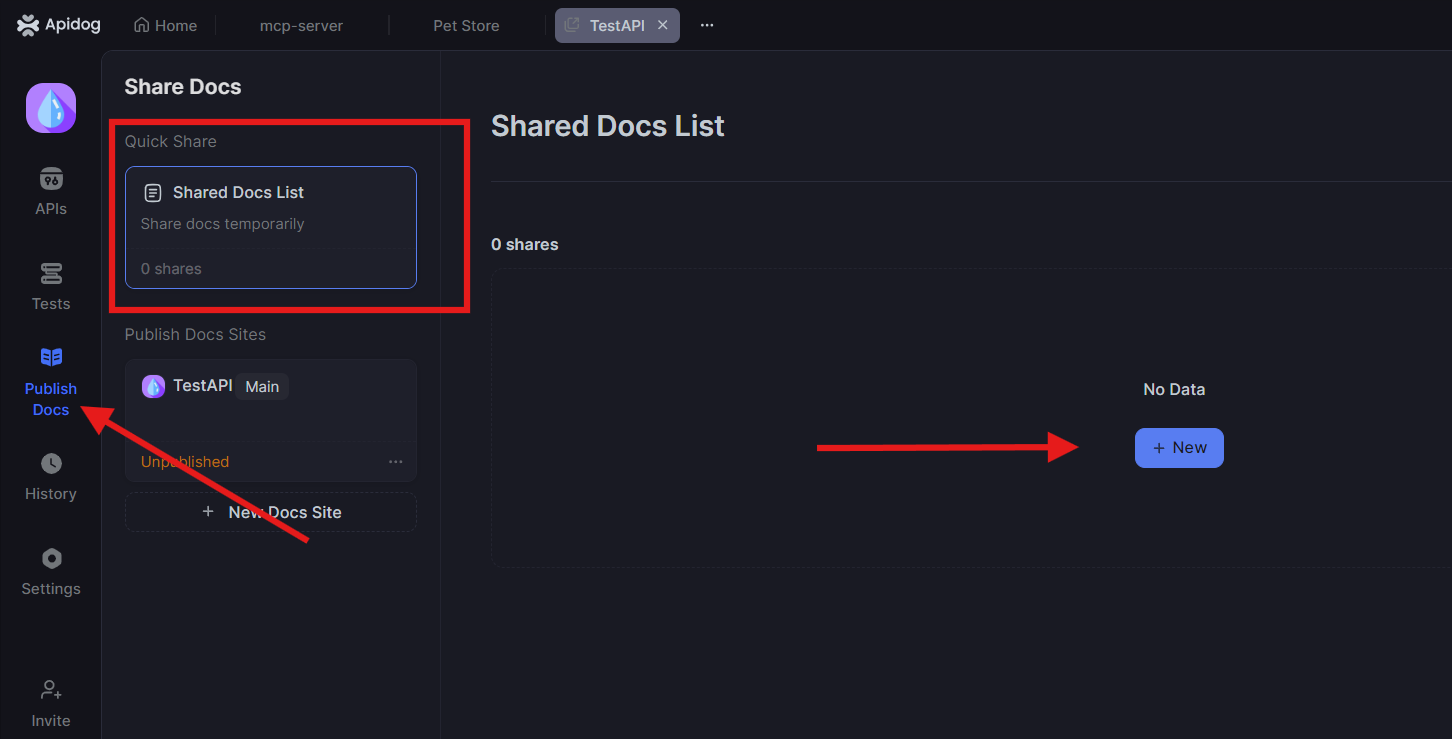
Publishing in Apidog turns designs into interactive, shareable documentation, treating your API as a marketable product. Generate docs from specs with "Try it out" features and code snippets, then use Quick Share for internal previews or Publish Docs for public branding.
Support for REST, GraphQL, and more ensures versatility, while versioned publishing keeps multi-release APIs organized.
- Key Features: Custom navigation, logos, and Markdown integration for engaging user experiences.
- Why Apidog?: Effortless sharing boosts adoption, positioning your API as a ready-to-use product.
Customizing Documentation with Custom CSS, JS, and HTML in Apidog
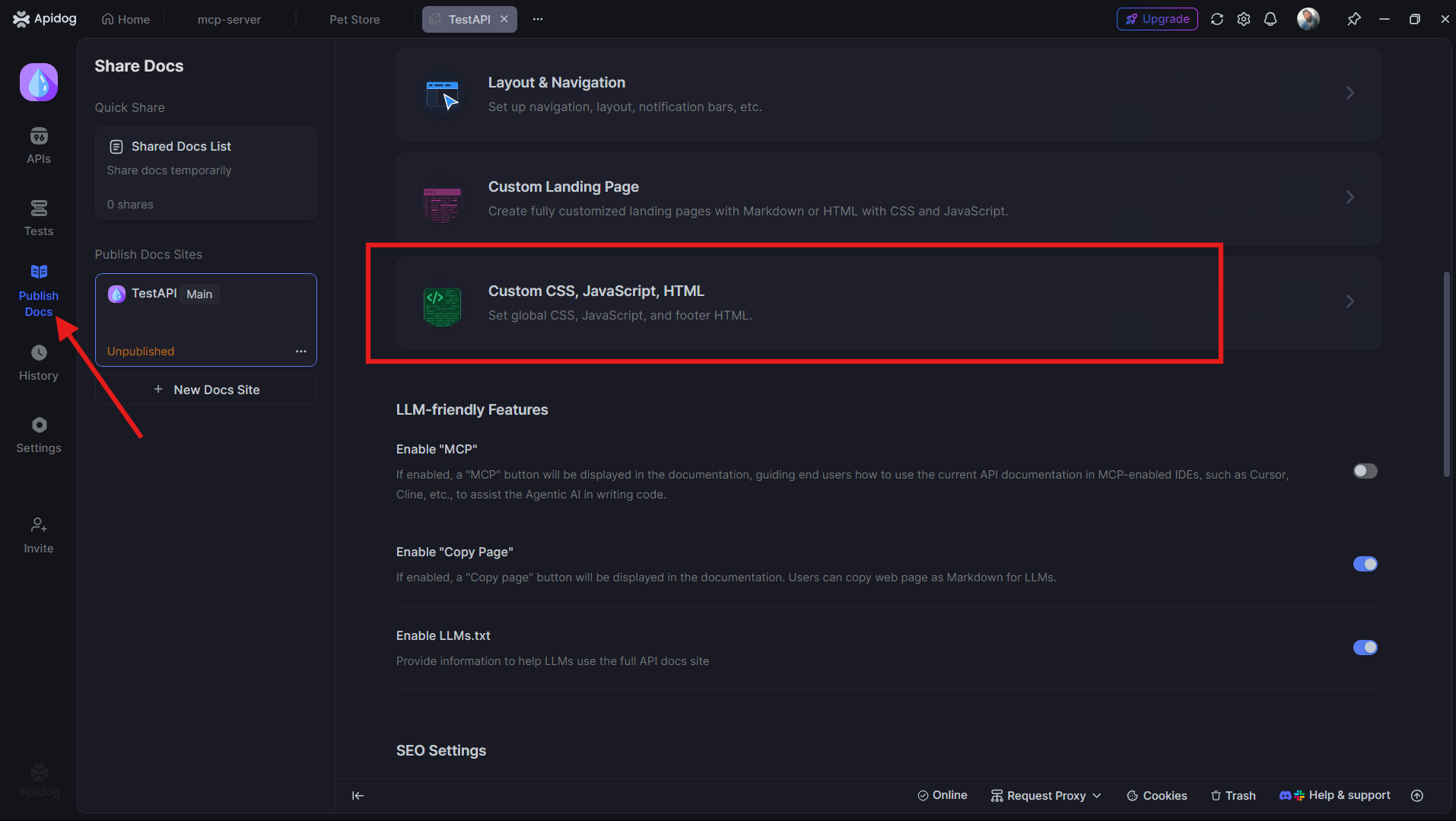
To make APIs feel like bespoke products, Apidog allows deep customization via CSS, JavaScript, and upcoming HTML—exclusive to custom domains. Tweak styles with reserved variables for themes or JS for interactive elements like chatbots, enhancing engagement without disrupting core functionality.
This level of personalization ensures your docs align with brand identity, turning static references into dynamic tools.
- Essentials: Use .g- classes for targeted styling; pure JS for third-party embeds.
- Apidog Edge: Secure, theme-stable customizations that elevate user interaction.
Setting Up Custom Domains for Branded API Products in Apidog
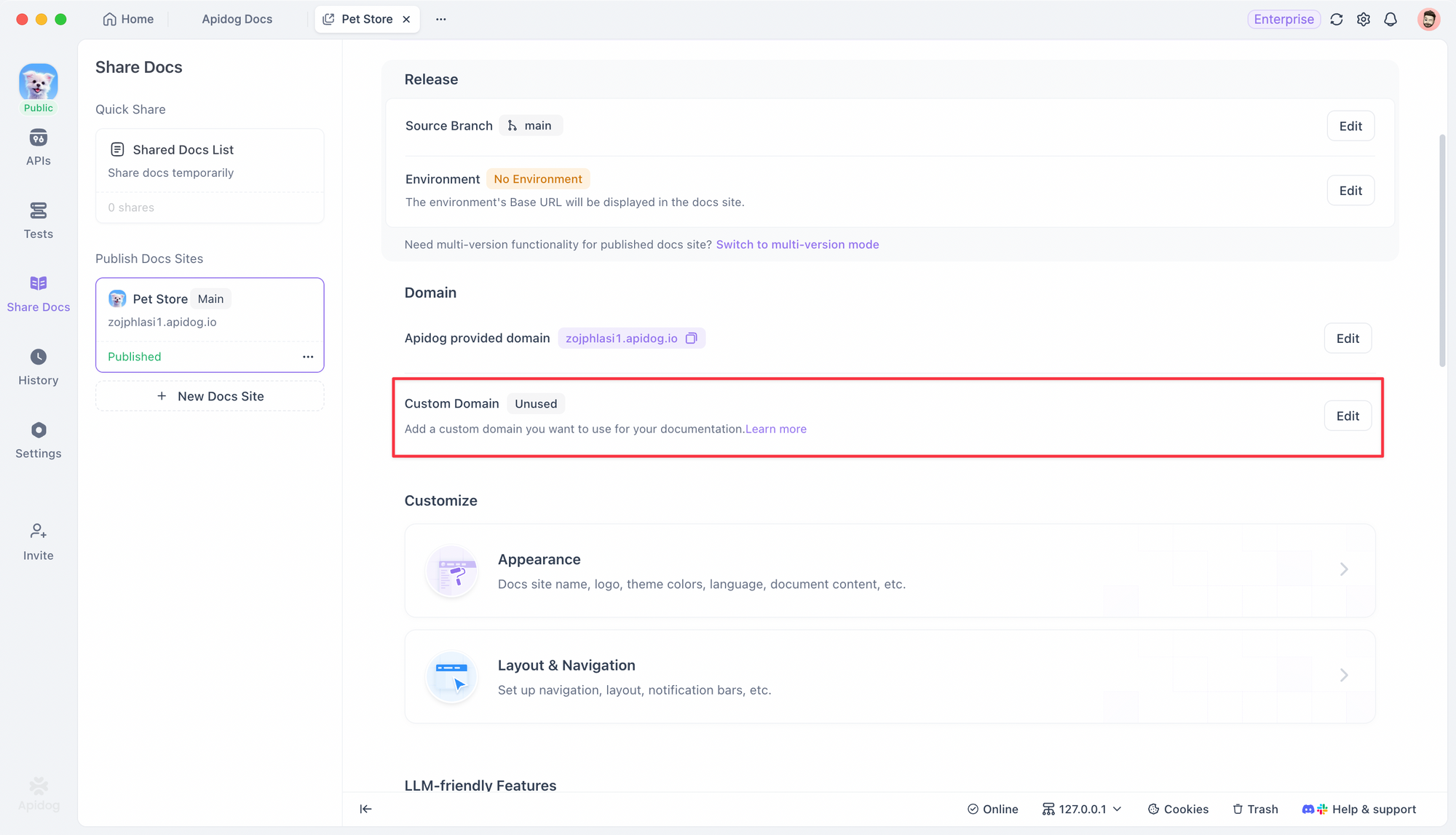
A custom domain in Apidog professionalizes your API product, integrating it seamlessly into your ecosystem. Configure via CNAME records in Publish settings for quick DNS setup, or use reverse proxies like Nginx for advanced control, with automatic HTTPS support.
Propagation is swift, enabling subdirectory deploys for organized paths.
- Pro Tips: Low TTL for fast changes; Europe-specific targets for compliance.
- Product Impact: Builds trust and ownership, making Apidog the go-to for branded accessibility.
Optimizing SEO for Discoverable API Products in Apidog
SEO in Apidog ensures your API product reaches developers searching for solutions, with page-level tweaks like meta titles, descriptions, and keywords, plus site-wide JSON metadata. Auto-generate sitemaps and robots.txt to guide crawlers, and set redirects for seamless updates.
This visibility strategy drives organic traffic, amplifying your API's market presence.
- Core Tactics: Dynamic variables for tailored meta; Open Graph for social shares.
- Apidog Advantage: Intuitive overrides and sitemap automation for superior search rankings.
By embracing "APIs as a Product," Apidog streamlines every step with unmatched efficiency, from design to SEO-optimized deployment. As the best-in-class platform, it equips you to create APIs that not only function flawlessly but also captivate and convert users.
What “API as A Product” Looks Like in Practice
Suppose you build a service that aggregates weather data — and you expose it as an API. By treating it as a product:
- You define clear, consistent endpoints (e.g.
/v1/forecast,/v1/history) with well-defined request/response schemas. - You document them thoroughly (how to fetch data, API rate limits, error codes, examples) — using Apidog.
- You publish a developer portal under
weatherapi.comwith custom domain and SSL. - You version your API — e.g. v1, v2 — and maintain backward compatibility.
- External developers (mobile apps, web apps) consume your API, build features, and maybe even pay for higher usage tiers.
What started as a backend internal service becomes a real product — a data service consumed by many, maintained, evolved, and supported.
Frequently Asked Questions
Q1. What distinguishes “API as a Product” from a regular API?
When you treat an API as a product, you apply product-management discipline: design, documentation, versioning, support, distribution, and often monetization. A regular API may just be a technical interface — internal or temporary — without these considerations.
Q2. Why is documentation important for API as a Product?
Because end-users (developers, partners) rely on clear instructions, examples, and stable contracts. Good documentation lowers friction in adoption, reduces errors, and increases trust in your API.
Q3. Can Apidog handle all types of APIs (REST, GraphQL, WebSocket)?
Yes. Apidog supports REST, SOAP, GraphQL, gRPC, WebSocket, SSE and more — making it flexible for many API architectures while maintaining consistent documentation standards.
Q4. How does versioning work when API evolves?
Apidog lets you publish multiple versions of your API documentation — users can switch between versions, so backward compatibility can be maintained and new features added without breaking existing integrations.
Q5. Is it possible to use a custom domain for the API documentation site?
Absolutely. Apidog supports custom domains (via CNAME or reverse-proxy) and automatic SSL — letting you brand the docs site as your own (e.g. api.yourcompany.com).
Conclusion
In modern software development, thinking of your API as a product is increasingly important. It shifts the mindset from “just a backend interface” to a stand-alone service or platform — one that can power integrations, external consumers, and even monetization.
Using a tool like Apidog, you can design, document, test, publish, brand, version, and maintain your API product professionally. Apidog’s rich feature set — visual design, multi-protocol support, documentation customization, custom domains, SEO settings, version control, mock servers, and more — makes it an excellent foundation for API-as-a-product strategies.
If you plan to expose your APIs externally, build a developer platform, or monetize services via APIs — adopting the “API as A Product” mindset and leveraging Apidog could make a significant difference in usability, adoption, and long-term sustainability.
Want an integrated, All-in-One platform for your Developer Team to work together with maximum productivity?
Apidog delivers all your demands, and replaces Postman at a much more affordable price!