APIs are the backbone of modern software ecosystems. They connect services, enable integrations, and expose business logic to clients — internal or external. With that central role, ensuring APIs are well-designed, consistent, and documented correctly is critical.
Traditionally, teams rely on manual API reviews: developers or architects inspect endpoint definitions, check naming conventions, verify response schemas, and ensure consistency with internal or external standards (like OpenAPI Specification). However, manual review has several drawbacks:
- It's time-consuming and error-prone. As the API grows, manually verifying every endpoint becomes a serious maintenance burden.
- Reviews tend to be inconsistent: different reviewers may interpret guidelines differently, leading to drift over time.
- It slows down development: every change, even minor, may require human review — causing bottlenecks.
As API usage scales, manual compliance checks simply do not scale as well.
That's where AI-powered API compliance comes in — by automating the review process, ensuring consistency, saving time, and reducing human error, while still enforcing strict design standards.
Want an integrated, All-in-One platform for your Developer Team to work together with maximum productivity?
Apidog delivers all your demands, and replaces Postman at a much more affordable price!
What Is AI-Powered API Compliance?
AI-powered API compliance refers to using AI (or intelligent automation) to automatically examine API definitions, documentation, and design against a defined standard (such as OpenAPI) or organizational rules — and highlight deviations or issues.
Rather than relying on humans to manually inspect specs or endpoint definitions, an AI-based compliance engine can scan the entire API surface, validate paths, schemas, naming, response definitions, and flag problems — in seconds. Compliance becomes part of your design workflow, not an afterthought.
How Apidog Enables AI-Powered Compliance
Apidog' endpoint compliance check brings AI-powered compliance directly into the API design environment.
Here's how it works and why it matters:
Define API Design Guidelines (Based on OpenAPI or Custom Rules)
First — compliance requires a standard. In Apidog, you can create an API design guideline at the top of your project's folder tree. This guideline can be based on OpenAPI recommendations (via a ready-made template) or customized to your team’s internal standards.
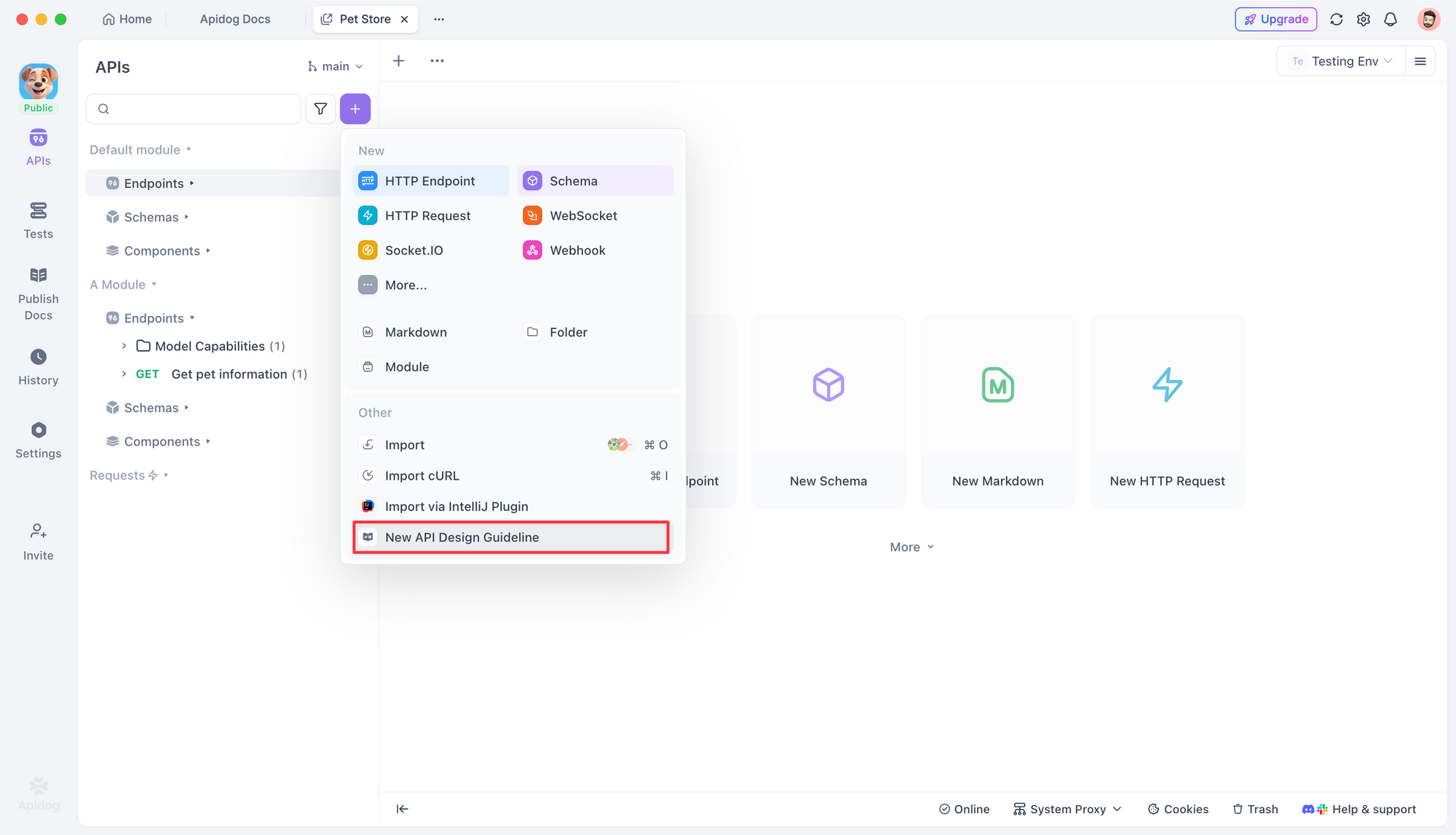
The guideline becomes the single source of truth for naming conventions, schema rules, response standards, and naming structure. With this baseline set, Apidog’s AI has a reference against which to compare endpoints.
Run "Endpoint Compliance Check" — Automated Review in Seconds
Once guidelines are in place and endpoints defined (paths, methods, params, responses, schemas), you can run the Endpoint Compliance Check from the API documentation page in Apidog. The AI scans your endpoints against the standard and produces a detailed report that shows:
- A compliance score per endpoint
- Specific issues: schema mismatches, naming problems, missing fields, naming inconsistencies, missing response definitions, etc.
- Actionable suggestions and examples of how to fix the issues
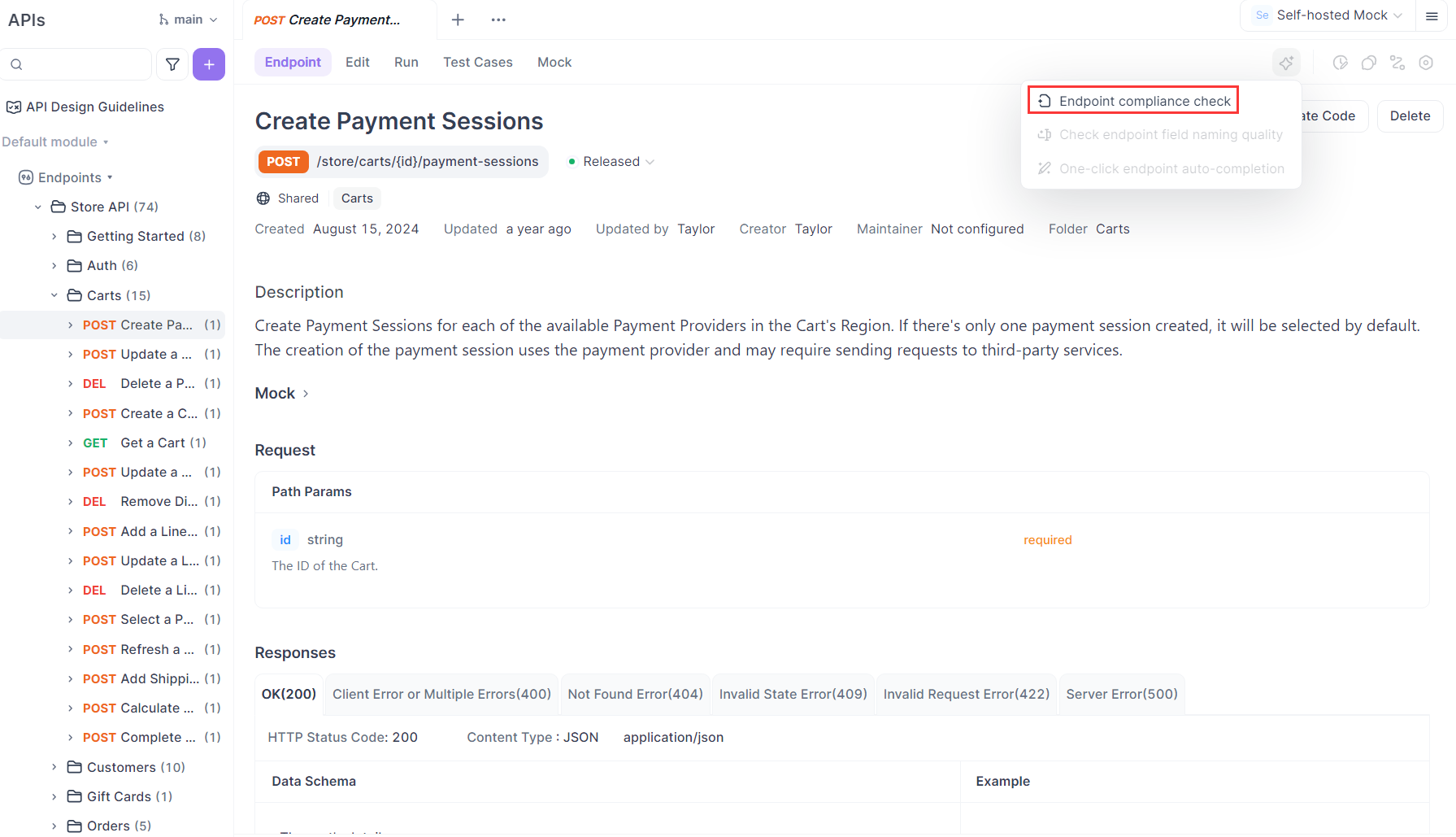
This transforms compliance from a slow human-led inspection into a fast, consistent, repeatable automated process — ideal for large APIs or frequent changes.
AI-Assisted Naming & Consistency Enforcement
Besides checking for problems, Apidog's AI helps in automated naming: suggesting standard-compliant endpoint paths, parameter names, response schema names — all aligned with your guidelines. This ensures that naming conventions remain consistent, even as different team members add or update endpoints.
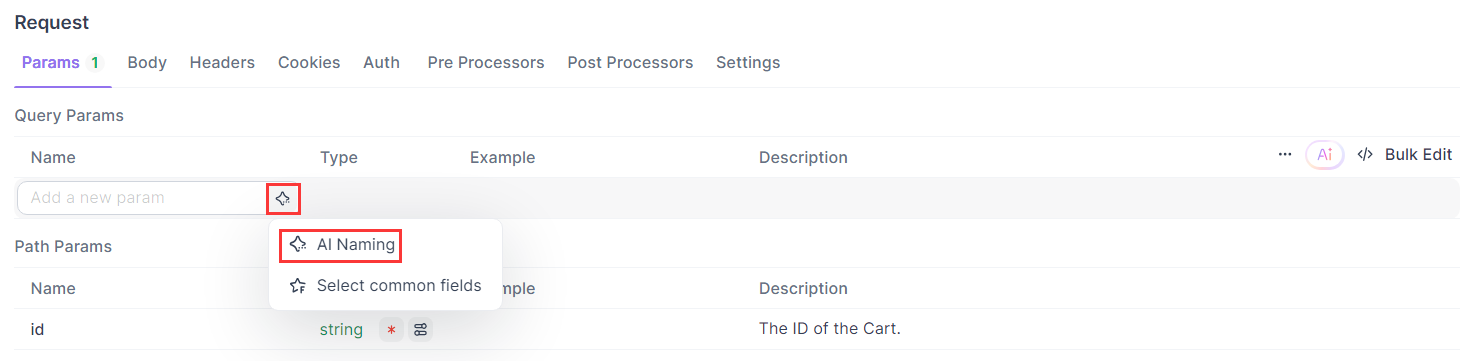
By standardizing naming and structure at design time, you reduce confusion, improve readability, and make downstream tasks (SDK generation, documentation, client libraries) easier.
Design-First Workflow & Continuous Compliance
Apidog encourages a design-first approach: you design your API spec (endpoints, schemas, docs) before implementing code. When combined with AI compliance, this means you get immediate feedback on compliance before writing or deploying code. That helps catch structural or design issues early — saving time, avoiding costly refactors, and ensuring a clean API from the start.
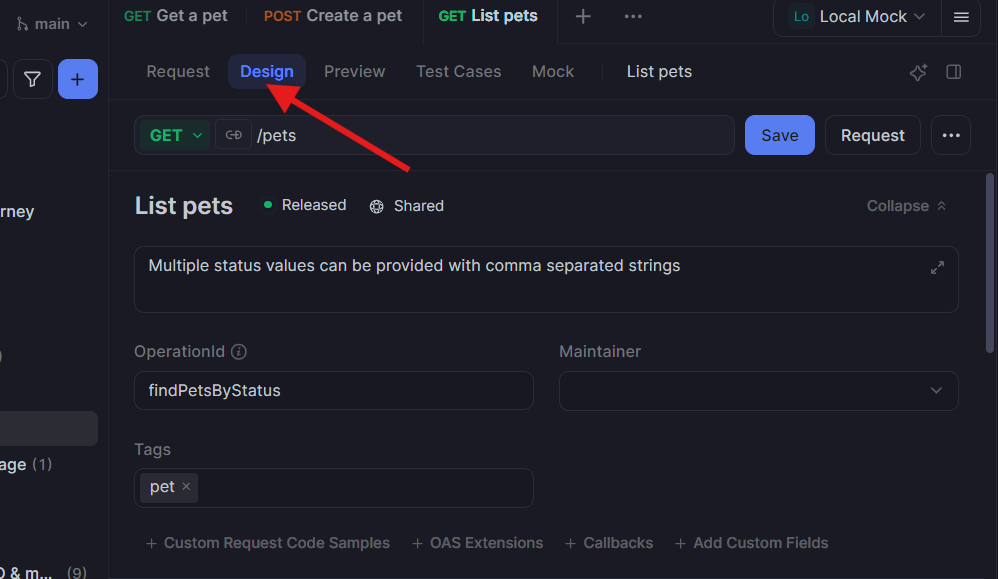
Once an API passes the compliance check, it's ready for publishing, and the spec can power automated documentation, SDK generation, mocks, and contract-based testing.
Benefits of AI-Powered API Compliance
Adopting AI-driven compliance for API design delivers several key advantages — especially for teams aiming for reliability, scale, and maintainable API surfaces:
- Speed and scalability: Compliance checks that used to take hours can now run in seconds, no matter how many endpoints you have.
- Consistency: Every endpoint is measured against the same standard — no subjective variation between reviewers.
- Early detection: Issues caught before implementation reduce refactor costs and avoid bugs related to schema mismatches or naming errors.
- Better documentation and developer experience: Clean, consistent, well-documented APIs are easier for clients, third-party developers, and internal teams to consume.
- Supports continuous evolution: As APIs grow and evolve, you can re-run compliance automatically, ensuring changes stay compliant.
- Improved team collaboration: Guidelines + automated checks align all contributors on design principles; feedback becomes objective and traceable.
In short — AI-powered compliance turns API design review from a bottleneck into a streamlined, integrated part of development.
What It Looks Like in Practice — A Typical Workflow
Here is a practical example of how a team might use AI-powered API compliance with Apidog:
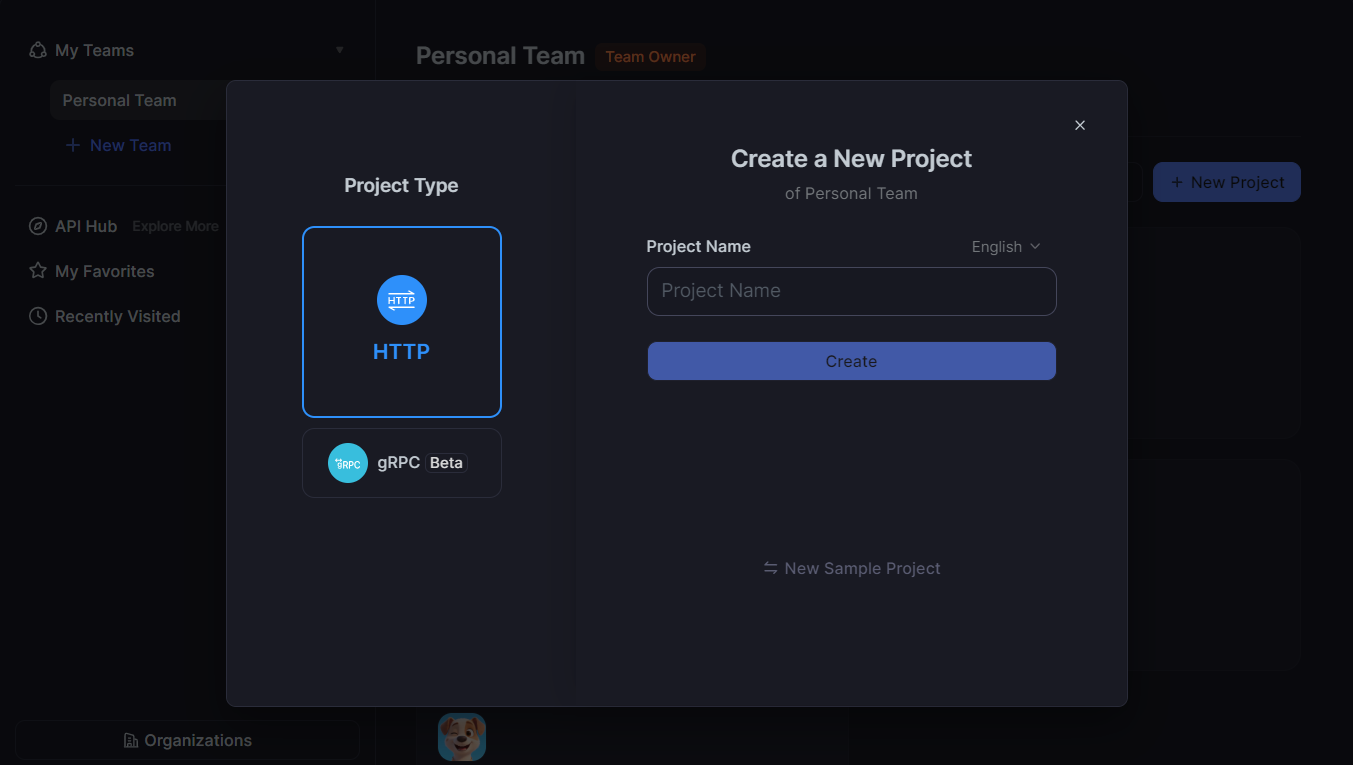
- Start a new API project in Apidog. Use REST, GraphQL, WebSocket, or any supported API style.
- Add API Design Guidelines. Use the OpenAPI-based template for best practice, or define custom rules for your team.
- Design endpoints: define paths, parameters, request/response schemas, error responses, status codes, and examples.
- Run "Endpoint Compliance Check". The AI reviews the definitions, returns a report with scores and suggestions. Fix any violations.
- Leverage AI naming suggestions. Let the AI propose standardized names for endpoints, schemas, parameters; accept or tune them.
- Publish documentation / spec. Once compliance is verified, publish docs. The OpenAPI-compliant spec can be exported, used to auto-generate clients or mock servers.
- Use additional Apidog features: response validation, contract testing, mocks, automated tests — now that your spec is clean and standard compliant.
- Iterate and maintain. Each time you add or modify endpoints, re-run the compliance check to ensure standards continue to hold.
Why Does this Matter for the Future of API Design Review
As API ecosystems grow more complex — with microservices, external integrations, public APIs, and multiple clients — manual review becomes unsustainable. AI-powered compliance represents the future of API design review for several reasons:
- From manual inspections to continuous, automated quality assurance: Every change is validated immediately; compliance becomes part of CI/CD rather than a separate step.
- Objective, data-driven standards enforcement: Instead of relying on individual reviewers’ judgment, compliance is based on defined guidelines and consistent evaluation.
- Seamless integration into existing workflows: Tools like Apidog embed compliance into design and documentation — no need for separate linting or static analysis tools.
- Higher developer velocity and lower friction: Teams can iterate quickly on APIs without worrying about manual compliance overhead — shipping faster, with confidence.
- Better API consumer experience: Clean, standardized, well-documented APIs are easier to understand and integrate, improving reliability for clients and partners.
In short — AI-powered API compliance is not just a convenience: it’s becoming a necessity for any serious API-driven organization aiming for scale, quality, and efficiency.
Frequently Asked Questions
Q1. Do I need a special license or plan to use Apidog's Endpoint Compliance Check?
No — as long as you use Apidog version 2.7.37 or later, the compliance check feature is available.
Q2. Does Apidog supply the AI model for compliance checks?
No — you need to supply your own AI model key (for example from OpenAI, Claude, or Gemini). Apidog leverages your model to run the compliance analysis.
Q3. Can I customize the design guidelines to match my organization's internal standards — not just OpenAPI?
Yes. Apidog allows you to create a custom API design guideline from scratch (blank template), so you can enforce your internal naming, schema, and style rules.
Q4. How accurate is the compliance check? Will AI make mistakes?
AI compliance tools — like any automated tool — are best viewed as assistants. They catch most structural or naming issues, but you should still manually review critical endpoints (especially business logic, security, or edge cases). Use the AI report as guidance, not absolute authority.
Q5. Does compliance checking integrate with client SDK generation, testing, or mock server workflows?
Yes — once your API spec is compliant and published in Apidog, you can export it, auto-generate client SDKs, mock servers, or integrate with testing workflows such as contract testing or automated tests.
Conclusion
AI-powered API compliance — as offered by tools like Apidog — is transforming how teams design, review, and maintain APIs. By automating compliance checks against OpenAPI or custom design guidelines, you get consistent, fast, and repeatable reviews; cleaner documentation; standardized naming; and better alignment across teams.
As API ecosystems scale, manual review becomes a bottleneck. With AI-driven compliance, you free up time, reduce errors, improve developer experience, and ensure that APIs remain robust, maintainable, and consumer-friendly.
If your team builds or maintains APIs — especially at scale — integrating AI-powered compliance into your workflow might be one of the best investments you can make.
Want an integrated, All-in-One platform for your Developer Team to work together with maximum productivity?
Apidog delivers all your demands, and replaces Postman at a much more affordable price!