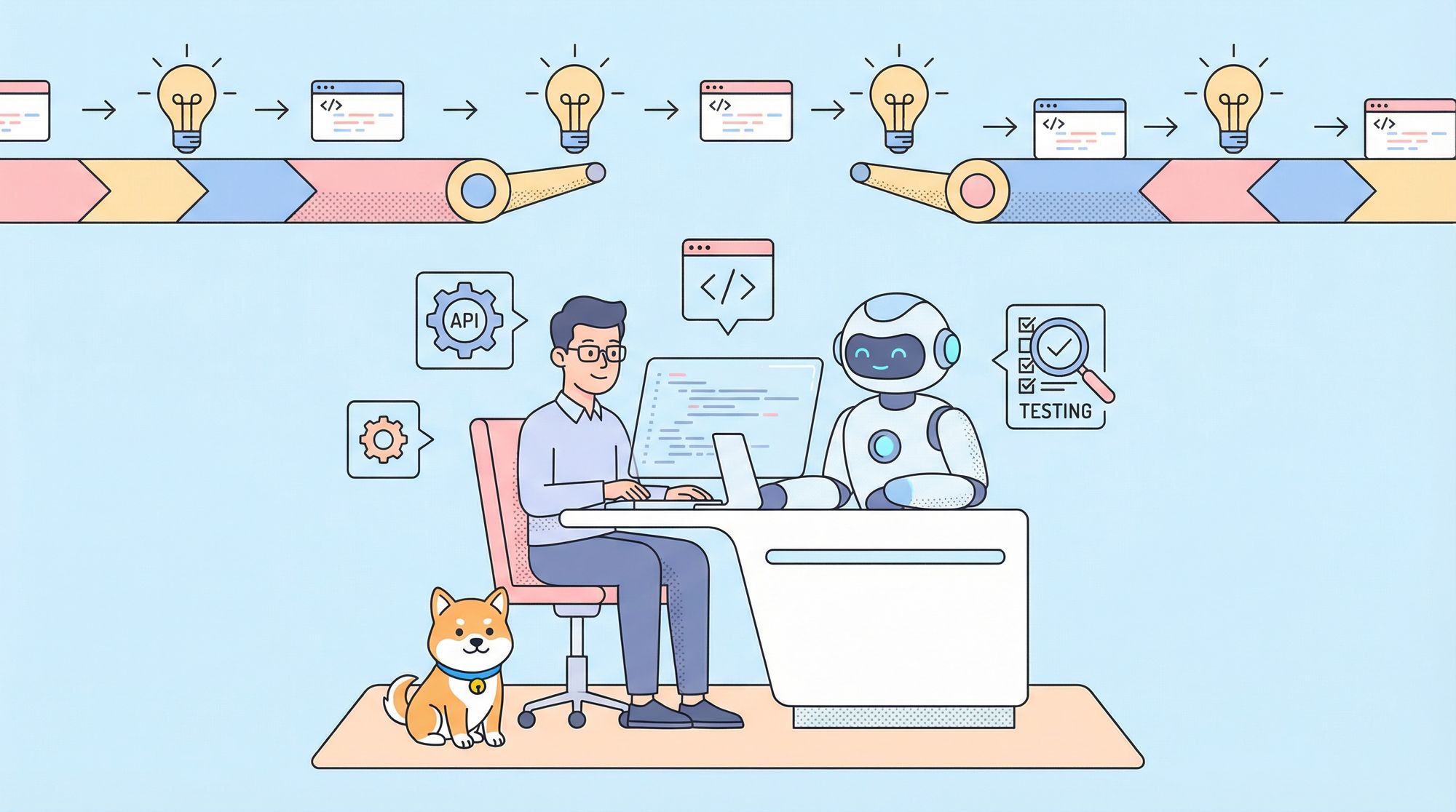
Software development is evolving rapidly. In 2026, success isn’t just about writing flawless code—it’s about building smarter, faster, and with fewer roadblocks. The rise of AI coding agents is transforming how API developers, backend engineers, and technical leads approach their daily work. These tools go well beyond autocomplete or code snippets; they can write, debug, test, and help design applications side-by-side with you.
With powerful AI agents now integrated into editors, cloud platforms, and no-code tools, selecting the right ones for your workflow can supercharge both velocity and reliability. Whether you’re building robust APIs, automating QA, or managing complex projects, AI coding assistants are fast becoming essential.
In this guide, we highlight the most impactful AI coding agents available—spanning full-stack generators, IDE-integrated copilots, no-code app builders, and more. Plus, we’ll show how solutions like Apidog fit seamlessly into an AI-augmented workflow for API teams, connecting API docs, testing, and code in one place.
Why AI Coding Agents Matter for Modern Developers
Traditional programming alone can’t keep pace with the demands of 2026. Teams now juggle vast codebases, shifting requirements, and the need for rapid iteration. AI coding agents address these challenges by:
- Automating repetitive work: Generate boilerplate code, refactor, and catch bugs before they hit production.
- Speeding onboarding: Summarize large codebases, offer context, and assist with complex logic.
- Enabling rapid prototyping: Build and test full-stack apps with natural language or visual tools.
- Improving collaboration: Act as a “pair programmer,” suggesting improvements and documenting changes in real time.
For API-focused teams, AI agents can streamline the entire lifecycle—from generating API endpoints to automatically testing them. Tools like Apidog connect your API documentation with your coding assistant, enabling you to generate, test, and maintain APIs without switching tabs or contexts.
Essential AI Coding Agents for Developers
Below, you’ll find the most valuable AI coding agents currently available. Each is matched to specific use cases—whether you’re new to programming or building enterprise-scale systems.
1. Cursor
Overview: An AI-first code editor integrating with multiple large language models (LLMs), Cursor elevates coding efficiency through real-time intelligent suggestions.
- Key Features:
- Real-time AI code completion
- Supports many languages
- Customizable AI integrations
Best for: Developers wanting an advanced, productivity-focused coding environment.
2. Cline

Overview: Cline is a VS Code plugin designed for large codebases. It offers runtime awareness and supports different LLMs for deeper code understanding.
- Key Features:
- Efficient with complex projects
- Multi-LLM support
- Contextual code suggestions
Best for: Teams working on massive or legacy systems needing smart navigation and code insight.
3. Databutton

Overview: A Norwegian solution making app development accessible for non-coders, with a user-friendly, step-by-step approach.
- Key Features:
- Simple interface for non-developers
- Guided app creation process
- VC-backed reliability
Best for: Product managers or analysts needing quick app prototypes—no coding required.
4. Continue.dev

Overview: An open-source alternative to Cursor, Continue.dev lets developers create their own AI-powered IDEs with full customization.
- Key Features:
- Open-source and flexible
- Ideal for tailored AI workflows
- Active developer community
Best for: Engineers needing custom AI IDE features or wanting to contribute to open tooling.
5. Base44

Overview: A no-code dashboard builder, Base44 streamlines analytics and data visualization without writing code.
- Key Features:
- Drag-and-drop dashboards
- Pre-built templates
- Zero coding for deployment
Best for: Business users or teams needing quick dashboard solutions.
6. Trae

Overview: Created by ByteDance, Trae is an AI assistant for full-stack web app development with a polished, VS Code-based UI.
- Key Features:
- End-to-end web app building
- Multimodal input (text, images)
- Automatic context management
Best for: Developers seeking a free, robust environment for rapid prototyping.
7. Windsurf

Overview: Windsurf adds an “agent mode” for interactive, large-project navigation and editing.
- Key Features:
- Smart project navigation
- Intuitive UI
- Designed for complex codebases
Best for: Engineers handling enterprise-scale applications.
8. Bolt

Overview: Focused on speed and simplicity, Bolt is excellent for SaaS prototyping and quick mobile app creation.
- Key Features:
- Fast prototyping
- Expo integration for mobile
- Beginner-friendly
Best for: Startups and solo devs testing ideas quickly.
9. Lovable

Overview: Lovable caters to beginners, with visual editing and seamless integration for building landing pages and SaaS MVPs.
- Key Features:
- Visual editing tools
- Supabase and Resend integration
- Customizable templates
Best for: New developers focusing on web app or SaaS landing page creation.
10. v0 by Vercel

Overview: v0 auto-generates UI components in shadcn style, with an extensive template library and Figma imports.
- Key Features:
- Instant UI generation
- Figma integration
- Large template collection
Best for: Developers streamlining design-to-code for frontend projects.
11. Replit AI
0
Overview: Replit AI provides full-stack capabilities, native databases, and mobile coding—ideal for cloud-based development.
- Key Features:
- Cloud IDE
- Built-in databases
- Mobile-friendly coding
Best for: Devs seeking a powerful, all-in-one cloud coding platform.
12. Augment Code
1
Overview: Augment Code integrates with VS Code and JetBrains, offering code execution, bug finding, and real-time analysis.
- Key Features:
- Supports major IDEs
- Terminal and code execution
- Performance optimization suggestions
Best for: Advanced users optimizing and maintaining large, complex codebases.
13. Mocha (BuildWithMocha)
2
Overview: Mocha allows non-coders to build production-ready web apps using simple prompts—handling everything from authentication to hosting.
- Key Features:
- No-code prompt interface
- End-to-end app generation
- Full-stack automation
Best for: Entrepreneurs or product leads needing quick MVPs without a dev team.
14. GitHub Copilot
3
Overview: GitHub Copilot is the most widely adopted AI pair programmer, offering real-time code suggestions across multiple languages and IDEs.
- Key Features:
- Live code completions
- Broad language and IDE support
Best for: All developers seeking to boost productivity and reduce manual coding.
15. Rork App
Overview: Rork builds mobile apps from plain text instructions, with direct TestFlight publishing.
- Key Features:
- Text-to-app creation
- One-click TestFlight deploy
- No-code, rapid prototyping
Best for: Non-coders or teams validating mobile app ideas fast.
16. Clark
4
Overview: Clark helps enterprises turn Jira tickets into internal tools—combining prompt-based input, Figma-like editing, and AI code generation.
- Key Features:
- Jira integration
- Visual and code-based editing
- Automation for internal tools
Best for: Enterprise teams streamlining internal development and automation.
17. Stitch (by Google)
5
Overview: Google’s Stitch enables rapid prototyping with a simple interface and built-in logic flows—ideal for quick MVPs.
- Key Features:
- Fast, accessible prototyping
- Logic flow integration
- Non-dev friendly
Best for: Founders and designers iterating on product ideas.
18. Grok Studio (by X AI)
6
Overview: Grok Studio provides an interactive, AI-powered coding sandbox for experimentation and learning.
- Key Features:
- Real-time suggestions and corrections
- Minimal interface
- Great for onboarding and skill-building
Best for: Beginners or anyone learning to code with AI assistance.
19. Canva Code
7
Overview: Canva Code brings Canva’s visual-first approach to lightweight coding—perfect for building interactive web tools and lead magnets.
- Key Features:
- Drag-and-drop code builder
- Exportable UI components
- Seamless with Canva ecosystem
Best for: Marketers and founders creating simple tools or landing page features.
20. A0.dev
8
Overview: A0.dev is a mobile-first AI agent that generates real React Native apps directly from your phone—ideal for fast, on-the-go prototyping.
- Key Features:
- Mobile app creation via smartphone
- True React Native output (not web wrappers)
- Powered by Claude 3.7 Sonnet for smart code
Best for: Indie developers and mobile-first creators needing rapid iteration.
💡 If you’re tired of switching between code, API docs, and test tools, Apidog unifies these tasks. Let your AI assistant handle the details while you focus on building robust APIs.
Conclusion: Future-Proof Your Workflow
AI coding agents are fundamentally changing how developers build, test, and ship software—especially for API-centric teams. From smart code editors to rapid app builders, these tools reduce friction and let you focus on logic, architecture, and innovation.
Incorporate the best AI agents into your workflow to improve code quality, speed up delivery, and stay competitive in an AI-driven tech landscape. And for API development, solutions like Apidog ensure your documentation, testing, and code remain perfectly in sync—so your team can deliver better APIs, faster.