Artificial intelligence (AI) has become the backbone of modern digital innovation, powering everything from chatbots to recommendation engines. But as AI adoption surges, so does the complexity of delivering, securing, and optimizing access to AI capabilities. Enter AI API management — the discipline dedicated to governing how AI services are exposed, consumed, and maintained through APIs.
In this comprehensive guide, you'll learn what AI API management is, why it’s essential for organizations leveraging AI, best practices, architecture, and how platforms like Apidog can streamline your AI API lifecycle.
What is AI API Management?
AI API management refers to the strategies, tools, and processes used to create, secure, monitor, scale, and govern application programming interfaces (APIs) that provide access to AI models, agents, or services. Unlike traditional API management, AI API management must address unique challenges such as high computational demands, sensitive data exchange, dynamic prompt handling, and regulatory compliance around AI-generated content.
AI APIs act as the bridges between your applications and advanced AI services — whether you’re using cloud-based large language models (LLMs), deploying on-premises machine learning, or orchestrating multiple generative AI agents. Effective AI API management ensures these connections are reliable, secure, cost-efficient, and compliant with organizational and legal requirements.
Why AI API Management Matters
With the rapid integration of AI into business operations, organizations face several unique challenges:
- Security & Compliance: AI APIs often process sensitive or regulated data. Unauthorized access can lead to data breaches or non-compliance.
- Resource Optimization: AI workloads are resource-intensive, making cost control and rate limiting critical.
- Scalability: Spikes in demand can overwhelm AI endpoints, requiring intelligent traffic management.
- Governance: AI responses must be monitored and filtered to prevent bias, toxicity, and regulatory violations.
- Observability: Tracking usage, errors, token consumption, and performance is essential for reliability.
Neglecting AI API management exposes organizations to security risks, runaway costs, degraded user experiences, and reputational harm.
Key Components of AI API Management
1. Secure API Gateways for AI
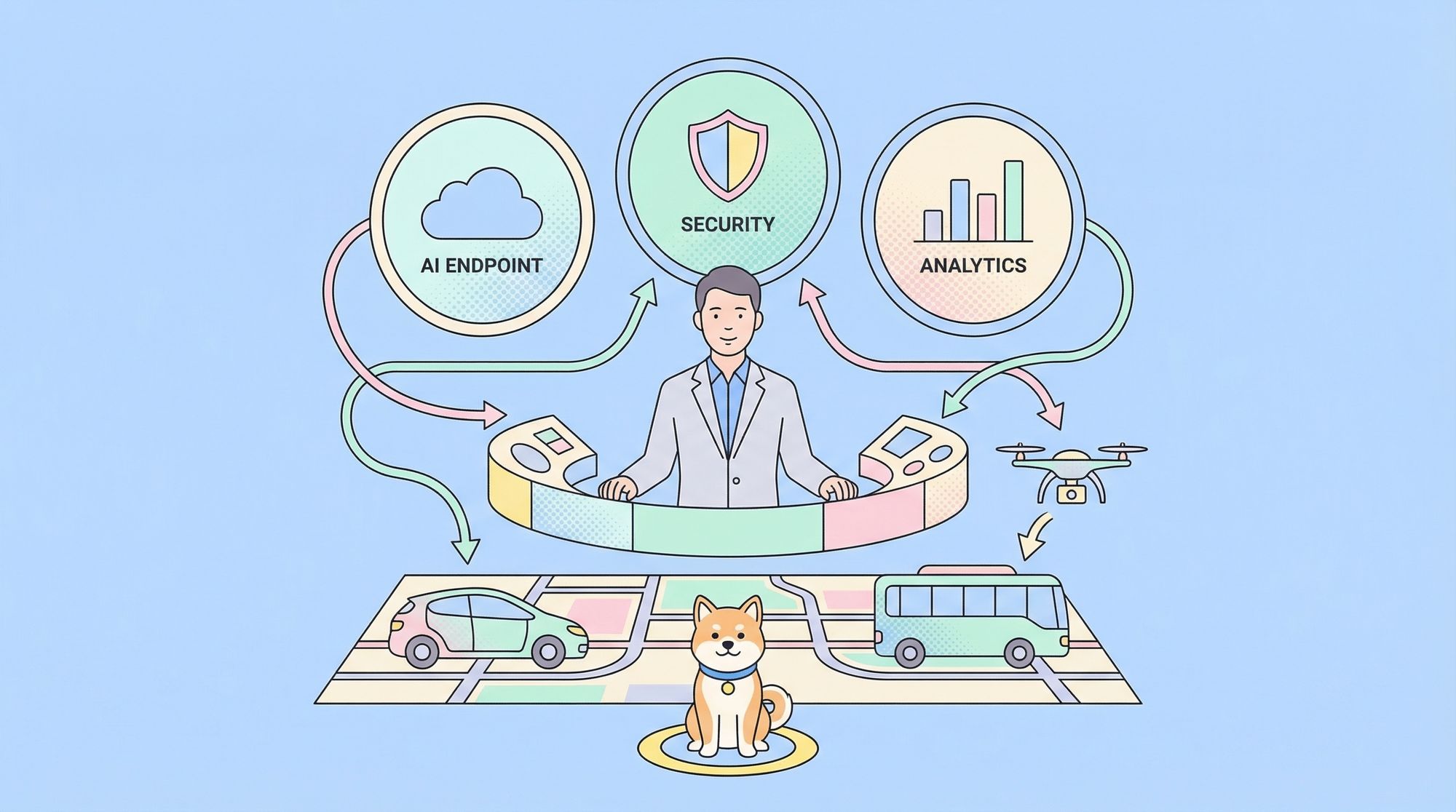
A core pillar of AI API management is the use of robust API gateways. These act as control points between consumers (apps, users, agents) and AI backends (models, inference services). Gateways enforce:
- Authentication & Authorization: Ensuring only legitimate users and applications can access AI endpoints.
- Rate Limiting & Quotas: Preventing abuse and controlling costs by capping usage per user, token, or application.
- Payload Validation & Transformation: Filtering inputs/outputs to sanitize prompts, enforce data formats, and block unsafe content.
Ingress gateways manage external access to your AI APIs, while egress gateways control how your internal applications consume third-party AI services.
2. Monitoring, Logging, and Analytics
Continuous observability is vital in AI API management:
- Usage Analytics: Track which models and endpoints are being used, by whom, and how often.
- Performance Monitoring: Measure latency, throughput, and model response times.
- Token Usage Tracking: For LLMs, monitor prompt and completion token consumption to manage costs.
- Audit Logs: Maintain records for compliance and troubleshooting.
3. Content Moderation and Governance
AI APIs can return unpredictable or even harmful outputs. Management platforms must:
- Filter Toxic Content: Block or flag unsafe, biased, or non-compliant outputs.
- Prompt Engineering Controls: Enforce policies on prompt structure and content.
- Ethical Guardrails: Apply business, legal, or brand guidelines to all AI interactions.
4. Multi-Model and Multi-Provider Orchestration
Organizations often leverage different AI models (e.g., OpenAI, Google Vertex AI, self-hosted LLMs) for various use cases. AI API management platforms enable:
- Seamless Routing: Direct requests to the optimal model or provider based on workload, cost, or compliance needs.
- Failover & Load Balancing: Distribute traffic and ensure high availability.
5. Developer Experience & Automation
AI API management tools, such as Apidog, provide developers with:
- API Design Tools: For defining, documenting, and mocking AI endpoints.
- Automated Documentation: Keep API specs and usage guides up-to-date for internal and external consumers.
- Self-Service Portals: Enable teams to onboard, test, and manage AI APIs rapidly.
Best Practices for AI API Management
Establish Model-Specific Security Policies
- Use strong authentication (OAuth, API keys, JWT).
- Restrict access to sensitive AI endpoints.
- Rotate credentials regularly.
Implement Granular Rate Limiting
- Set quotas per user, team, or application.
- Limit requests and token consumption to control costs — especially important for generative AI APIs.
Monitor and Govern AI Outputs
- Enforce response validation and content moderation.
- Log all API interactions for compliance and auditability.
Support Multi-Cloud and Hybrid AI Deployments
- Use gateways to unify access to models across cloud and on-premises environments.
- Abstract differences between providers for a consistent developer experience.
Automate API Documentation and Testing
- Use platforms like Apidog to generate interactive documentation and mock endpoints.
- Automate regression testing as models or endpoints evolve.
Real-World Applications of AI API Management
Scenario 1: Secure Access to Generative AI in Finance
A fintech company integrates LLM-powered chatbots for customer service. They use AI API management to:
- Authenticate requests from web/mobile apps.
- Enforce rate limits to control usage costs.
- Filter outputs to block investment advice or regulatory violations.
- Log all interactions for compliance reporting.
Scenario 2: Multi-Model Routing in Healthcare
A healthcare provider uses both cloud-hosted AI (e.g., AWS Bedrock) and on-premises models for privacy-sensitive tasks. Their AI API management platform:
- Routes requests to on-premises models for patient data, cloud models for general tasks.
- Monitors latency and failover between endpoints.
- Ensures only authorized applications access patient-related AI APIs.
Scenario 3: Developer Enablement with Apidog
A SaaS team wants to expose their proprietary AI models as APIs for third-party developers. Using Apidog:
- They rapidly design API contracts and mock endpoints for early adopters.
- Generate interactive documentation, reducing support overhead.
- Easily import, update, and test OpenAI-compatible endpoints as their model offerings evolve.
How Apidog Supports AI API Management
Apidog streamlines the AI API management lifecycle with features tailored for modern AI workflows:
- API Design & Mocking: Quickly model, document, and simulate AI API responses, speeding up frontend/backend integration.
- Import & Export: Seamlessly bring in OpenAPI/Swagger specifications for AI models hosted across clouds or on-premises.
- Testing & Validation: Send requests, test prompt variations, and validate AI model responses — all in an intuitive UI.
- Automated Documentation: Keep your AI API documentation up-to-date and easy to share with internal and external consumers.
Whether you're onboarding a new AI model or exposing enterprise-grade endpoints to partners, Apidog offers the flexibility and control essential for robust AI API management.
Overcoming Key Challenges in AI API Management
High Computational Demand
AI models, especially LLMs, can strain backend resources. AI API management must include:
- Autoscaling: Dynamically adjust resources based on traffic.
- Load Balancing: Evenly distribute requests to avoid bottlenecks.
Data Privacy and Regulatory Compliance
AI APIs often process PII or regulated data. Management strategies should:
- Enforce Data Residency: Route sensitive data to compliant endpoints.
- Anonymize or Mask Inputs/Outputs: Before forwarding to models.
Evolving AI Models and Versioning
AI models are updated frequently. AI API management platforms should:
- Support Versioned APIs: Allow consumers to specify model or API versions.
- Deprecation Policies: Communicate and enforce retirement of old endpoints.
Sample API Gateway Policy for AI API Management
apiVersion: v1
kind: AIAPIGatewayPolicy
metadata:
  name: secure-llm-endpoint
spec:
  authentication:
    type: oauth2
    scopes: ["ai.read", "ai.write"]
  rateLimit:
    requestsPerMinute: 60
    tokensPerDay: 100000
  contentModeration:
    enabled: true
    blockList:
      - "hate speech"
      - "PII"
      - "investment advice"
  logging:
    enabled: true
    retentionDays: 90
  endpointRouting:
    rules:
      - match: { region: "EU" }
        routeTo: "on-prem-llm"
      - match: { region: "US" }
        routeTo: "cloud-llm"
The Role of AI API Management in the Agentic AI Era
As AI agents become primary consumers of APIs, the importance of sophisticated AI API management only grows. API management platforms now must:
- Mediate security and traffic between LLMs, agents, and enterprise data.
- Support novel protocols (e.g., Model Context Protocol, Agent2Agent).
- Enable structured, auditable, and governed AI-to-API interactions.
Organizations investing in AI must therefore prioritize AI API management as a strategic pillar for scalability, security, and innovation.
Conclusion: Next Steps for Mastering AI API Management
AI API management is not a luxury — it’s a necessity in the age of AI-driven business. By implementing robust gateways, monitoring, governance, and developer tooling, organizations can:
- Safely scale AI adoption.
- Control costs and risks.
- Accelerate innovation.
Platforms like Apidog empower teams to design, test, and document AI APIs with agility and confidence, making them indispensable allies in your AI journey.