Curious about building autonomous AI agents right on your machine? Agent Zero is an open-source framework that lets you launch powerful coding, browsing, and productivity AI agents inside a secure Docker container—all accessible via a polished web UI. In this hands-on review, you'll learn exactly how to set up Agent Zero on Windows (the same steps work for macOS and Linux), connect it with Ollama for blazing-fast local LLMs like Qwen3, and put it to the test with real-world developer workflows.
💡 Looking to simplify API testing and documentation for your team? Generate beautiful API Documentation and boost team productivity with Apidog—the all-in-one platform that replaces Postman at a more affordable price.
What is Agent Zero? An Open-Source AI Agent Platform
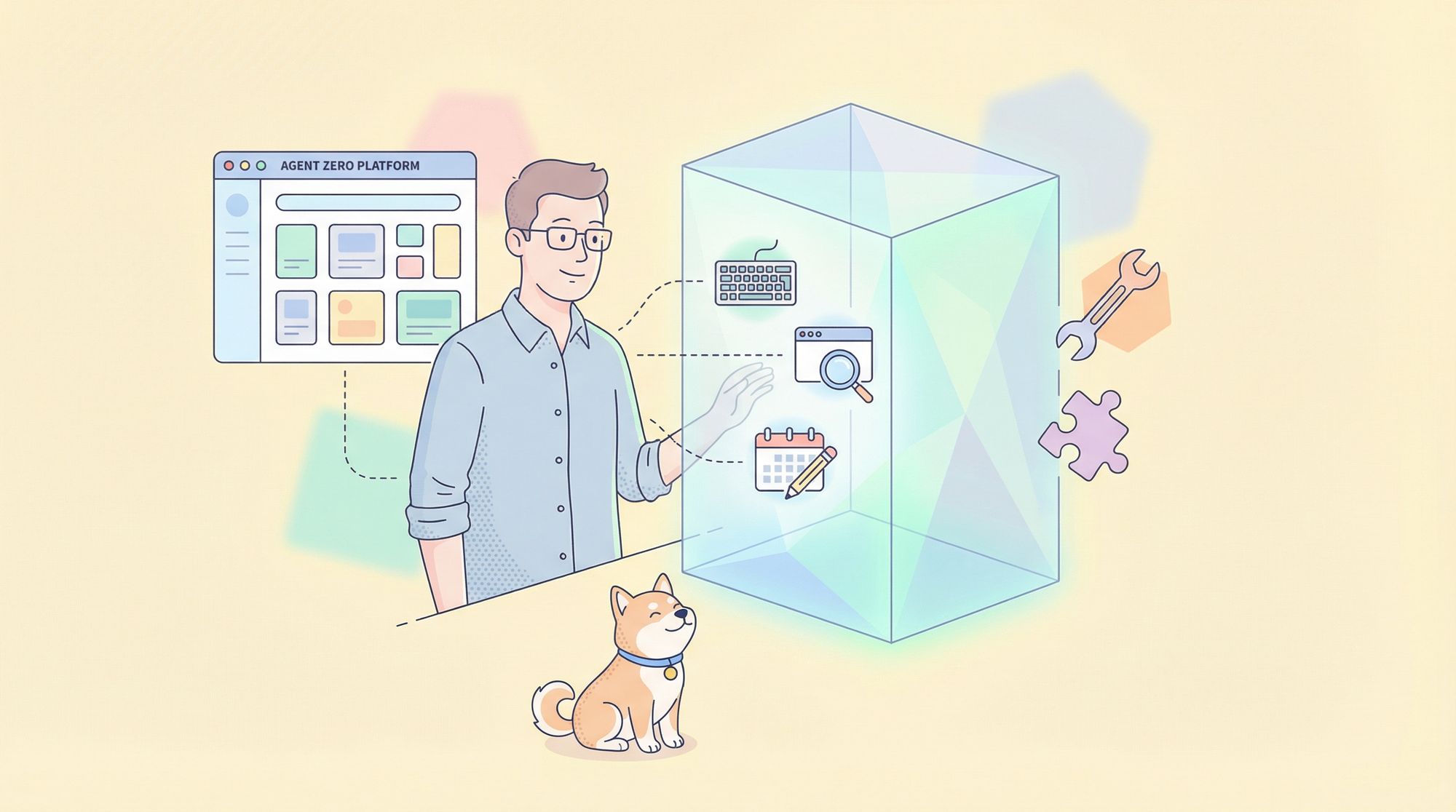
Agent Zero is a Python-based, open-source framework designed for developers who want to create and deploy autonomous AI agents securely. Running inside Docker, it offers a modular platform for tasks such as:
- Coding automation: Generate games, utilities, or scripts.
- Web browsing: Fetch real-time data, screenshots, or research.
- Task planning: Create itineraries, organize workflows, and more.
Key Features:
- Customizable Agents: Integrate with models like OpenAI or Ollama, and tailor agent behaviors with your own prompts and tools.
- Security by Design: Docker isolates Agent Zero from your system, reducing risk.
- Multi-tasking: Run multiple agents or conversations simultaneously.
- Web UI: Fast, colorful interface for chat and configuration.
- Free & Open Source: Backed by a growing community (3.4K+ GitHub stars).
Developers can get up and running in under 20 minutes—let’s walk through the setup.
Step-by-Step: Installing Agent Zero on Windows, macOS, or Linux
Agent Zero uses Docker for portability and safety. Here’s a clear guide for rapid installation.
1. Prerequisites
- Docker Desktop installed. (Instructions below)
- Basic command-line familiarity.
- (Optional) API keys for LLM providers (OpenAI, Ollama, etc.).
2. Install Docker Desktop
Docker provides a consistent environment for Agent Zero.
Steps:
-
Download Docker Desktop from the official site.
-
Install with default settings (on macOS, drag Docker to Applications).
-
For Linux, use Docker Desktop or Docker CE. Add your user to the Docker group for permission:
sudo usermod -aG docker $USERLog out and back in after adding.
-
Launch Docker Desktop and verify it’s running.
3. Pull and Start Agent Zero with Docker
Terminal method:
docker pull frdel/agent-zero-run
Or use Docker Desktop:
- Go to the Images tab, search “frdel/agent-zero-run,” and click Pull.

Prepare persistent data:
- Windows:
C:\agent-zero-data - macOS/Linux:
~/agent-zero-data
Launch the container:
docker run -p 50080:80 -v /path/to/agent-zero-data:/a0 frdel/agent-zero-run
Replace /path/to/agent-zero-data with your actual path.
In Docker Desktop: Use the Run dialog to set the port (50080) and map your data directory.

4. Access the Agent Zero Web UI
- Open your browser and go to the provided local link (e.g.,
http://localhost:50080). - You’ll see the Agent Zero web interface.

5. Configure Agent Zero for Your Workflow
Click the settings gear icon to customize:

- Agent Behavior: Select prompt folders by task type (e.g., coding, browsing).
- Memory: Define where agents store their knowledge.
- LLM Providers: Choose OpenAI, Ollama, or others. Enter API keys as needed.
- Authentication: Set UI and Docker root passwords.
- Optional: Enable speech-to-text for voice-driven chats.
Most developers can complete this in minutes.
6. Start Using Agent Zero
- Open chat sessions in the Web UI for each task.
- Run multiple agents in parallel—code, browse, and plan at the same time.

- For debugging, Agent Zero saves HTML-formatted logs in the
logs/folder.
7. Keeping Agent Zero Up to Date
Refresh to the latest version:
docker stop agent-zero
docker rm agent-zero
docker rmi frdel/agent-zero-run
docker pull frdel/agent-zero-run
docker run -p 50080:80 -v /path/to/agent-zero-data:/a0 frdel/agent-zero-run

Running Local LLMs with Ollama and Agent Zero
Want to keep your AI completely local for speed and privacy? Ollama makes running models like Qwen3 seamless.
Steps:
-
Download Ollama from ollama.ai for your OS.
-
Verify installation:
ollama -
Pull a model such as Qwen3:
ollama run qwen3

-
List available models:
ollama list

- In Agent Zero’s Settings, select Ollama as the provider and pick your desired model.
Developer Tip: Qwen3 ran smoothly on a machine with 8GB+ RAM. Adjust memory settings if you notice slowdowns.
Practical Example: Setting Up Ollama with Agent Zero
After installing Ollama and Agent Zero, here’s how the integration process went:
- Used the terminal to pull and launch Qwen3.
- In Agent Zero’s Settings:
- Set Ollama as the LLM provider and selected Qwen3.
- Enabled speech-to-text for hands-free commands.
- Added a Google API key for enhanced web search (no cost).
- Adjusted memory and prompt directories for optimal performance.

Setup was straightforward—ready for real-world testing in less than 10 minutes.
Testing Agent Zero: Real Developer Use Cases
To see how Agent Zero fits into daily developer workflows, I tested it with practical prompts in separate chats:
Prompt 1: Financial Data & Trip Planning
-
“What’s the S&P 500 price today?”
Agent Zero browsed the web, returned the current price (SPY at $593.05 USD), and displayed it in a finance card. -
“Plan out a trip to Tokyo.”
Generated a detailed 7-day itinerary—complete with top districts and food recommendations.
Actual data (June 6):
0
Agent Zero’s response (June 5):
1
Prompt 2: Coding Mini-Games & Tools
- “Create a simple Flappy Bird game using HTML.”
Agent Zero generated HTML/JS code for a playable browser game. - “Build a Whack-a-Mole game with HTML.”
Provided a working, interactive grid game. - “Make a color palette generator in HTML.”
Instantly produced a tool with random color swatches and hex codes.
2
Prompt 3: Automated Web Browsing
- “Browse the web and take a screenshot of Google and the S&P 500 price.”
Agent Zero navigated, captured screenshots, and saved images directly to my data folder.
3
Insight: Running these parallel tasks in separate chats felt like having dedicated assistants for each job—ideal for busy API teams or technical leads.
Agent Zero: Pros and Cons for Developers
What Works Well
- Fast, Simple Setup: Docker Desktop and web UI make onboarding easy.
- Concurrent Agents: Run multiple workflows side by side.
- Local LLM Support: Use Ollama and Qwen3 for privacy and speed.
- Customizable: Tailor agent prompts, memory, and integrations.
- Active Community: GitHub and Discord provide support.
What Could Improve
- Prompt Engineering: Some results (e.g., finance data format) require precise prompts.
- Hardware Requirements: Local models need 8GB+ RAM for smooth performance.
- Documentation Gaps: Some advanced features (e.g., embeddings) could use clearer guides.
- Minor Bugs: Occasional glitches (e.g., screenshot tool), but logs make troubleshooting easier.
Is Agent Zero Worth Using for Developers?
Agent Zero stands out as a robust, open-source AI agent framework. Its Docker-based architecture, multi-agent web UI, and Ollama integration make it a practical choice for API developers, backend engineers, and technical leads who want to automate tasks, prototype tools, and experiment with local LLMs.
While prompt tuning and hardware are considerations, the value is clear—especially compared to paid AI tools. Agent Zero’s flexibility, strong community, and cost-free model make it a smart addition to your development toolkit.
Pro Tip: If you’re also seeking a unified API collaboration platform, Apidog streamlines API testing, documentation, and team workflows—all in one place. Boost productivity and save on licensing costs with Apidog.