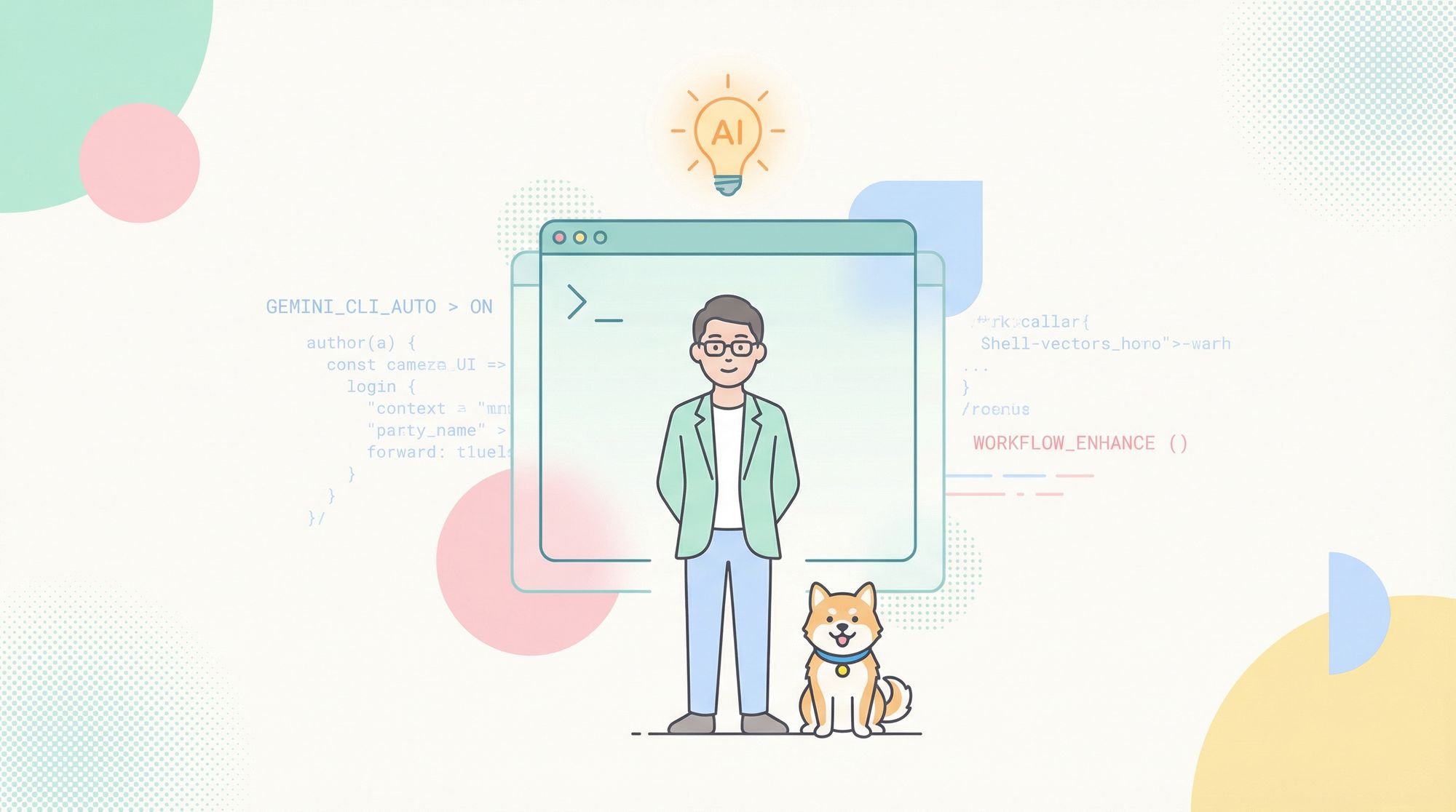
For API developers, backend engineers, and technical leads, the command-line interface (CLI) is more than a tool—it's the heart of productivity and control. While GUI tools evolve, the terminal remains the bedrock of serious development work. Now, Google is redefining this workspace by introducing Gemini CLI, an open-source AI agent that brings the full power of Gemini models directly into your terminal.
What is Gemini CLI?
Gemini CLI is a command-line AI agent designed to transform your workflow. Unlike basic chatbots forced into the terminal, Gemini CLI is a purpose-built, open-source tool meant to act, plan, and automate. With direct access to Gemini 2.5 Pro’s 1M token context window, developers can run up to 1,000 free requests daily—making advanced AI capabilities accessible without cost barriers.
Gemini CLI is a direct answer to proprietary coding assistants like Anthropic’s Claude, offering a transparent, extensible alternative for developers who value control, security, and customization.
💡 Looking for an integrated API testing and documentation solution? Explore Apidog for beautiful API documentation and seamless team collaboration. Boost productivity and replace Postman at a more affordable price.
Why Gemini CLI Matters for API & Backend Developers
Redefining "AI Agent" in the Terminal
Gemini CLI is more than a prompt-response tool. As an “AI agent,” it can:
- Plan and execute multi-step tasks: For example, refactor a Python service, generate new test files, execute tests, and recover from errors.
- Understand your codebase: Analyze, modify, and generate code based on your entire project, not just isolated snippets.
- Interact with your environment: Read/write files, execute shell commands, and even search the web for up-to-date technical information.
Practical Use Cases
- Automate code refactoring:
cat main.go | gemini "add comments to this code" - Generate documentation or commit messages:
gemini "summarize changes in this pull request" - Debug errors:
Paste error messages and get step-by-step solutions.
- Research dependencies:
gemini "Summarize the latest features in FastAPI and show a hello world example." - Organize team tasks:
Create feature plans or task lists directly from the CLI.
Developers can inspect, modify, or extend Gemini CLI thanks to its Apache 2.0 license—unlike black-box solutions, this fosters trust and community-driven evolution.

Unprecedented Free Access to Google Gemini API
Getting started with Gemini CLI is simple: log in with your Google account to receive a free Gemini Code Assist license. This unlocks:
- 1M token context window (analyzing entire codebases or extensive documentation)
- 60 model requests per minute
- 1,000 model requests per day

These limits remove “rate limit anxiety,” enabling uninterrupted experimentation, debugging, and feature building. Unlike other solutions that restrict free access or enforce paywalls for API usage, Gemini CLI’s generous free tier democratizes state-of-the-art AI for all developers—students, hobbyists, and professionals alike.
For teams needing more, scaling to Google AI Studio, Vertex AI, or enterprise Gemini Code Assist is seamless.
Core Capabilities: From Code Generation to Real Automation
Gemini CLI’s strength lies in its ability to act, not just converse.
1. Code Understanding, Generation & Debugging
- Analyze and comment on code (
cat main.go | gemini "add comments") - Generate scripts or boilerplate code on demand
- Debug errors with actionable suggestions
2. File System Interaction
- Read and write files, enabling complex refactoring
E.g., “Scan all
.tsfiles insrc/and update deprecated functions.” - Maintain and update codebases with single commands
3. Command Execution
- Run shell commands, automate troubleshooting, and CI/CD steps
E.g., “Diagnose and fix Node.js app startup errors automatically.”
4. Real-Time Web Search Integration
- Fetch live information on package updates, security advisories, and breaking changes
E.g., “Summarize breaking changes in the latest Django release and update
settings.pyaccordingly.”
Gemini CLI can also be embedded in scripts, automating documentation, changelog summaries, or test generation—ideal for API-focused teams and CI pipelines.
Open Source and Extensible: Shaping Your AI Workflow
Developers value customization, and Gemini CLI delivers:
- Open-source (Apache 2.0): Fork, inspect, and contribute to the project freely.
- Per-project customization: Use a
GEMINI.mdfile to define agent behavior, coding style, or project-specific rules. - Extensibility: Built on the Model Context Protocol (MCP), supporting third-party integrations and extensions for broader workflows.
This open, modular approach stands apart from closed ecosystems. Developers can directly influence the tool’s direction, maximizing relevance to real-world API and backend needs.
Unified AI Experience: From Terminal to IDE

Most development alternates between terminal and IDE. Gemini CLI shares its core agent with Gemini Code Assist for VS Code and other editors. This means:
- Consistent AI capabilities across CLI and IDE
- Agent mode in VS Code: Multi-step reasoning and planning in chat windows
- No context switching: Use high-level prompts and get actionable results, regardless of environment
For API and backend teams, this unified experience streamlines everything from debugging to major refactoring.
Weighing the Anthropic side instead? Our breakdown of Claude Free vs Pro lays out which plan actually fits a developer workflow.
The CLI is only one side of Google's developer push — for collaborative drafting and code prototyping in the browser, Gemini Canvas offers an AI workspace that complements terminal-driven workflows.
Since Gemini CLI lives entirely in your terminal, the shell you run it in matters more than usual — Wave, an open-source terminal with built-in graphical widgets, pairs naturally with agentic CLI workflows.
Google's terminal agent isn't the only open-source entrant in this space; xAI's Grok CLI launched around the same period with a distinct approach to autonomous coding tasks.
Because Gemini CLI lives entirely in your terminal, the quality of that shell environment shapes how productive the tool actually feels—a modern terminal emulator like Warp or Ghostty can meaningfully change the day-to-day experience.
The same open-source agentic patterns that make Gemini CLI productive for development tasks transfer cleanly to automating your job search with a purpose-built pipeline that handles sourcing, filtering, and outreach in the background.
Conclusion: Upgrade Your Terminal—and Workflow
Google Gemini CLI isn’t just an AI chatbot; it’s a transformative, open-source agent for the modern development stack. With its generous free tier, rich agentic capabilities, and transparent design, it empowers developers to automate, analyze, and innovate directly from the command line.
As you explore new tools for API testing, collaboration, and automation, consider how solutions like Apidog can complement these new AI-driven workflows—supporting seamless documentation, testing, and teamwork alongside your upgraded terminal.