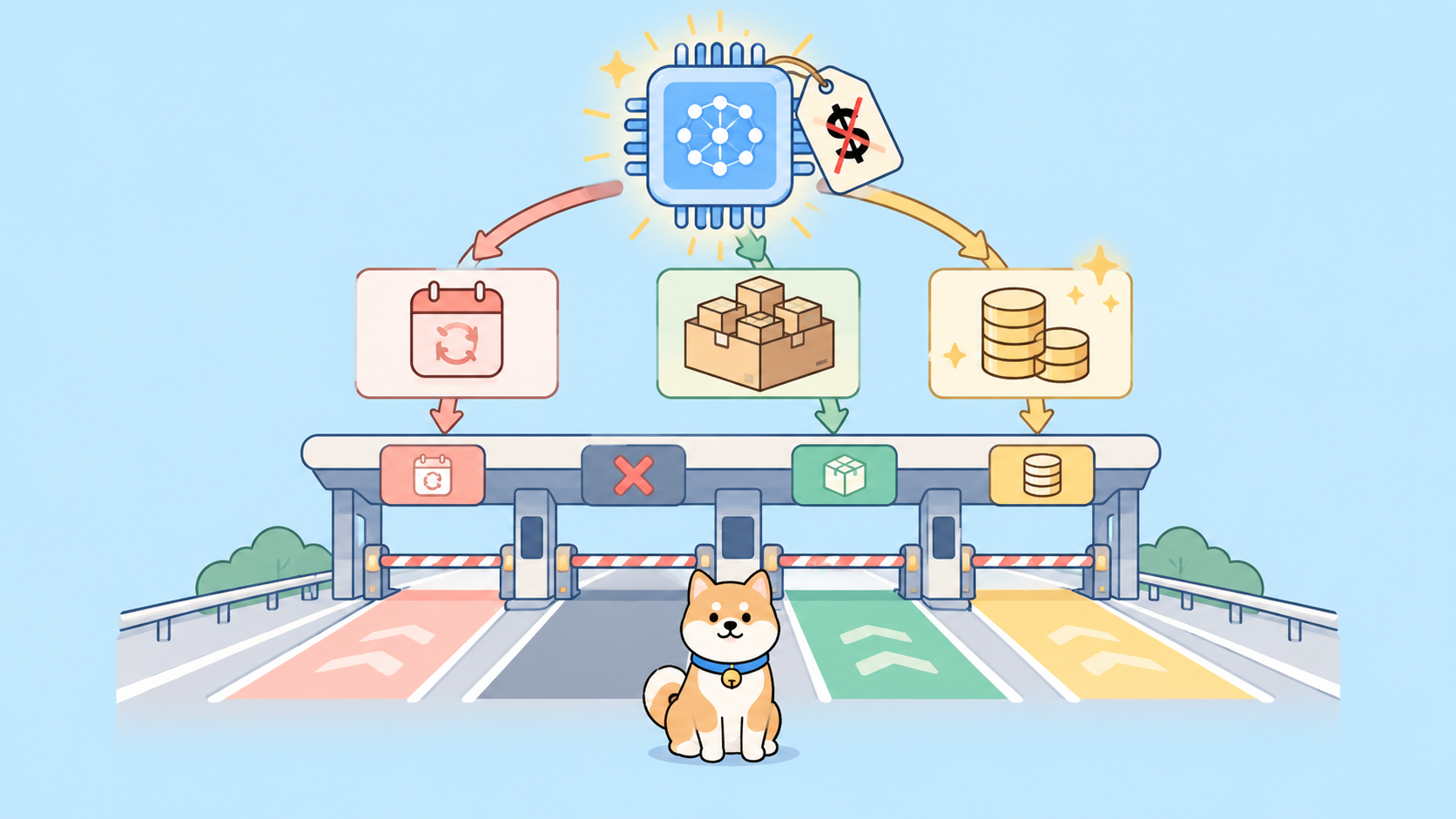
No, GPT-6.1 Sol isn’t free. OpenAI launched it on September 29, 2026 for Plus, Pro, Business, Enterprise and Edu users in ChatGPT Work and Codex. It isn’t in Chat yet, the Free and Go plans don’t get it, and the API model gpt-6.1-sol has no free tier. Standard API pricing is $2 per million input tokens, $0.10 per million cached input tokens and $10 per million output tokens.
The upside is that the cheap routes got cheaper. GPT-6.1 Sol keeps GPT-6 Sol’s $2/$10 list price and halves the cached-input rate. This guide ranks every route by cost, names what isn’t free, works through a cost example with real rates, and points to a free alternative from the same GPT-6 family. For the model itself, see what GPT-6.1 Sol is; the same question for its predecessor is answered in is GPT-6 Sol free. Before you choose a route, measure what your own prompts cost in Apidog.
Every route to GPT-6.1 Sol, compared
| Route | Cost | What you get | The catch |
|---|---|---|---|
| Free alternative (not Sol): GPT-6 Luna in the ChatGPT desktop app | $0 on the Free plan | Luna, not Sol, in Work and Codex in the desktop app | Different model; not in Chat; no API key |
| ChatGPT Plus in Codex or ChatGPT Work | A Plus subscription | 6.1 Sol for coding and work tasks | Plan usage limits; not in Chat; no API key |
| Sign in with ChatGPT partner apps | Counts against your Plus or Pro usage | Your plan inside apps such as Devin, Notion, Vercel, T3, OpenClaw and Dactyl | Plus and Pro only; per-app weekly cap; credits off by default |
| API, Batch or Flex | $1 input, $0.05 cached, $5 output | Half the Standard rate | Batch is async; Flex is slower and can return 429 |
| API, Standard with caching | $2 input, $0.10 cached, $10 output | The model from your own code | Every token billed; cache hits need a stable prefix |
OpenRouter openai/gpt-6.1-sol |
$2 input, $0.10 cached, $10 output (OpenAI endpoint) | One key across providers | Same list price; not free |
All API prices are per million tokens for prompts up to 272K input tokens, from OpenAI’s pricing page and OpenRouter’s model page.
ChatGPT Plus: the entry plan for interactive use
If you want to use 6.1 Sol yourself, in Codex or ChatGPT Work, Plus is the lowest plan that includes it. OpenAI’s launch post makes it available “to all Plus, Pro, Business, Enterprise, and Edu users in ChatGPT Work and Codex” and says it “is not yet available in Chat.” Per OpenAI’s models docs, Enterprise and Edu keep it off until an admin enables it.
You don’t pay per token here, but plan usage limits apply; our guide to Codex usage limits explains how they work. The free Codex guide covers Codex’s no-cost options, but for 6.1 Sol, OpenAI’s list starts at Plus.
Sign in with ChatGPT: your plan inside other apps
DevDay added Sign in with ChatGPT. The identity part (OAuth/OIDC) is available globally. On top of that, Plus and Pro users can spend their plan’s usage inside participating tools. OpenAI launched with 16 partners, and its DevDay recap names Cognition’s Devin, Notion, Vercel, T3, OpenClaw and Dactyl.
How the usage works, per OpenAI’s help article on using your plan in other apps:
- Eligible requests count toward your plan’s ChatGPT Work and Codex usage.
- Each app gets a weekly usage limit set as a percentage of your overall weekly usage. It’s a cap, not a reserved pool.
- Paying with credits after you hit the limit is optional, off by default, and applies only once the app’s limit is at 100%.
- The app receives your name, email address and profile picture. It doesn’t get your conversations, memories or an API key.
Check which model an app uses before assuming it’s 6.1 Sol. If you’re wondering what OpenClaw itself costs, see is OpenClaw free. The developer side, from client IDs to the OAuth flow, is in our Sign in with ChatGPT guide.
A ChatGPT plan is not an API key
This is the trap in most “free GPT” searches. A Plus or Pro plan gives you 6.1 Sol in ChatGPT Work and Codex, not an API key. A script, CI job or agent that sends Authorization: Bearer $OPENAI_API_KEY to https://api.openai.com/v1 pays per token, whatever plan you’re on. The only way code draws on a plan is Sign in with ChatGPT’s OAuth flow, which OpenAI’s plan usage docs open to open-source and locally hosted apps, with preview limits: streaming only, store: false, no temperature, and no hosted tools such as file search. Those requests still count against your Plus or Pro usage and the app’s limit.
The cheapest API route: Batch, Flex and the cache
Three levers cut the per-token bill:
- Batch runs jobs asynchronously at half the Standard rate: $1 input, $0.05 cached, $5 output. Our Batch API guide walks through a job end to end.
- Flex charges Batch rates on ordinary requests when you set
service_tier: "flex". The Flex processing guide warns of slower responses and occasional429 Resource Unavailableerrors, which aren’t charged. - Prompt caching is on by default. Cached input costs $0.10, 95% below standard input and half GPT-6 Sol’s $0.20. OpenAI’s prompt caching guide sets a 1,024-token minimum, bills cache writes at 1.25x the uncached input rate ($2.50 here), and keeps a prefix reusable for 30 minutes after its last write or reuse.
Keep prompts under 272K input tokens. Above that, the model page says the whole request bills at 2x input and cache rates and 1.5x output.
Worked example: what one agent call costs
Take an agent step with a 100,000-token prefix (system prompt, tool schemas, repo context) that stays the same across calls, 8,000 new input tokens, and 2,000 output tokens, reasoning included. The prefix is already cached, and explicit-only caching mode stops cache writes at the prefix, so the new tokens bill as ordinary input.
On Standard with a cache hit:
- Cached input: 100,000 x $0.10 / 1,000,000 = $0.0100
- New input: 8,000 x $2.00 / 1,000,000 = $0.0160
- Output: 2,000 x $10.00 / 1,000,000 = $0.0200
- Total: $0.0460 per call
On Batch or Flex, every rate halves: $0.0050 + $0.0080 + $0.0100 = $0.0230. On GPT-6 Sol, the cached line doubles to $0.0200, so the call costs $0.0560. With no cache hit on 6.1 Sol, all 108,000 input tokens bill at $2.00: $0.2160 + $0.0200 = $0.2360.
| Scenario | Per call | 1,000 calls |
|---|---|---|
| 6.1 Sol Standard, cache hit | $0.046 | $46 |
| 6.1 Sol Batch or Flex, cache hit | $0.023 | $23 |
| GPT-6 Sol Standard, cache hit | $0.056 | $56 |
| 6.1 Sol Standard, no cache hit | $0.236 | $236 |
The first call writes the prefix to the cache at $2.50 per million: 100,000 x $2.50 / 1,000,000 = $0.25 for that part. After that, the cache hit rate moves the bill about fivefold, Batch or Flex halves it, and moving from GPT-6 Sol saves a cent per call in this example because only the cached line changed. For more on hitting the cache, read GPT-6 prompt caching.
What is NOT free
- ChatGPT Free and Go: no 6.1 Sol.
- ChatGPT Chat: 6.1 Sol isn’t there yet, on any plan.
- The API: no free tier.
- Sign in with ChatGPT on a Free account: plan usage is for Plus and Pro only.
- OpenRouter: the same list price, not a discount.
- Ultrafast: 6.1 Sol’s is “coming soon,” and on GPT-6 Astra it costs 6x Standard.
The free alternative: GPT-6 Luna
If you need something that costs nothing, GPT-6 Luna is available on the Free plan in Work and Codex in the ChatGPT desktop app (Go, a paid plan, gets it too). It isn’t in Chat. It’s a different, cheaper model, and a plan seat comes with no API key, so it can’t power a script or agent you wrote either. The free GPT-6 Luna guide covers setup. On the API, Luna lists at $0.10 input and $0.50 output, a twentieth of 6.1 Sol’s input and output rates, which makes it the cheap choice for high-volume classification and extraction.
Measure real token usage in Apidog before you choose
The example uses made-up token counts. Your real numbers decide which route wins, and one saved request in Apidog gets them:
- Create an environment with
OPENAI_API_KEYandMODEL_IDset togpt-6.1-sol. - Save a POST to
https://api.openai.com/v1/responseswithBearer {{OPENAI_API_KEY}}in the Authorization header and a body containing"model": "{{MODEL_ID}}","reasoning": {"effort": "low"}and a real prompt from your workload asinput. - Send it twice. Assert
$.usage.input_tokens_details.cached_tokensis greater than 0 on the second run, so a prompt edit that breaks caching fails the test. - Compare
usage.output_tokensandusage.output_tokens_details.reasoning_tokensatlowandmedium. The reasoning guide says reasoning tokens bill as output. - Add a post-response script that prices each call at Standard rates:
const u = pm.response.json().usage;
const d = u.input_tokens_details || {};
const cached = d.cached_tokens || 0;
const written = d.cache_write_tokens || 0;
const fresh = u.input_tokens - cached - written;
const usd = (fresh * 2 + cached * 0.1 + written * 2.5 + u.output_tokens * 10) / 1e6;
console.log(`gpt-6.1-sol Standard: $${usd.toFixed(4)} per call`);
Multiply by your daily volume and halve it for Batch or Flex. Save the request in a test scenario and the Apidog CLI can rerun it in CI, so a prompt change that drops your cache hit rate shows up before the invoice does.
FAQ
Is GPT-6.1 Sol free in ChatGPT? No. It’s in ChatGPT Work and Codex for Plus, Pro, Business, Enterprise and Edu. It isn’t in Chat yet and isn’t on Free or Go.
Can I use my ChatGPT Plus plan to call the GPT-6.1 Sol API? Not with an API key: a plan isn’t one, and code that sends a key pays per token. Sign in with ChatGPT lets apps that build its OAuth flow, including open-source and locally hosted ones, count eligible requests against Plus or Pro usage, within preview limits.
Is there a free GPT-6.1 Sol API? No. The cheapest official rate is Batch or Flex: $1 input, $0.05 cached and $5 output per million tokens.
Is GPT-6.1 Sol free on OpenRouter? No. OpenRouter lists openai/gpt-6.1-sol at $2/$10 on its OpenAI endpoint, the same as OpenAI’s list price.
Is GPT-6.1 Sol cheaper than GPT-6 Sol? The list price is the same, $2/$10. Cached input is half ($0.10 vs $0.20), so workloads with high cache hit rates get cheaper.
Next step
Pick the route by the numbers. Download Apidog, save one real request, send it twice, and read usage. If you only need 6.1 Sol interactively, Plus in Codex is the entry point; if your code needs it, use the API with caching, and move anything that can wait to Batch or Flex. The GPT-6.1 Sol API guide covers the first request and migrating from gpt-6-sol.