
An API test that runs once and then never again is barely worth writing. The value of testing comes from repetition: catching the regression before a customer does, proving a contract still holds after a refactor, gating a deploy on green checks. An API automation testing framework is the structure that makes that repetition cheap, reliable, and readable.
This article explains what an API automation testing framework actually is, the five layers that every serious one contains, and a practical process for choosing between building your own and adopting an existing tool. It stays focused on automating API tests specifically, not browser or unit testing, so you can apply it directly to the HTTP services your team ships.
What an API automation testing framework is
A framework is not a single library. It is the agreed-upon set of components, conventions, and glue code that lets a team write API tests once and run them on demand. Without one, every engineer invents their own way to send a request, check a response, and load test data. The tests work, but they drift apart, duplicate logic, and become impossible to maintain.
A good framework removes those decisions. It defines where requests live, how assertions are written, where test data comes from, what a report looks like, and how the suite plugs into continuous integration. New tests follow the pattern instead of reinventing it. That consistency is the whole point: a test suite that one person can maintain is a liability, while one that any team member can read and extend is an asset.
Frameworks come in two broad shapes. Code-first frameworks are assembled from libraries in a language your team already uses, such as Python with pytest or JavaScript with Jest. Platform-based frameworks like Apidog give you the same five layers through a visual interface, so you configure tests instead of coding the plumbing. Both produce automated API tests. The difference is how much glue code you own.
The five layers every framework needs
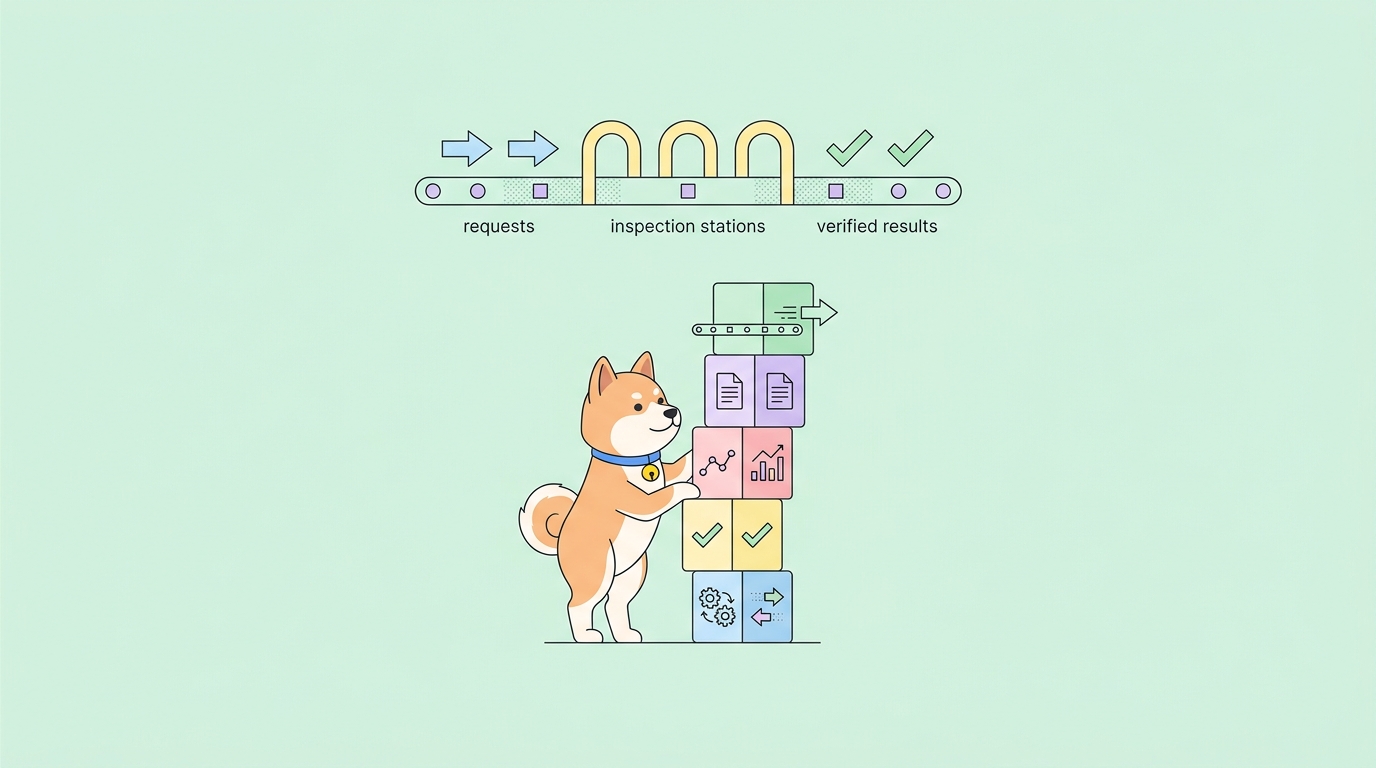
Whether you build or buy, an API automation testing framework is made of the same five layers. Evaluate any option against this list and gaps become obvious.
1. The request layer
This layer sends HTTP calls and exposes the response. It handles base URLs, headers, authentication tokens, query parameters, request bodies, and timeouts. In a code-first setup this is usually a thin wrapper around an HTTP client so that tests do not repeat boilerplate. The key design goal is that a test should describe what it wants, not how to construct a socket call. A clean request layer also centralizes retry logic and connection pooling so individual tests stay short.
2. The assertion layer
Sending a request proves nothing. The assertion layer checks that the response matches expectations: status code, response time, headers, and the shape and values of the body. Strong frameworks support schema validation against an OpenAPI definition, not just hand-written field checks, because schema drift is one of the most common API defects. If you want a deeper look at assertion strategy, our guide to API assertions covers the patterns that catch real bugs.
3. The test data layer
Tests need inputs, and hard-coded inputs rot quickly. This layer supplies data from fixtures, factories, CSV or JSON files, or a database. It also manages the lifecycle of that data: creating a user before a test and deleting it after, so runs stay independent and repeatable. Data-driven testing, where one test body runs against many input rows, lives here. A data-driven API testing approach with CSV and JSON lets you expand coverage without writing new test functions.
4. The reporting layer
A test run that produces only an exit code is hard to debug. The reporting layer records which tests ran, which failed, the request and response for each failure, timing, and trends across runs. Good reports turn a red build into a five-minute fix instead of an hour of guessing. HTML reports help humans; JUnit XML output helps CI servers display results inline.
5. The CI integration layer
The final layer connects the suite to your pipeline so tests run automatically on every commit, pull request, or schedule. It handles environment selection, secret injection, exit codes that fail the build correctly, and artifact upload for reports. A framework that cannot run headless in CI is only half a framework. Our walkthrough of API tests in CI/CD pipelines shows how to wire this layer up cleanly.
A framework is healthy only when all five layers stay in balance. Teams commonly over-invest in the request and assertion layers, the parts that feel like real testing, and neglect data and reporting until a flaky run or an undebuggable failure forces a rebuild. Treat the five layers as a checklist you revisit, not a one-time setup. When you add a new endpoint, ask which layer the new test touches and whether that layer still holds up.
What an API automation testing framework is not
It helps to be precise about boundaries, because two common confusions waste time. An API automation testing framework is not a load testing tool. Functional API tests confirm correctness: the right status, the right body, the right behavior. Load and stress testing confirm that the API holds up under volume, which is a separate concern with separate tools. A few teams bolt loose timing assertions onto functional tests and call that performance coverage; it is not. For real load work, use a dedicated approach like the one in our API performance testing tutorial.
It is also not the same as unit testing. Unit tests check small pieces of code in isolation, usually without a network call. API tests exercise the running service over HTTP, including its routing, serialization, authentication, and data layer. Both belong in a healthy test strategy, but they catch different defects and live in different parts of the framework. Mixing them under one label leads to gaps nobody notices until production.
Code-first versus platform-based: a comparison
The honest tradeoff is control versus speed. Code-first frameworks give you total flexibility and live alongside your application code, but you maintain every layer yourself. Platform-based frameworks hand you all five layers immediately, at the cost of working inside the tool’s model.
| Factor | Code-first framework | Platform-based framework |
|---|---|---|
| Setup time | Days to weeks of glue code | Minutes |
| Flexibility | Unlimited, any logic you can code | Bounded by the platform |
| Maintenance owner | Your team | Mostly the vendor |
| Onboarding | Requires the language | Visual, low barrier |
| Schema validation | Add a library yourself | Usually built in |
| Best fit | Teams with strong engineering capacity | Mixed teams, fast delivery |
Many teams run both. Engineers keep a code-first suite for complex, logic-heavy scenarios, while QA and product staff build broad coverage in a platform. The two are not in conflict; they cover different parts of the same surface.
How to choose or adopt a framework
Use a short, ordered process instead of picking the most popular option.
- Inventory your APIs. Count the services, note the protocols (REST, GraphQL, gRPC, SOAP), and identify which endpoints carry the most risk. This tells you what the request and assertion layers must support.
- Assess your team. A team of Python engineers should not be forced into a no-code tool, and a team of analysts should not be handed a bare pytest repo. Match the framework to who will write and maintain tests.
- Check CI compatibility. Confirm the framework runs headless, returns correct exit codes, and emits a report format your pipeline understands. Test this on day one, not after fifty tests exist.
- Pilot on one real service. Write ten meaningful tests for an existing API. You will learn more from that pilot than from any feature checklist.
- Decide on a data strategy. Choose how tests get and clean up data before the suite grows, because retrofitting data management onto a hundred tests is painful.
If you want to compare concrete options, our roundup of the best automated testing platforms lays them side by side, and the broader automation testing framework guide explains the structural patterns underneath all of them.
A common mistake at this stage is choosing based on a feature list rather than a pilot. Feature lists reward the tool with the most checkboxes, but the tool you actually want is the one that makes your most common test easy to write and your most common failure easy to debug. Those qualities only surface when real engineers write real tests against a real service. Ten honest tests during a pilot will tell you more than a week of vendor comparisons.
Where Apidog fits
Apidog is an all-in-one API platform that provides the five layers without glue code. The request layer reuses the same endpoint definitions you use for design and debugging, so tests stay in sync with the API. The assertion layer includes visual checks and schema validation against your OpenAPI spec. Test data can be driven from CSV or JSON files for data-driven runs. Reports are generated as HTML automatically, and the CLI runner integrates with Jenkins, GitHub Actions, and other CI systems.
Because design, debugging, mocking, and testing share one source of truth, a request you debug today becomes a regression test tomorrow with a couple of clicks. That tight loop is hard to reproduce with a hand-assembled stack. You can download Apidog and build a working API test suite the same afternoon. For teams that prefer code, Apidog still helps as the place to design and mock the APIs your code-first suite tests against.
Frequently asked questions
What is the difference between an API testing tool and an API automation testing framework?
A tool sends requests and shows responses. A framework adds structure: shared conventions for assertions, test data, reporting, and CI integration so that tests are repeatable and maintainable at scale. Many modern platforms are both, offering ad-hoc debugging and a full automation framework in one product.
Do I need to know how to code to use an API automation testing framework?
No. Code-first frameworks like pytest require programming, but platform-based frameworks let you build and run automated API tests through a visual interface. Choose based on your team’s skills. Mixed teams often use both, with engineers on the code-first suite and others on the platform.
How many of the five layers can I skip?
None of them, though some can be minimal. Even a tiny suite needs a way to send requests, check responses, supply data, see results, and run in CI. Skipping the CI layer is the most common mistake, and it quietly turns automated tests back into manual ones.
How do I keep API tests from becoming flaky?
Flakiness usually comes from shared state and unmanaged test data. Make each test create and clean up its own data, avoid depending on test execution order, and use stable environments or mocks for unreliable dependencies. A solid test data layer prevents most flakiness before it starts.
Should API tests validate against an OpenAPI schema?
Yes, whenever you have a spec. Schema validation catches structural drift, such as a renamed field or a changed type, that hand-written assertions often miss. It also keeps tests in sync with the contract automatically, so the assertion layer does not rot as the API evolves.